
Lebanon has moved toward direct negotiations with Israel for the first time since the recent outbreak of war, but the prospect of a durable peace is clouded by deep internal divisions and a weakened state apparatus.
President Joseph Aoun called for the historic face-to-face talks after a month of fighting that has uprooted more than a million Lebanese residents, flattened sections of the capital and inflamed sectarian tensions. Israeli Prime Minister Benjamin Netanyahu has responded to the call to enter talks, yet analysts and Lebanese officials say Beirut is in the weakest position to extract concessions or to secure a binding halt to the violence.
Hezbollah, the powerful armed Shi'ite movement that has been clashing with Israeli forces in southern Lebanon, opposes direct negotiations. That stance raises immediate doubts about whether the militia would accept any state-mediated ceasefire or comply with disarmament measures negotiated by government representatives. A Lebanese official close to Hezbollah told Reuters on condition of anonymity that the negotiations were effectively futile because those representing Lebanon lacked bargaining leverage.
A month of escalating violence
Israel intensified air strikes after Hezbollah launched missiles into Israel on March 2 - an action that came three days into what the article described as the U.S.-Israeli war on Iran. The campaign has since broadened to include a ground offensive, producing one of the deadliest stretches for Lebanon in decades.
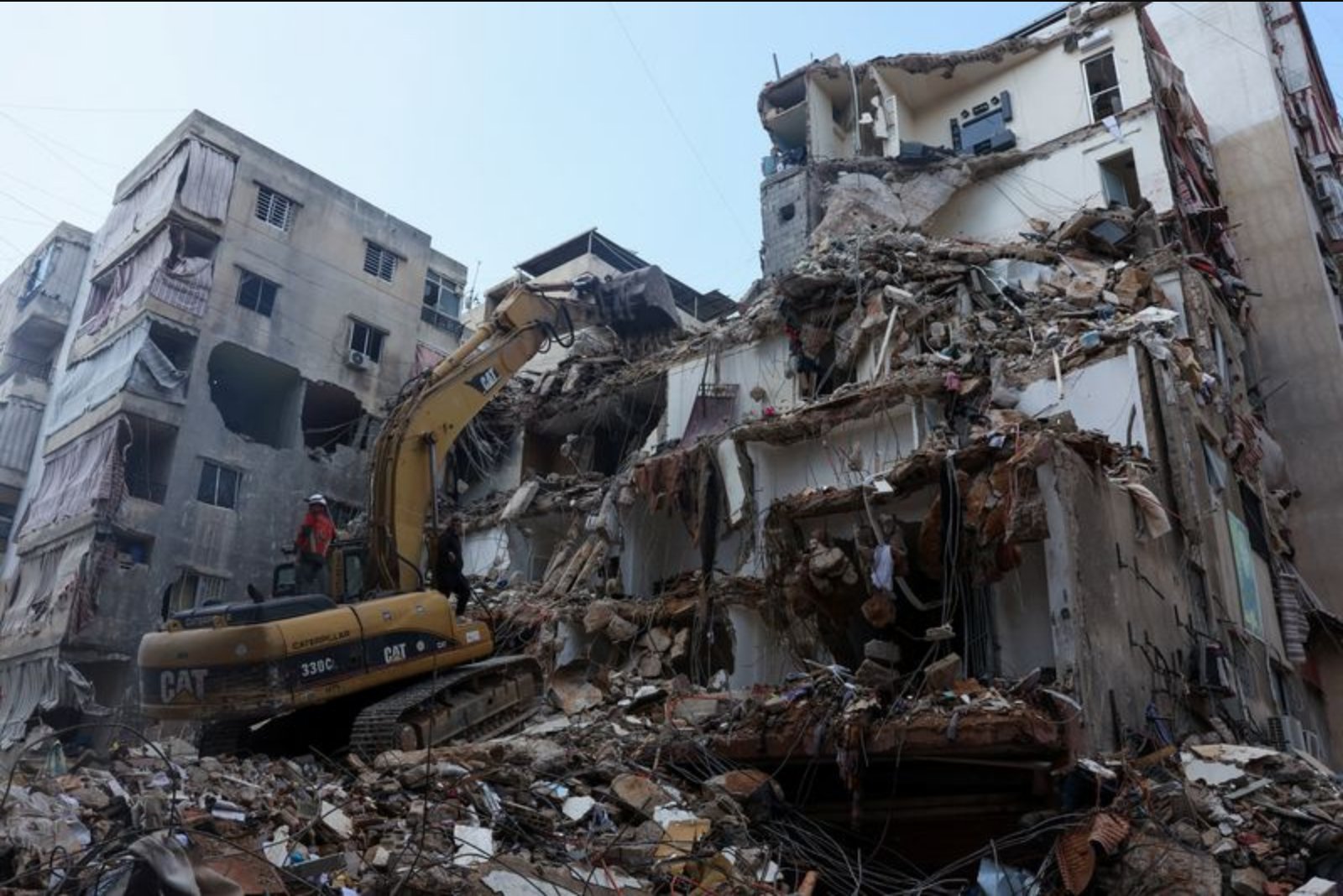
One day of strikes killed more than 300 people, marking among the highest single-day death tolls since the civil war that ended in 1990. Rescuers continued to recover mangled bodies from the rubble of destroyed buildings as families across Lebanon held funerals. Public infrastructure in southern Lebanon has been heavily damaged by bombardment, and Lebanese state security forces were among those killed in the strikes.
At a funeral in the southern city of Tyre, Hassan Saleh said Israel’s bombardment did not differentiate between civilians or between confessional communities. "We must all stand together to confront this barbarity and this aggression," he told the gathering, reflecting a sense of shared vulnerability among those mourning the dead.
The state’s standing and historical frailties
Lebanon’s government arrived at the negotiations from a position of longstanding weakness. Observers noted entrenched corruption, a sectarian power-sharing system frequently paralyzed by deadlock, and recurring cycles of internal conflict and cross-border warfare between Hezbollah and Israel.
Public confidence in the state has eroded over recent crises. Lebanon’s financial system collapsed in 2019; a 2020 chemical blast at the Beirut port killed more than 200 people and remained without accountability; and in September 2024 an Arab Barometer survey found 76% of Lebanese had no trust at all in their government. Those failures have contributed to a popular refrain that "there is no state." The present conflict, officials and residents say, has degraded the government's standing even further.
Following a year of exchanges with Hezbollah, Israeli forces re-entered Lebanon in October 2024 and escalated bombing. That period of violence left more than 3,700 people dead in Lebanon, according to the figures reported. A U.S.-brokered ceasefire in November 2024 did not remove Israeli forces entirely from Lebanese territory, and strikes attributed to Israel continued against what Israeli officials identified as Hezbollah infrastructure.
Returnees to destroyed southern towns said they relied on their own savings to rebuild homes because state assistance did not materialize. Thousands who could not return blamed their government for failing to secure through diplomacy the withdrawal of Israeli troops.
Division over disarmament and the threat of civil strife
Talks that Prime Minister Netanyahu has said would focus on Hezbollah’s disarmament and a potential historic peace with Lebanon face immediate obstacles. Many in Lebanon view disarming Hezbollah as tantamount to confronting an entire community. Michael Young of the Carnegie Endowment’s Middle East Center was quoted as saying disarming the group "means entering into a confrontation with the entire Shi'ite community, which will not accept Hezbollah’s disarmament because they feel they are surrounded by enemies."
Lebanese officials argue that attempting to remove Hezbollah's arsenal by force would risk igniting internal conflict, and diplomatic efforts to persuade the group to lay down arms have stalled amid continued Israeli occupation of Lebanese land. After Hezbollah entered the regional war on March 2, Lebanon formally outlawed its military activities - but the army did not prevent the group's missile launches, with officials citing the risk of triggering civil unrest if they tried to confront the militia directly.
Those internal frictions, along with unclear negotiating mandates, political division over the very idea of talks, and expectations that Lebanese demands will be rejected, all leave Beirut with little room to maneuver. "We’re weak because we’re unclear on the terms of reference of negotiations, divided over the question of negotiations, because our demands will be rejected and because we cannot do what we need to do to secure an Israeli withdrawal," one Lebanese official said.
Perceptions of diplomatic posturing
Many Lebanese officials and residents viewed Netanyahu’s delayed agreement to negotiate as a potential public relations move - a fig leaf intended to garner favor in Washington as the United States prepared to open talks with Iran. Two anonymous Lebanese officials told Reuters that they believed Israel might be seeking goodwill in U.S. diplomatic circles while continuing military operations in Lebanon.
For ordinary Lebanese, the calculus is stark. Shi'ite communities that have borne disproportionate damage from strikes expressed little faith in a state they see as failing to protect them. Meanwhile, the Lebanese state is tasked with negotiating from a position weakened by institutional failures and compounded by the immediate humanitarian crisis.
What is at stake
The coming talks are being presented as an opportunity to halt bloodshed and address long-standing enmity, but they unfold amid deep skepticism, unresolved questions about Hezbollah’s role, and a population reeling from mass displacement and destruction. Observers warned that without credible leverage, a unified negotiating position or mechanisms to enforce any agreement, the talks may struggle to produce a sustained peace or to stop further civilian suffering.
Key points
- Lebanon has entered unprecedented direct talks with Israel after a month of fighting that forced more than a million people to flee and caused substantial destruction.
- Hezbollah opposes direct negotiations and has continued military actions in southern Lebanon, undermining the state's ability to guarantee or enforce a ceasefire or disarmament.
- Lebanon's weakened institutions - including a collapsed financial system, unaccountable disasters, and deep public distrust - reduce the state's leverage in negotiations and complicate reconstruction and recovery efforts.
Risks and uncertainties
- Risk that Hezbollah will not honor any state-negotiated ceasefire or disarmament plan - potentially undermining the effectiveness of talks and prolonging conflict; sectors affected include security and regional stability.
- Domestic political division and unclear negotiating mandates could prevent Lebanon from securing concessions or the withdrawal of Israeli forces, worsening humanitarian and reconstruction needs - impacting construction, housing and public infrastructure sectors.
- Perception that talks are a diplomatic maneuver aimed at external audiences could allow continued military action without meaningful negotiation outcomes, adding uncertainty for financial recovery and investor confidence - affecting banking and financial markets.
Disclosure
None