
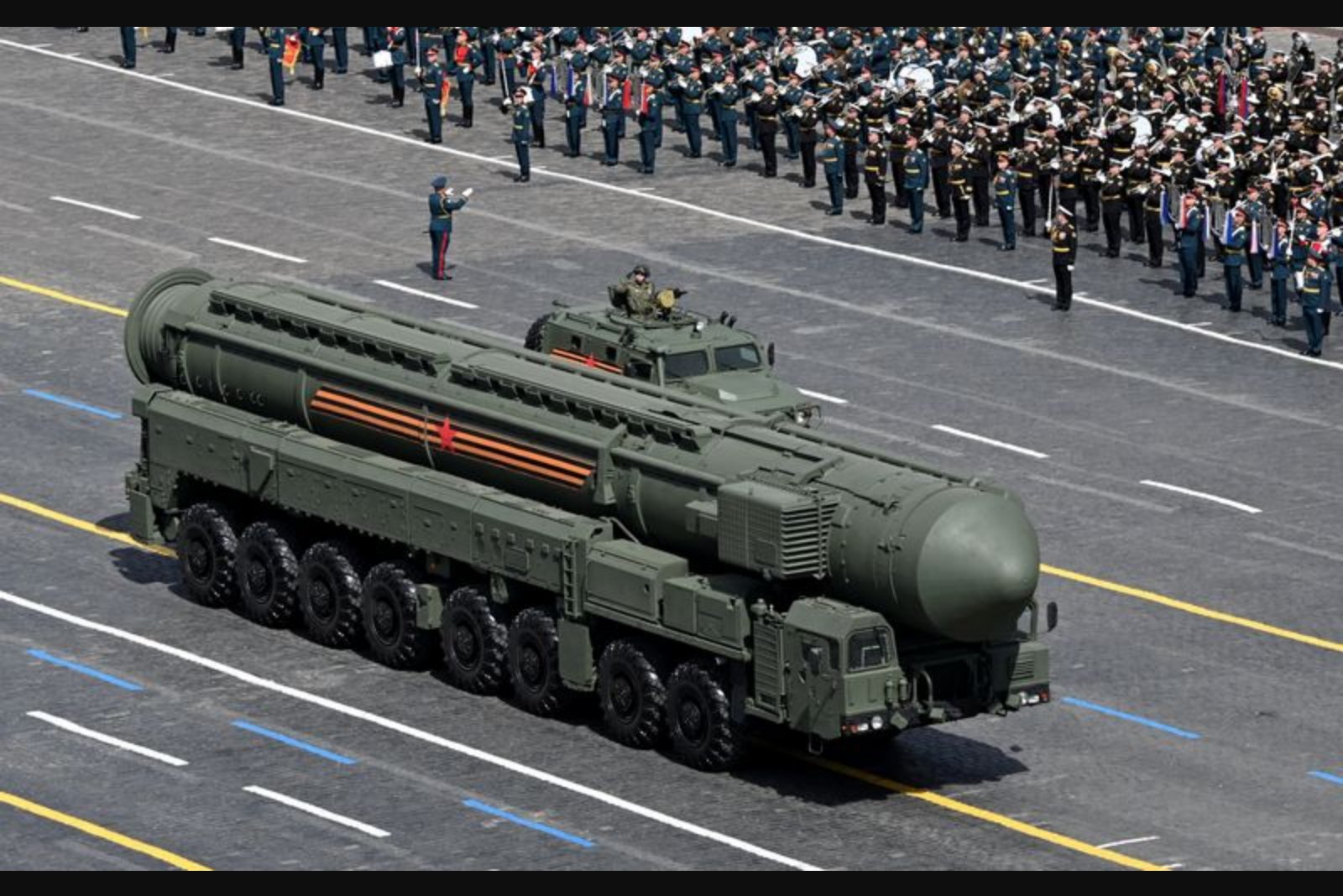
MOSCOW, Feb 5 - The Kremlin said on Thursday that Russia intends to continue to act responsibly on matters of strategic nuclear stability, even as the most recent bilateral arms control treaty with the United States lapses.
Kremlin spokesman Dmitry Peskov told reporters that the New START agreement - which placed limits on each side's missiles, launchers and strategic warheads - would expire at the end of Thursday. He noted that arms control experts had earlier been operating on the assumption the treaty would expire at the end of Wednesday.
"Today the day will end, and it (the treaty) will cease to have any effect," Peskov said.
According to the Kremlin, Russia proposed that both parties voluntarily extend the treaty's provisions for one year. The purpose of that proposal, Moscow said, was to allow time for negotiations on a successor agreement. The Kremlin also said the United States never issued a formal response to that suggestion.
Peskov described the treaty's termination as negative and expressed regret at its ending. He added that the subject had been discussed in a telephone conversation between President Vladimir Putin and Chinese President Xi Jinping a day earlier.
"The agreement is coming to an end. We view this negatively and express our regret," Peskov said.
Addressing the uncertainty about future developments, he said: "What happens next depends on how events unfold. In any case, the Russian Federation will maintain its responsible and attentive approach to the issue of strategic stability in the field of nuclear weapons and, of course, as always, will be guided first and foremost by its national interests."
The Kremlin's statements reaffirm Moscow's declared intent to remain measured on nuclear issues despite the expiry of the New START treaty and highlight that efforts to secure a voluntary extension were, according to Russia, not formally answered by Washington. The immediate diplomatic and strategic implications were framed by the Kremlin as contingent on how events proceed.
Key points
- Russia says it will preserve a responsible approach to strategic nuclear stability after New START lapses.
- Moscow proposed a voluntary one-year extension to allow time for talks on a successor treaty; it says the United States never formally replied.
- The treaty's end was discussed between President Putin and President Xi Jinping a day before the Kremlin's announcement.
Risks and uncertainties
- Uncertainty over next steps - Peskov said outcomes will depend on how events unfold, leaving diplomatic and strategic trajectories unclear.
- Absence of a formal U.S. response to Russia's extension proposal - Moscow reports no formal answer, which contributes to unresolved negotiation status.
- Expiry timing confusion - arms control experts had previously assumed the treaty would expire a day earlier, reflecting differing interpretations of the lapse date.