
World April 5, 2026

King Charles and Queen Camilla Attend Windsor Easter Service as Some Family Members Stay Away

St George's Chapel congregation included Prince William and family; Prince Andrew and two princesses absent amid ongoing controversies

By Caleb Monroe
King Charles and Queen Camilla Attend Windsor Easter Service as Some Family Members Stay Away

King Charles and Queen Camilla attended the annual Easter Matins at Windsor Castle, joined by Prince William, Catherine and their three children. Prince Andrew, who faces a police investigation, did not attend, and Princesses Beatrice and Eugenie were also absent by their own decision. The Easter observances included a sermon by the archbishop of Canterbury at Canterbury Cathedral.

Key Points

  • King Charles and Queen Camilla attended Easter Matins at St George's Chapel with Prince William, Catherine and their three children present, alongside Prince Edward and Princess Anne.
  • Prince Andrew was absent following his February arrest on suspicion of misconduct in public office; Princesses Beatrice and Eugenie also did not attend by their own choice.
  • The Easter observances included Sarah Mullally delivering her first Easter sermon as archbishop of Canterbury, and the timing of the king's upcoming U.S. state visit was highlighted by calls from Virginia Giuffre's family to meet survivors.

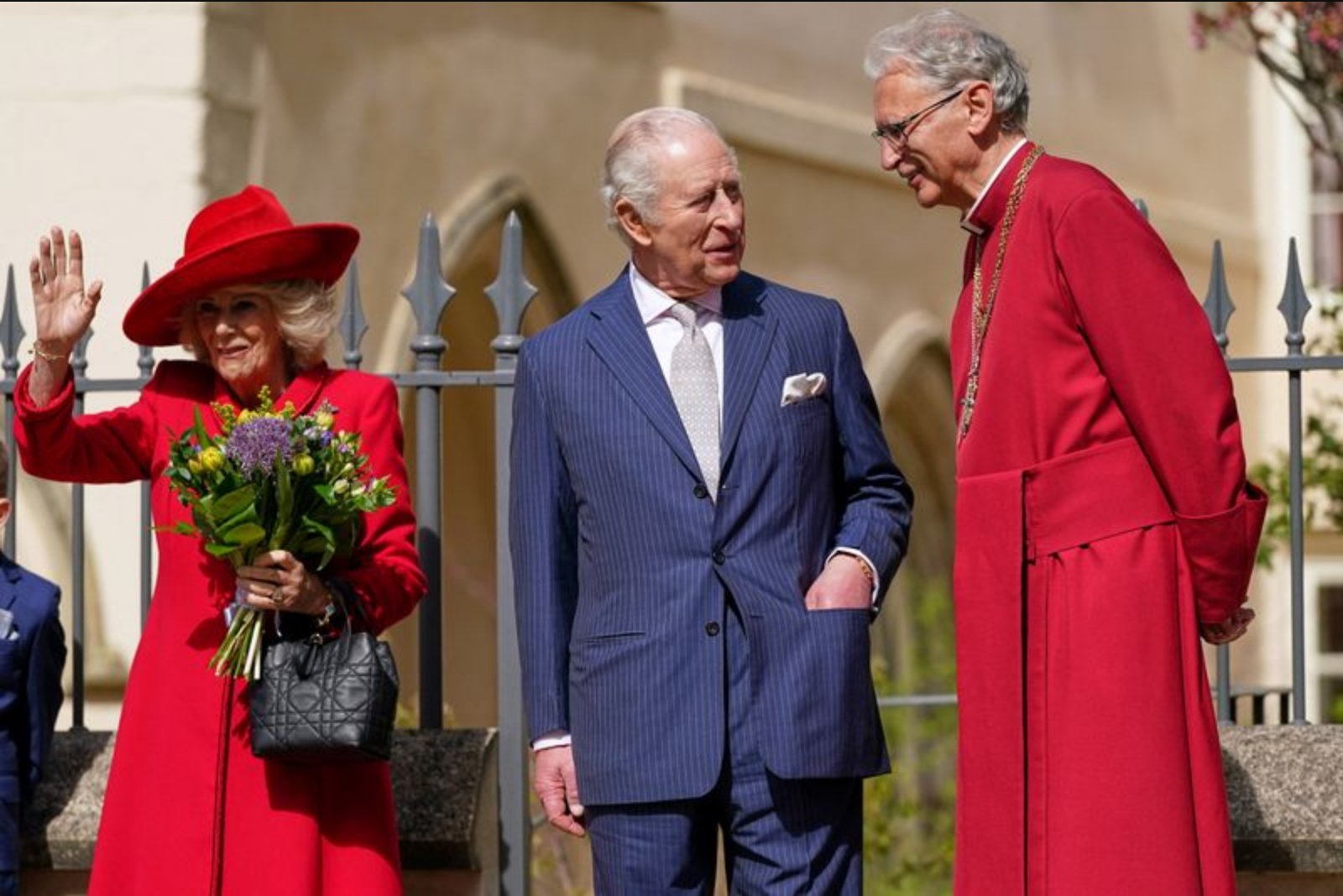
LONDON, April 5 - King Charles and Queen Camilla were present at the traditional Easter Matins service at St George's Chapel, Windsor Castle, on Sunday, attending one of the central religious observances in the monarch's calendar.

The service, which is an established fixture for the sovereign in his role as supreme governor of the Church of England, saw the king accompanied by his eldest son and heir, Prince William, together with William's wife Catherine and their three children. Other senior royals in attendance included Prince Edward and Anne, the Princess Royal.

On arrival at St George's Chapel, the Dean of Windsor, Christopher Cocksworth, greeted King Charles and Queen Camilla. The queen wore a red hat and coat and was handed a posy of flowers. After the service ended, Charles and Camilla exchanged greetings with members of the crowd, offering a "Happy Easter" to those gathered.

Notable absences at the Windsor service included the monarch's younger brother, Prince Andrew, Duke of York, and the king's daughters, Princesses Beatrice and Eugenie. Andrew, who had attended last year’s Easter gathering with his former wife Sarah Ferguson, did not take part this year after being arrested in February on suspicion of misconduct in public office. The princesses' absence on Sunday, sources said last week, was their own choice and not directed by the king.

The Easter period also intersected with broader public attention on issues linked to allegations involving Jeffrey Epstein and his associates. The family of Virginia Giuffre - who had accused the late financier of trafficking her to Prince Andrew when she was 17 - urged King Charles on Saturday to meet survivors during the king's state visit to the United States later this month. They said the visit coincided with the anniversary of Giuffre's death. Giuffre had alleged that Epstein trafficked her to Andrew; the former prince has denied those allegations and said he had no recollection of meeting her. He reached an out-of-court settlement with Giuffre in 2022 without admitting wrongdoing.

Separately, the Church of England marked the holiday with a notable sermon: Sarah Mullally, the archbishop of Canterbury and the first woman to head the Church of England, delivered her first Easter sermon at Canterbury Cathedral on Sunday.


This year King Charles did not deliver a formal Easter message.

Risks

  • Ongoing legal and reputational matters related to Prince Andrew - potential implications for the royal family's public standing and institutional trust in the Church of England and related ceremonial events.
  • Public scrutiny tied to the timing of the king's state visit to the U.S., as raised by the family of Virginia Giuffre - a potential diplomatic and reputational sensitivity for the monarchy during international travel.
  • Absences of senior royals from high-profile public religious services may affect public perception and attendance at ceremonial events, with possible knock-on effects for sectors tied to royal events such as tourism and heritage services.

More from World

Russia Calls on U.S. to Drop ‘Language of Ultimatums’ and Return to Negotiations Over Iran Apr 5, 2026 Keiko Fujimori Leads Peru’s Presidential Race as Voter Field Remains Fragmented Apr 5, 2026 Cuellar Backs Mexico to Overcome 'Fifth-Game' Barrier, Raises Concerns Over Tickets and U.S. Immigration Rules Apr 5, 2026 Easter Strikes in Lebanon Kill at Least 11 as Conflict Intensifies Apr 5, 2026 Airstrike in Gaza City Kills Four as Fragile Ceasefire Faces New Strains Apr 5, 2026