
World April 9, 2026 04:59 AM

Kenya Rebuts U.N. Finding on Sexual Abuse Claims Involving Haitian Mission

Nairobi contests a U.N. human rights report that said four allegations against a predominantly Kenyan anti-gang unit in Haiti were substantiated

By Ajmal Hussain
Kenya Rebuts U.N. Finding on Sexual Abuse Claims Involving Haitian Mission

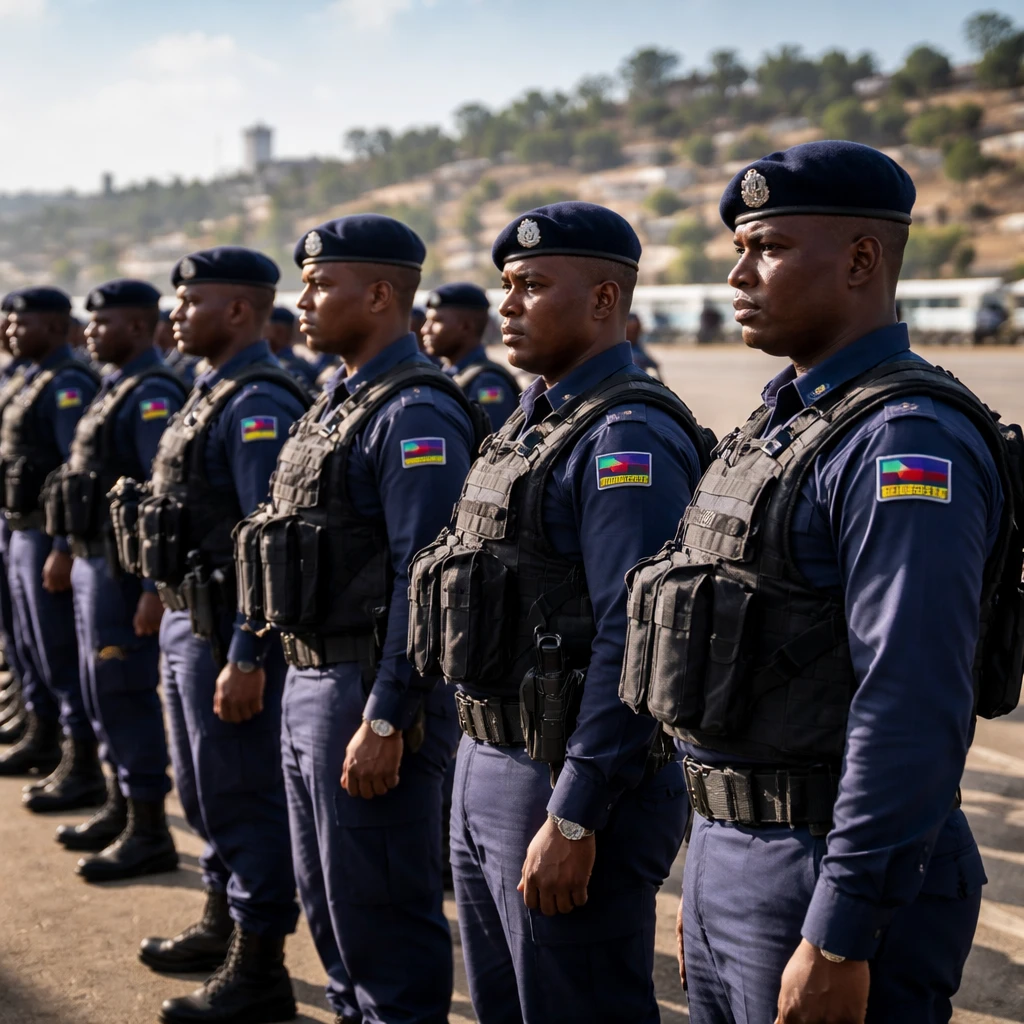
Kenya has formally challenged a U.N. Human Rights Office report that concluded four allegations of sexual exploitation and abuse against members of a U.N.-backed anti-gang force in Haiti were substantiated. In a letter to U.N. Secretary-General Antonio Guterres, Kenya's foreign minister said a domestic board of inquiry found the same allegations unsubstantiated and that the investigations were impartial and shared with stakeholders. The force, largely composed of Kenyan police, was deployed to Haiti in June 2024 and numbers about 1,000 personnel.

Key Points

  • Kenya has formally disputed a U.N. Human Rights Office report that said four allegations of sexual exploitation and abuse against members of a U.N.-backed anti-gang force in Haiti were substantiated.
  • A Kenyan board of inquiry reviewed the same allegations and concluded they were unsubstantiated; Kenya's foreign minister said the investigations were impartial and shared with relevant stakeholders.
  • The force is composed mostly of Kenyan police, numbers about 1,000 personnel, and was first deployed in June 2024 to address gangs controlling much of Haiti's capital. Sectors impacted include international security, diplomatic relations, and peacekeeping operations.

Nairobi has pushed back against a United Nations report that the U.N. Human Rights Office had substantiated four allegations of sexual exploitation and abuse involving personnel serving in a U.N.-backed anti-gang force in Haiti.

The U.N. document, dated Feb. 16 and first reported last week, said investigators had substantiated four allegations from last year directed at members of the multinational unit, which is staffed predominantly by Kenyan police officers.

In response, Kenya's Foreign Minister Musalia Mudavadi sent a letter this week to U.N. Secretary-General Antonio Guterres disputing those findings. Mudavadi wrote that a Kenyan board of inquiry had reviewed the allegations and "found to be unsubstantiated." He also stated that the "investigations conducted were impartial and shared with all relevant stakeholders, including U.N. human rights offices."

A U.N. representative in Kenya did not immediately respond to a request for comment on Thursday regarding Kenya's challenge to the U.N. report.

Kenya provides most of the personnel for the roughly 1,000-strong force, which first deployed in June 2024 with a mandate to confront gangs that control large portions of Haiti's capital. The unit's composition and deployment timeline were cited in the U.N. report and in Kenya's response.

The dispute over the investigative conclusions comes against a backdrop of prior accusations of sexual exploitation and abuse involving U.N. peacekeepers in Haiti. The article notes that during the MINUSTAH mission from 2004 to 2017, there were widespread accusations, including allegations involving child victims, and that only a small number of peacekeepers were prosecuted by their home countries.


The correspondence between Nairobi and the U.N. underscores a clear divergence in conclusions reached by different investigative bodies: the U.N. Human Rights Office reported substantiated allegations, while Kenya's board of inquiry reached the opposite determination. The U.N. document's date and Kenya's letter to the secretary-general are central to the official record presented by both sides.

As of the latest exchange referenced in the U.N. report and Kenya's letter, the situation remains one of contested findings and limited public clarification, with the U.N. office in Kenya not having issued an immediate reply to requests for comment.

This dispute involves factual claims about specific allegations and the outcomes of separate investigations; the public record reflected in the U.N. report and Kenya's letter is the basis for the differing positions.

Risks

  • Divergent findings between the U.N. Human Rights Office and Kenya's board of inquiry create uncertainty about the factual record and accountability for the allegations, affecting international oversight of peacekeeping operations (impacts: security, diplomacy).
  • A lack of immediate comment from the U.N. representative in Kenya leaves outstanding questions and limits clarity about follow-up actions or further investigation (impacts: diplomatic communications, international institutions).
  • Historical patterns noted in the record - that only a few peacekeepers were prosecuted during the MINUSTAH mission despite widespread accusations - point to ongoing challenges in accountability mechanisms for peace operations (impacts: rule-of-law, defense and peacekeeping sectors).

More from World

Lawyers for Sean 'Diddy' Combs Argue Appeals Court Should Overturn Conviction and Sentence Apr 9, 2026 Funding Shortfall Threatens Basic Aid for Over 1.3 Million Sudanese Refugees in Chad Apr 9, 2026 U.S. Expands Nigeria Travel Warning and Authorises Non-Emergency Embassy Departures Apr 9, 2026 Trump Signals Continued U.S. Military Presence as Iran Peace Talks Face Strains Apr 9, 2026 Iran Rejects Talks as Israel Intensifies Strikes on Lebanon, Raising Energy and Market Risks Apr 9, 2026