
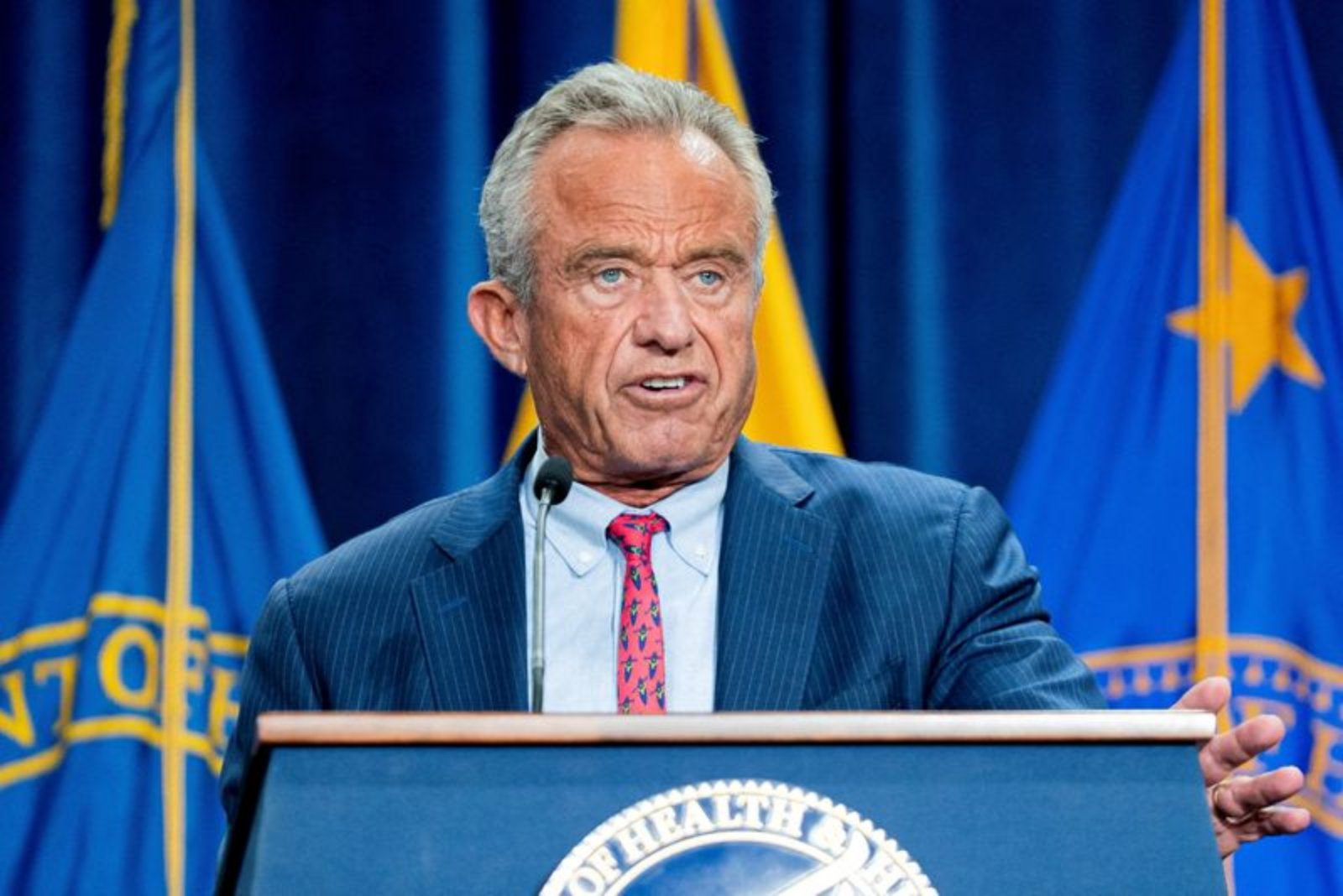
U.S. Health Secretary Robert F. Kennedy Jr. signed a new charter on March 31 that reshapes the advisory framework for the Centers for Disease Control and Prevention's vaccine advisory committee, broadening the panel's remit to place greater emphasis on vaccine risks and perceived gaps in safety evidence. The document was posted publicly on Thursday.
The charter change comes after a federal judge last month determined that most of the prior members of the committee were unqualified, effectively freezing the panel's prior decisions. In a March 16 ruling, U.S. District Judge Brian Murphy of Boston concluded that the Advisory Committee on Immunization Practices, which counsels the CDC on vaccine use, had been unlawfully reconstituted. The judge's decision followed the removal last year by Kennedy of all 17 independent experts who previously served on the panel and the appointment of several new members who share many of Kennedy's controversial views on vaccines.
The revised ACIP charter expands the pool of potential panelists beyond professionals whose primary expertise is the use and research of vaccines and immunization practices. It specifically lists toxicology and data science among the disciplines now considered relevant, and adds individuals with "expertise in the assessment of vaccine safety and efficacy."
Academics and public health experts reacted to the revised language by warning it lowers the threshold for scientific credentials on the committee. Dorit Reiss, a law professor at UC Law San Francisco who specializes in vaccine policy, said the new charter weakens the expertise requirement by using the term "knowledgeable," which she warned "could make it harder for judges to demand expertise."
The charter also designates four additional organizations to serve as non-voting liaisons to the committee. Among those named are the Association of American Physicians and Surgeons, the Independent Medical Alliance and Physicians for Informed Consent - organizations that have publicly expressed anti-vaccine viewpoints. Another named group is the Medical Academy of Pediatrics and Special Needs, an organization advocating for children with autism.
The inclusion of such groups expands the committee's formal lines of input from organizations that have questioned vaccine safety. Kennedy has long asserted that childhood vaccines cause autism, a claim the charter and federal filings highlight as at odds with decades of scientific evidence showing vaccines to be safe.
Earlier in the week, the Department of Health and Human Services, under Kennedy's leadership, published a notice stating a new charter would be issued that broadens the types of expertise considered for service on the advisory panel. The ACIP issues recommendations that influence how vaccines are used and which vaccines are covered by insurance, including guidance that shapes the U.S. childhood immunization schedule.
An HHS spokesman, Andrew Nixon, characterized the renewed ACIP charter and its publication as routine. He said the charter renewal "are routine statutory requirements and do not signal any broader policy shift."
Critics contend the charter will ease the reconstitution of the committee in ways that could introduce greater politicization into ACIP deliberations. Daniel Jernigan, a former director of the CDC's National Center for Emerging and Zoonotic Infectious Diseases who resigned in August along with two other senior CDC leaders in protest over Kennedy's vaccine policies, said the new charter will make it easier to rebuild the committee and "further politicizes the discussion at the meeting."
The American Academy of Pediatrics brought the court challenge that led to last month's ruling. Richard Hughes IV, lead counsel for the academy, said it was too early to know whether his organization would take additional legal action over the new charter. "It really remains to be seen how they reconstitute the committee," he said.
Summary
The Health Secretary signed a revised ACIP charter expanding membership criteria to include toxicology and data science, appointing several groups with anti-vaccine reputations as non-voting liaisons, and following a federal court ruling that found the committee had been unlawfully reconstituted after the removal of 17 prior experts.
Key points
- The new charter broadens who may serve on ACIP to include toxicologists, data scientists and those with expertise in assessing vaccine safety and efficacy.
- Four additional organizations, including groups that have expressed anti-vaccine views, were named as non-voting liaisons to the committee.
- The change follows a federal court decision that declared the earlier reconstitution unlawful and placed prior committee decisions on hold.
Risks and uncertainties
- Legal uncertainty - The charter change may prompt further legal challenges depending on how the committee is reconstituted; this primarily affects public health institutions and legal services advising them.
- Policy and political risk - Critics say the new criteria could politicize the advisory process, which may influence vaccine policy and insurance coverage decisions relevant to the healthcare and insurance sectors.
- Scientific credibility - Broadening membership criteria and including organizations with anti-vaccine views as liaisons may raise questions about the committee's scientific rigor, affecting public trust in vaccination programs and public health communications.