
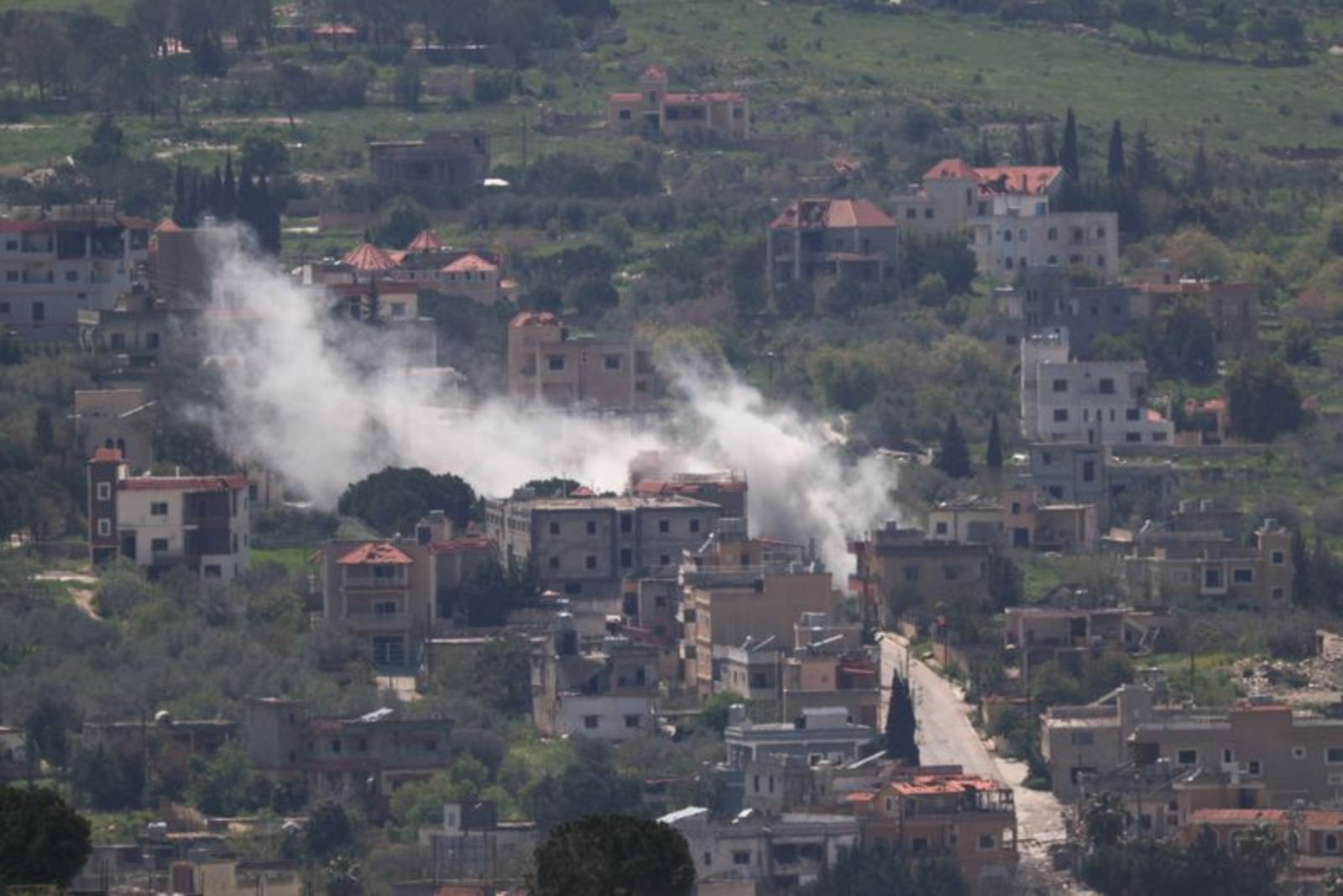
BEIRUT/JERUSALEM — Israeli military forces began a focused operation on Monday to capture the strategically significant south Lebanon town of Bint Jbeil, after completing an encirclement and initiating a ground assault, Israeli and Lebanese security officials said. The push came on the eve of a rare, in-person diplomatic meeting in Washington between the Lebanese and Israeli ambassadors, convened by the United States.
Lebanese security sources and an Israeli military spokesperson described Bint Jbeil as a Hezbollah stronghold where fighters have entrenched themselves and, according to Lebanese officials, are prepared to resist fiercely because of the town’s strategic and symbolic value. An Israeli military official said operational control of Bint Jbeil was expected to be achieved within days and that only a limited number of militants remained in the immediate area.
Hezbollah reported that it had struck Israeli forces in and around Bint Jbeil on Sunday with rockets, artillery fire and suicide drones. A foreign security official based in Lebanon said capturing the town would give Israel more complete control over the southeastern stretch of Lebanon’s border strip, while noting that the western border sector is largely forested and harder to clear.
Diplomatic encounter in Washington
The diplomatic meeting set for Tuesday in Washington will bring together Israeli Ambassador Yechiel Leiter and Lebanon’s Ambassador Nada Hamadeh Moawad at the U.S. ambassador to Lebanon’s residence, Michel Issa said. Lebanese officials said the session would be used to press for a ceasefire in a conflict that has complicated wider diplomatic efforts across the region.
Lebanon’s culture minister, Ghassan Salameh, told local broadcaster Al Jadeed that negotiating a ceasefire was the only substantive mandate given to the Lebanese ambassador for the Washington talks. At the same time, Israel’s embassy in Washington described the discussion as the start of "formal peace negotiations," while stating that Israel had declined to negotiate a ceasefire with Hezbollah.
Lebanese Foreign Minister Youssef Raggi, a member of the anti-Hezbollah Lebanese Forces party, said Lebanon intended to pursue a ceasefire through direct talks. After a phone call with German Foreign Minister Johann Wadephul, Raggi posted on X that establishing this diplomatic track had effectively separated the Lebanese file from the Iranian track.
Domestic political divisions in Lebanon
Officials close to Lebanon’s political leadership said the talks in Washington were proceeding without a national consensus. Sources described opposition from Hezbollah and its Shiite ally, Parliament Speaker Nabih Berri, to entering negotiations before a ceasefire was secured. One source familiar with their stance said Lebanon should not sit down with Israel while "our people are being killed."
The disagreement reflects deepening political tensions inside Lebanon over how to approach any engagement with Israel while the conflict persists on Lebanese soil.
Context of the fighting
Hezbollah opened fire on Israel on March 2, in what the group said was an action in support of Tehran. Israel responded with a military offensive that Lebanese authorities say has resulted in more than 2,000 deaths and has forced over 1 million people from their homes. Israel states that one of its aims is to secure and occupy south Lebanon up to the Litani River, which meets the Mediterranean roughly 30 km (20 miles) from Israel’s border.
While fighting in southern Lebanon has continued, Israel has not launched airstrikes on Beirut since Wednesday of last week, following heavy bombardment that struck the Lebanese capital and killed hundreds across the country.
Positions and statements
Israel and the United States have said that the campaign against Hezbollah is not part of what they describe as a fragile Iran-U.S. ceasefire arrangement, even though an intermediary had previously suggested the truce would include Lebanon. The Israeli military noted its refusal to discuss a ceasefire with Hezbollah, a stance that has helped shape the diplomatic contours heading into the Washington meeting.
Lebanese officials stressed the goal of the envoy-level meeting would be to press for an end to hostilities. Yet political actors inside Lebanon have signaled that any direct engagement with Israel will remain politically contentious while battle conditions prevail and civilian casualties mount.
On-the-ground implications
Securing Bint Jbeil, if achieved as the Israeli military projected within days, would alter control dynamics along the southeastern border strip and potentially affect nearby villages and routes. Lebanese sources warned that fighters inside the town intend to fight to the end, underscoring the possibility of intense clashes as Israeli forces press their operation.
The diplomatic track opened in Washington is being watched closely, but it enters a fraught political environment in which participants disagree not only about tactical battlefield goals but also about the legitimacy of negotiating without a ceasefire already in place.
What remains unclear
How far the Washington talks can progress given the absence of consensus in Beirut, Hezbollah’s objections to negotiating with Israel, and Israel’s stated refusal to treat certain issues with the Iran-backed group remains uncertain. The immediate military situation around Bint Jbeil may also determine the tone and practical outcomes of any diplomatic engagement.