
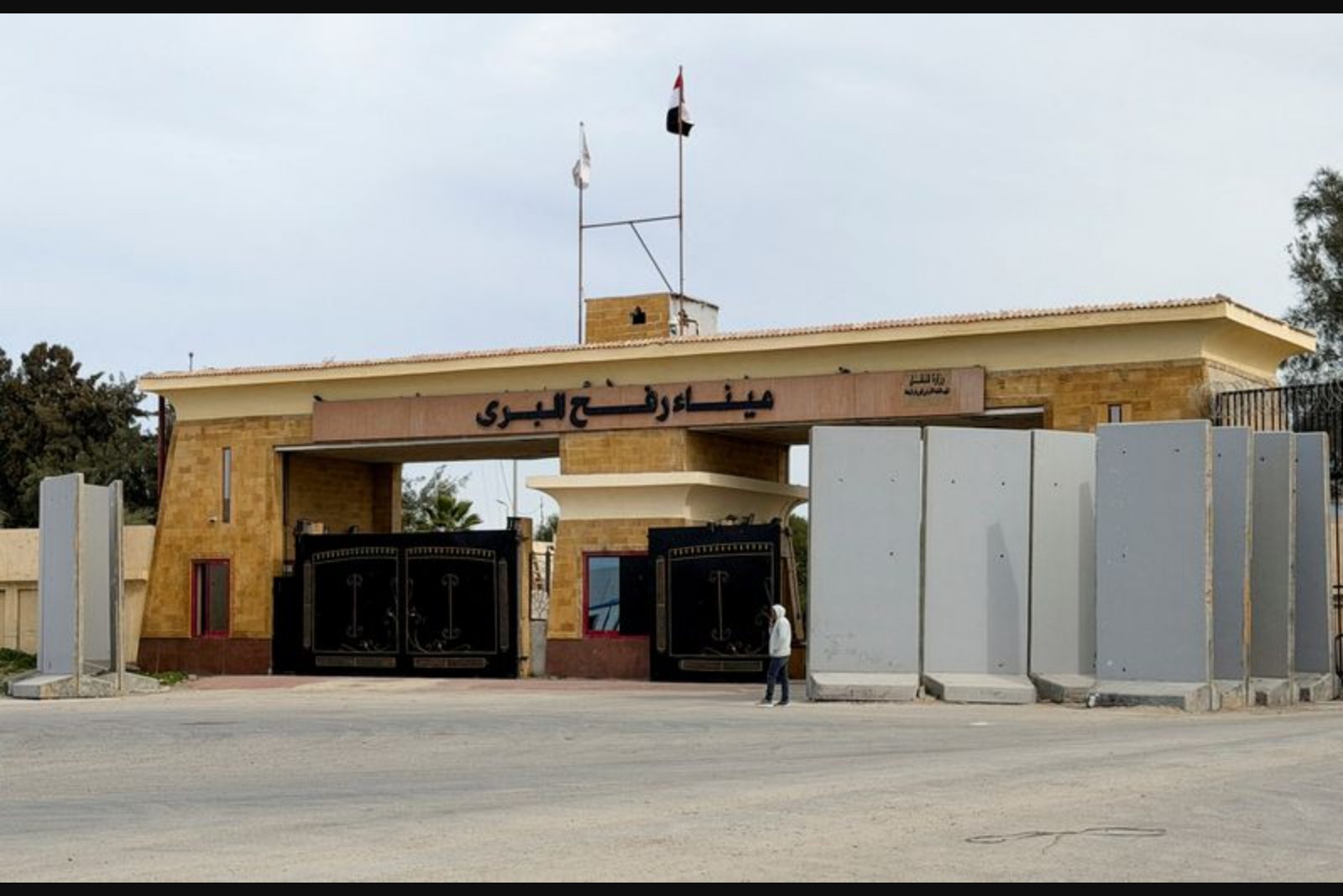
Israel announced that the Rafah border crossing into Egypt will reopen on Sunday, allowing people to travel between the Gaza Strip and Egypt for the first time since Israel took control of the crossing in May 2024.
The Coordinator of Government Activities in the Territories (COGAT), the Israeli agency responsible for civilian policy in Gaza, said the reopening will permit the return of residents from Egypt to Gaza - but only those who left during the course of the war, and only after they receive prior security clearance from Israel. COGAT did not provide a daily quota for how many of Gaza's more than 2 million residents will be allowed to cross.
Israel seized control of the Rafah crossing in May 2024, about nine months into the Gaza war. The decision to reopen the crossing was cited as an important element of the first phase of U.S. President Donald Trump’s plan to halt hostilities between Israel and Hamas militants, following a ceasefire that was agreed in October. Israeli officials had linked reopening the crossing to the recovery of the body of the last Israeli hostage in Gaza; that recovery occurred this week.
According to a source familiar with the matter, the crossing will open despite ongoing negotiations between Egypt and Israel over entry and exit conditions. The source said Israel is seeking to limit the number of people entering Gaza through Rafah so that more people are permitted to leave Gaza than to enter it; Egypt has not agreed to that condition. The same source said Israel wants to allow roughly 150 people to return per day.
COGAT’s statement emphasized that the reopening will be strictly for the movement of people. Humanitarian organizations have pointed out that Gaza remains in urgent need of vital supplies, and say Israeli restrictions have impeded the delivery of aid.
Mirjana Spoljaric, president of the International Committee of the Red Cross (ICRC), highlighted the humanitarian consequences in a statement on Friday, noting that many people in Gaza continue to live amid rubble without basic services and are struggling to keep warm in harsh winter conditions. She urged an easing of constraints on so-called "dual use" items - such as water pipes and generators - which she said are essential to restoring critical infrastructure.
Israel has for years applied a policy of inspecting trucks destined for Gaza to prevent the entry of items it considers to have potential dual use - civilian or military. That policy long predates the Oct. 7 Hamas attack and the subsequent war, and remains in force as aid deliveries continue to be scrutinized.
The broader context remains stark: Gaza has been heavily damaged by what the Israeli government describes as a two-year offensive, leaving much of the territory in ruins and displacing nearly the entire population. The reopening of Rafah for people - without a parallel easing of restrictions on supplies - leaves unanswered questions about how and when essential infrastructure and humanitarian needs will be addressed.
What to watch next
- Whether Egypt agrees to Israel’s proposed limits on the number of people entering Gaza versus those allowed to leave.
- How strictly the requirement for prior Israeli security clearance will be applied and how that will affect the pace of returns.
- Whether humanitarian access for goods such as water pipes and generators will be eased alongside the reopening for people.