
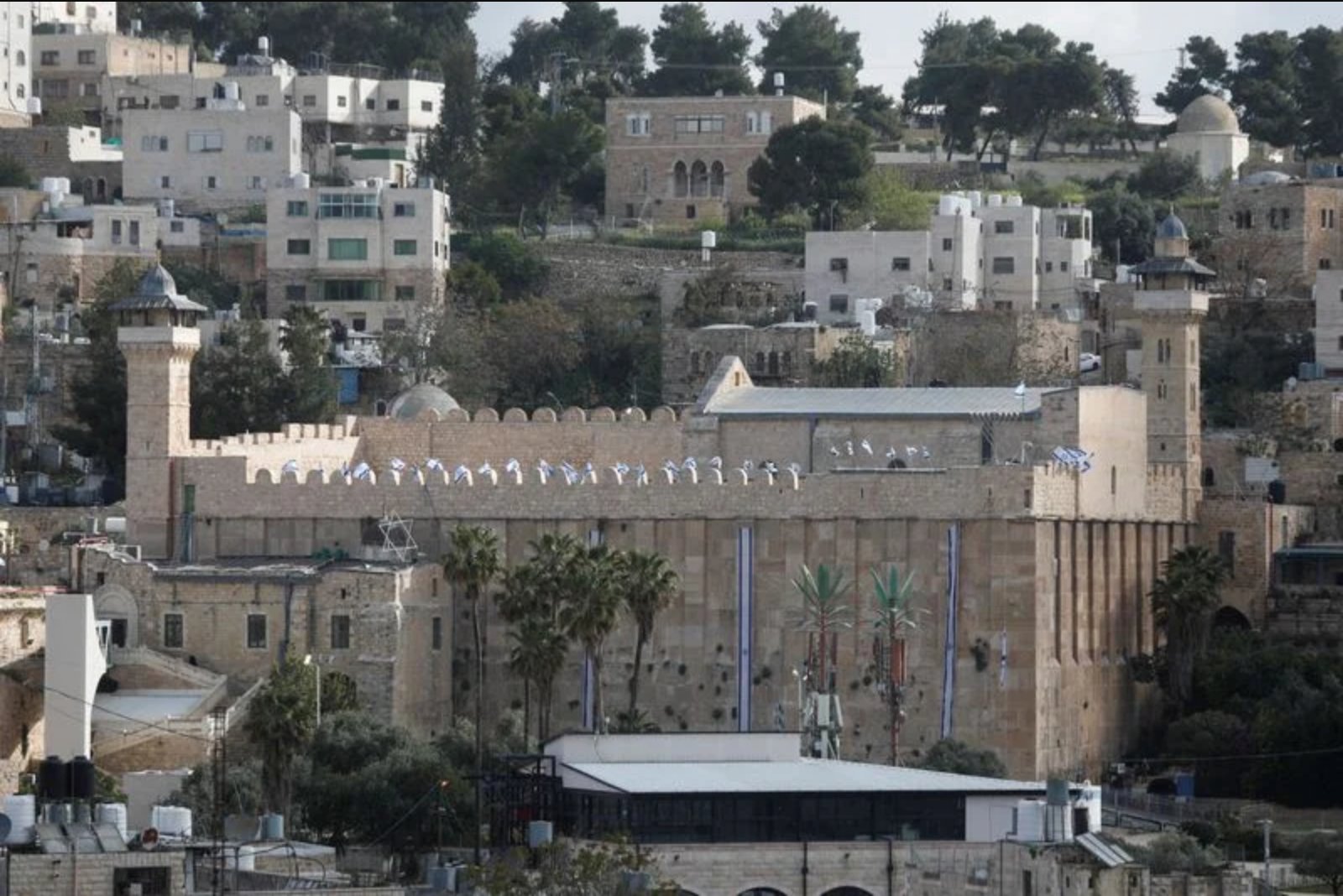
Israel has moved to retake planning and construction powers in and around a highly sensitive religious complex in the occupied West Bank, transferring responsibilities from Palestinian municipal authorities to Israeli control, Finance Minister Bezalel Smotrich said on Tuesday. The change affects the Jewish Tomb of the Patriarchs and the adjoining Muslim Ibrahimi Mosque in Hebron's Old City.
Under the 1997 Hebron Agreement, Palestinians had been granted authority over planning and construction across the city, including the shrine that is sacred to Jews, Muslims and Christians. That arrangement remains formally recognised in parts of international discourse - Hebron's Old City is listed as a Palestinian World Heritage site - but Smotrich said he signed off late on Monday on an alteration that moves planning and construction jurisdiction for the site and nearby Jewish settler locations to Israeli hands.
Smotrich, a minister known for his far-right views, described the move as a "historic step" that would further "Israeli sovereignty" in the West Bank - a territory Palestinians view as central to any future independent state. He made the statements while marking the establishment of a new Israeli settlement near Hebron.
Palestinian officials reacted sharply. The office of Palestinian President Mahmoud Abbas said the transfer of powers constituted an "infringement upon the political and legal status of Hebron" and asserted it amounted to a violation of international law. The Palestinian mayor of Hebron, Yousef Al-Jabari, characterised the announcement as a "racist decision aimed at stripping the Hebron municipality of its powers."
The Israeli foreign ministry sought to temper perceptions that the 1997 agreement had been entirely overturned. It said that the security cabinet decided several months ago to assume control over planning and construction specifically in relation to Jewish settler areas and Jewish holy sites, and noted difficulties in cooperation with the Palestinian municipality over such matters.
Hebron's demography and governance are complex. Hundreds of Jewish settlers live within parts of the ancient city where tens of thousands of Palestinians also reside, and where security responsibilities are exercised by Israeli forces. The city contains a site revered across faiths: Jews hold that the Cave of the Patriarchs is the burial place of Abraham, Isaac and Jacob and their wives, while Muslims maintain the adjoining Ibrahimi Mosque, built in the 14th century, is likewise sacred.
Politically, the move is the latest in a series of steps by the current Israeli government to expand administrative and enforcement powers in the West Bank. Earlier this year the security cabinet approved measures intended to make it easier for settlers to acquire land in the territory and to increase Israeli enforcement capabilities there. Smotrich has publicly supported rapid settlement expansion and has stated his opposition to the concept of a Palestinian state in the West Bank.
International bodies and most countries have treated Israel's settlement enterprise in the West Bank as illegal and view settlement growth as a major impediment to Israeli-Palestinian peace and the prospect of Palestinian statehood. Israel disputes that legal framing, describing the area as disputed and asserting a long-standing Jewish presence.
Observers note a correlation between settlement expansion policies and an uptick in violence. The period since the government's policy shifts has seen a rise in settler attacks on Palestinians, according to reporting and statements cited by international organisations. Hebron itself has a history as a flashpoint for deadly violence - one of the worst single attacks occurred in 1994 when a Jewish settler killed 29 Muslims at the shrine during prayers. United Nations data referenced by officials indicate settlers have killed 13 Palestinians so far this year.
Domestic politics are also relevant. Israel is due to call an election by the end of October, and Smotrich, a settler who has long advocated annexation of the West Bank, is reported to be trailing in opinion polls. His party derives significant support from ideologically motivated settlers who consider the West Bank their biblical heartland.
The transfer of planning and construction authority over Hebron's shrine and nearby settler areas underscores the tensions between municipal governance, religious sensitivities and national policy. It also raises questions about implementation on the ground - from building permits to enforcement - in an urban environment where dense, mixed habitation and heightened security presence make municipal decision-making both technically and politically fraught.
For now, Israeli officials stress the change targets specific Jewish settler areas and holy sites rather than nullifying the entire 1997 arrangement, while Palestinian leaders and representatives frame the step as a significant challenge to Hebron's legal and political status and to prospects for negotiated resolution of status issues in the city.
Note: The reporting includes statements from Israeli ministers and Palestinian officials describing the transfer of powers and reactions; it references the 1997 Hebron Agreement and existing international positions regarding settlements. The factual record also cites past incidents of violence associated with the shrine and recent U.N.-reported fatalities.