
Even while the United States and Iran formalize a pause in fighting to negotiate a broader end to the conflict that began on February 28, Israel has moved to enlarge and entrench defensive perimeters beyond its borders. Six Israeli military and defence officials said the strategy, which has produced buffer zones in Gaza, Syria and now Lebanon, reflects a deliberate shift since the October 7, 2023 attacks toward a prolonged, semi-permanent state of hostilities rather than a search for a decisive military end.
Those officials argue the new posture accepts a hard reality that has become clearer over two-and-a-half years of intermittent fighting: the clerical leadership in Tehran, Hezbollah in Lebanon, Hamas in Gaza and a range of militias across the region cannot simply be eliminated. Instead, Israeli leaders have concluded they face a protracted contest that must be managed through deterrence, dispersal and the physical separation of armed actors from Israeli towns and installations.
"Israel's leaders have concluded that they are in a forever war against adversaries who have to be intimidated and even dispersed," said Nathan Brown of the Carnegie Endowment for International Peace. That characterization captures the logic behind the creation of security belts that push potential launch sites, weapons caches and observation points back from the frontier.
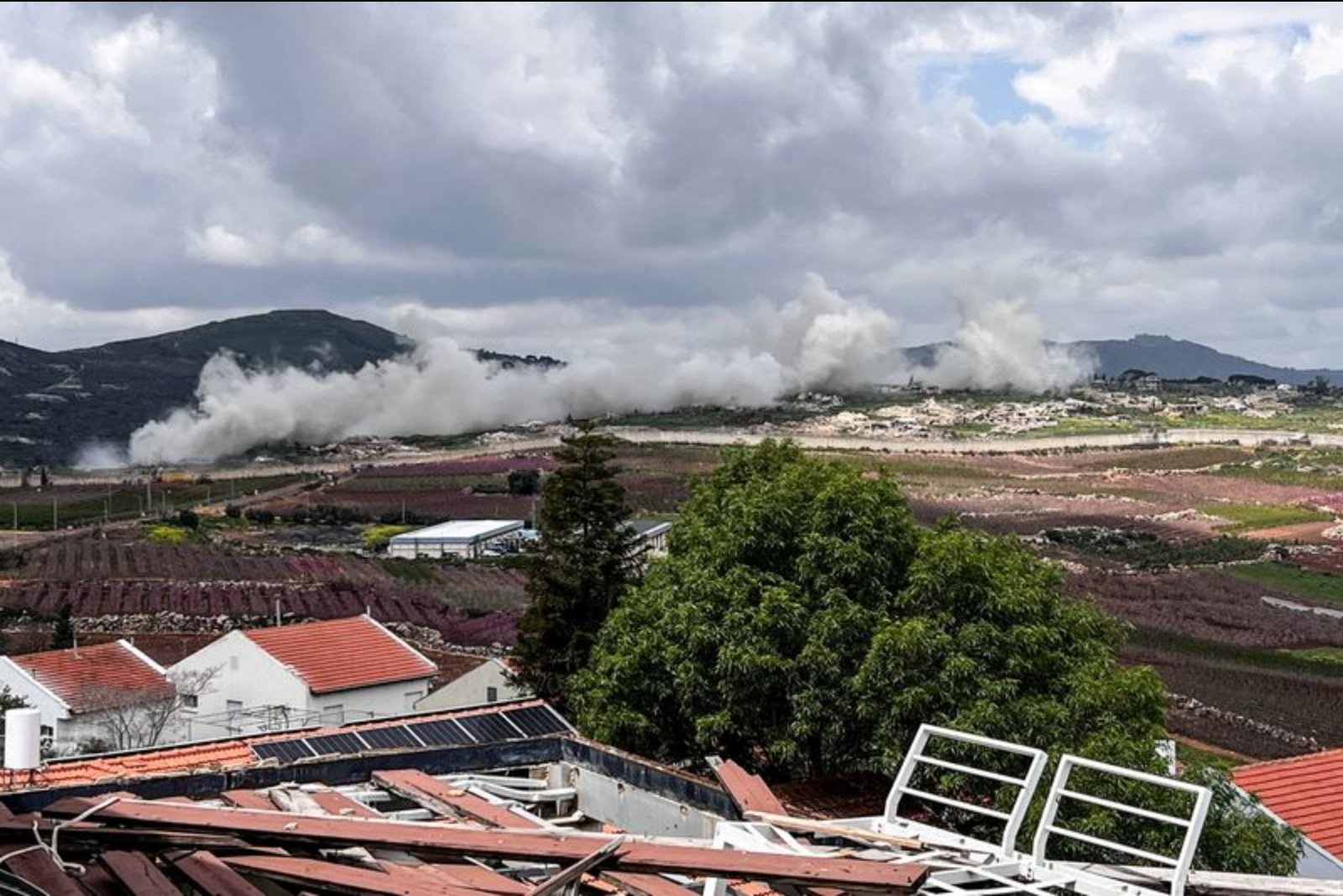
The United States and Iran on Wednesday agreed to a pause in hostilities while they attempt to negotiate a broader settlement. As part of that understanding, Israel agreed to halt its strikes on Iran, but has made clear it will continue operations aimed at Iranian-backed Hezbollah. The confrontation with Hezbollah escalated after the group fired rockets at Israel on March 2; Israel then launched a ground operation into southern Lebanon intended to clear a buffer zone reaching up to the Litani River - an area that constitutes roughly 8% of Lebanese territory.
Authorities have ordered hundreds of thousands of residents from that zone to evacuate. Israeli forces are in the early stages of demolishing houses in Shi'ite villages they assess have been used by Hezbollah for weapons storage or as staging points for attacks. A senior military official, speaking on condition of anonymity for operational security, described the objective as "clearing" an area that would extend 5-10 km beyond the international border so that Israeli frontier communities sit beyond the range of rocket-propelled grenades and other direct-fire weapons.
In some of the Lebanese villages closest to the frontier, Israeli troops reportedly found evidence suggesting that nearly 90% of homes contained weapons or materiel linked to Hezbollah. For military planners, those findings mean such homes are effectively enemy military positions and therefore subject to destruction when operations are undertaken to neutralize threats. Many of the villages in southern Lebanon occupy hilltops that provide a direct line of sight to Israeli towns and army positions, which planners say amplifies their tactical value to Hezbollah.
Retired Israeli brigadier general Assaf Orion, formerly head of military strategy, described the emergence of buffer zones as a new doctrine in which "border communities cannot be protected from the border." "Israel no longer waits for the attack to come," he added. "It sees an emerging threat and it attacks it preemptively."
If implemented as planned, the buffer strategy will result in Israel seizing or occupying territory in multiple theatres - Lebanon, Syria, the West Bank and the Gaza Strip. Israel remains in control of more than half of Gaza following an October ceasefire with Hamas, a fact cited by officials as part of the consolidation of security belts in the south. Under the existing ceasefire terms, Israel is supposed to withdraw from all of Gaza as Hamas disarms, but military and political leaders regard near-term disarmament as unlikely.
Prime Minister Benjamin Netanyahu framed the approach in a video message released on March 31, saying, "We have established security belts deep beyond our borders. In Gaza - more than half of the Strip's territory. In Syria, from the Mount Hermon summit until the Yarmuch River. In Lebanon - a vast buffer zone that thwarts the threat of invasion and keeps anti-tank fire a distance away from our communities."
The Lebanese buffer plan, officials said, has not been formally presented to the cabinet. A member of the cabinet and two other officials confirmed that the plan remains to be tabled. The Israeli military referred inquiries about the buffer zones to the prime minister's office, which did not immediately respond to requests for comment.
Israel's record of holding territory beyond its internationally recognized borders is not new. It has long maintained control over the occupied West Bank and Gaza, and it annexed the Golan Heights in southern Syria in 1981. Hundreds of thousands of Israeli settlers now reside in the West Bank among roughly 3 million Palestinians who seek the territory as the core of a future state. For many displaced Lebanese and Palestinian civilians, the expansion of Israeli control and the demolition of villages in southern Lebanon and Gaza reinforce fears of further territorial acquisition - a sentiment strengthened by statements from prominent members of the government.
Bezalel Smotrich, Israel's finance minister and a member of the far-right wing of the cabinet, has publicly advocated extending Israel's border to the Litani River and has argued that Gaza should be annexed and settled by Israelis. Those remarks, combined with aggressive military operations that have resulted in large-scale displacement, feed perceptions among affected communities that Israel intends permanent expansion rather than temporary security measures.
At the same time, another Israeli military official involved in operational planning, speaking anonymously, cautioned that the Litani is not intended to become a new international border. That official said the envisioned buffer would be policed through mobile ground units conducting raids and surveillance rather than by permanently occupying positions along the river itself.
Defence Minister Israel Katz has compared the destruction in southern Lebanon to the counterinsurgency and clearing operations carried out in Gaza, including in Rafah and Khan Younis, saying village homes near the border that function as Hezbollah outposts will be destroyed "to remove the threat from Israeli towns."
Eran Shamir-Borer, an international law expert at the Israel Democracy Institute, warned that broad destruction of civilian property would likely be unlawful unless it is based on specific, individual evidence of military use. "Sweeping destruction of houses in southern Lebanon that is not based on individual analysis would be unlawful," he said.
Israeli public sentiment has also shaped the move toward buffer zones. Decades of unproductive negotiations with Palestinians, Lebanon and Syria have left the electorate and political class skeptical of long-term peace deals. A 2025 poll from the Pew Research Center found that only 21% of Israelis believe Israel and a potential future Palestinian state could coexist peacefully. A separate poll conducted by the Tel Aviv-based Institute for National Security Studies reported that only 26% of Israelis expected the October ceasefire in Gaza to produce many years of calm; most respondents anticipated a rapid return to fighting.
Ofer Shelah, research program director at the Institute for National Security Studies, said that absent a negotiated settlement with Lebanon, a northern buffer could reduce the immediate risk of attacks or a large-scale ground incursion by Hezbollah. But he cautioned that the manpower demands of maintaining security belts across Lebanon, Gaza, Syria and the occupied West Bank would eventually strain the Israel Defense Forces. "We would be better off eventually going back to the international border and maintaining a mobile active defence beyond the border, without having outposts there," Shelah said, warning of the operational and personnel costs of holding expanded perimeters.
The policy shift toward proactive territorial buffers represents a significant recalibration of Israeli defence strategy. It emphasizes depth, preemption and the physical separation of armed actors from civilian communities, while acknowledging the enduring presence of organized, state- and non-state-backed adversaries. The approach has immediate humanitarian and legal consequences in affected communities, raises questions about long-term military sustainability, and reflects a political environment in which public scepticism about negotiated peace has incentivized measures that prioritize security depth over diplomatic settlement.