
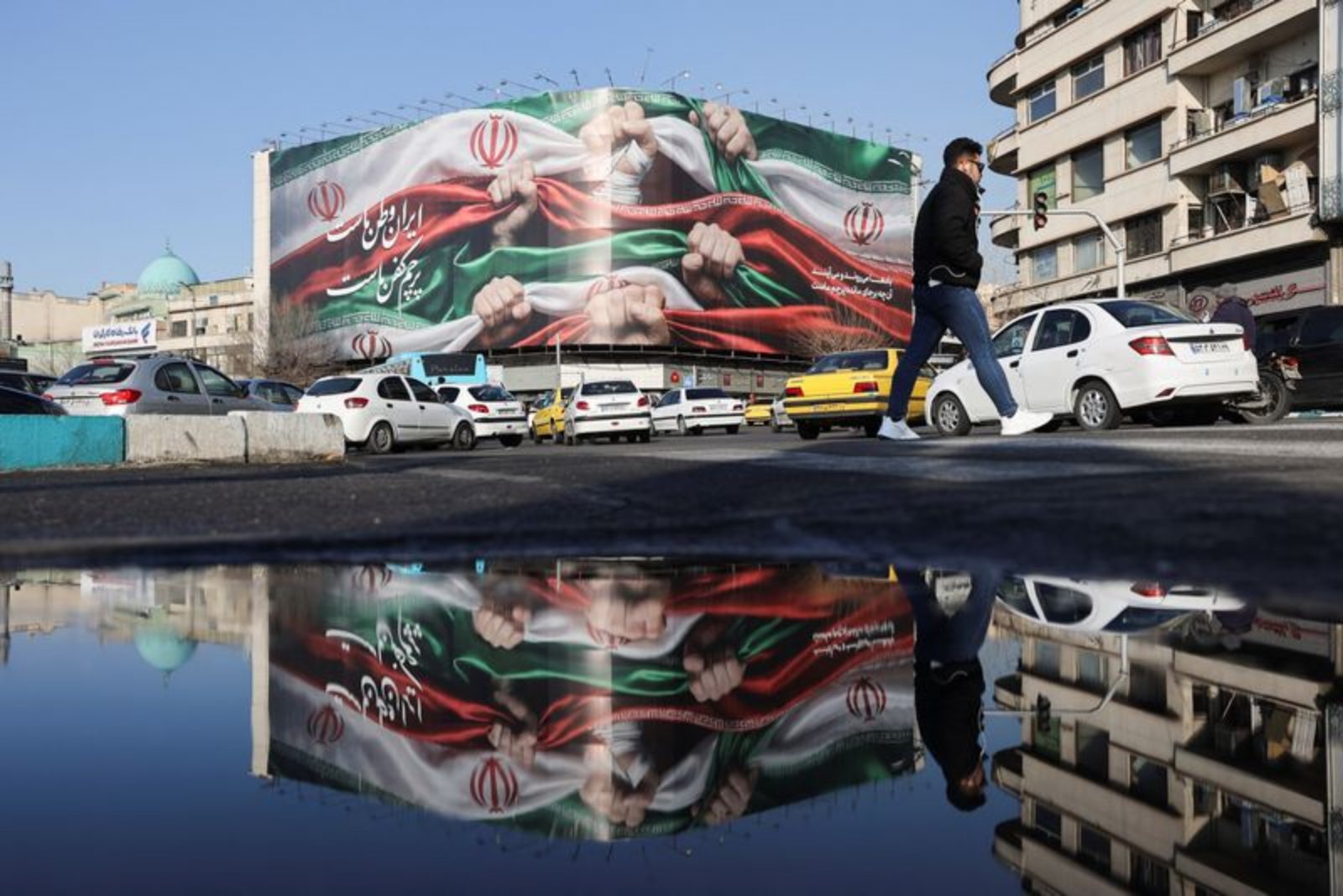
Plainclothes security personnel in Iran have launched a broad campaign of arrests and increased street-level control, detaining thousands of people and establishing checkpoints, according to activists, lawyers, medical workers and anonymous officials inside the country. The detentions follow the most violent unrest Iran has seen since the 1979 Islamic Revolution, which began with modest protests in Tehran's Grand Bazaar over economic hardship and quickly widened into major demonstrations calling on ruling clerics to step down.
Authorities cut internet access as the unrest spread and deployed overwhelming force, actions that rights groups say resulted in thousands of deaths. Tehran has placed blame for the violence on what it describes as "armed terrorists" it says are linked to Israel and the United States.
Sources inside Iran who spoke on condition of anonymity described a rapid escalation of security measures that moved from visible patrols to a coordinated campaign of mass detentions. Five activists inside Iran said that within days of the unrest beginning, plainclothes security forces had begun widespread roundups accompanied by a stepped-up street presence centered on checkpoints. They said many of those detained were being held in secret or improvised lockups.
"They are arresting everyone," one activist said. "No one knows where they are being taken or where they are being held. With these arrests and threats, they are trying to inject fear into society." Similar accounts were provided by lawyers, medics and witnesses as well as two Iranian officials who spoke anonymously to avoid reprisals from security services. Those sources said the roundups appeared designed to prevent any serious revival of mass protests by spreading fear, just as Iran's clerical establishment faces rising external pressure.
Uncertainty about the possibility of military action against Iran has added to the tense environment. U.S. President Donald Trump said last week that an "armada" was on its way toward Iran, while also saying he hoped not to have to use it. On Wednesday he again escalated his rhetoric by demanding Iran negotiate limits on its nuclear programme and warning that any future U.S. attack would be "far worse" than one day of airstrikes last June on three nuclear sites. Multiple Western and Middle Eastern sources have told reporters this week that Trump is weighing options against Iran that include targeted strikes on security forces and leaders with the stated aim of inspiring protesters, although Israeli and Arab officials have said air power alone would not topple the clerical rulers.
One activist said the recent detentions were not limited to those implicated in the latest wave of unrest. Instead, security forces were reportedly detaining people arrested during previous protests, "even if they had not participated this time, plus members of their families."
Human rights monitoring groups have published figures documenting the scale of fatalities and arrests. The U.S.-based HRANA rights group, in its latest compilation, reports a death toll of 6,373 composed of 5,993 protesters, 214 security personnel, 113 people under the age of 18 and 53 bystanders. HRANA also reports arrests totalling 42,486.
Iranian judiciary officials have warned that those accused of "sabotage, burning public property and involved in armed clashes with security forces" could face the death penalty. Two Iranian officials speaking on condition of anonymity confirmed that thousands of arrests had been carried out in recent days. Those officials said many detainees were being held in unofficial locations, "including warehouses and other improvised locations," and that the judiciary was moving quickly to process cases.
Authorities have declined to speak publicly about the overall number of arrests or to disclose where those arrested in connection with the unrest are being held. On January 21 authorities provided a death toll of 3,117 in the unrest, including 2,427 civilians and security personnel. Amnesty International reported on January 23 that "sweeping arbitrary detentions, enforced disappearances, bans on gatherings and attacks to silence families of victims mark the suffocating militarisation imposed in Iran by the Islamic Republic's authorities in the aftermath of protest massacres."
Arrests are reported to be continuing across Iran, from small towns to the capital. A resident of northwestern Iran who requested anonymity recounted that plainclothes officers recently stormed a family home, detained two relatives and seized laptops and mobile phones. "They arrested my brother and my cousin a few days ago," the resident said. "They stormed our home in plainclothes, searched the entire house, and took all the laptops and mobile phones. They warned us that if we make this public, they will arrest all of us."
Iran's population is notably young: more than 60 percent of the country's 92 million people are under the age of 30. Rights activists warn that despite the current suppression of street demonstrations, the clerical leadership risks renewed protest activity if heavy repression continues.
Three Iranian lawyers told colleagues and families in recent days that dozens of families had sought legal help for relatives detained during the unrest. "Many families are coming to us asking for legal assistance for their detained children," one lawyer said. "Some of those arrested are under 18 - boys and girls." Human rights organizations have long asserted that during periods of serious unrest Iranian security agencies use informal detention sites, holding detainees without access to lawyers or family members for extended periods.
Medical personnel have also reported pressure from security services. Five doctors said protesters wounded during demonstrations had been removed from hospitals by security forces, and that dozens of doctors had been summoned by authorities or warned against aiding injured demonstrators. Prison authorities denied holding wounded protesters. "They have arrested many doctors and nurses who helped wounded protesters...They are arresting everyone," one of the doctors said.
For many families, the unknown status of detained relatives has itself become a form of punishment. Families of five detainees said the lack of information about where relatives were being held and whether they remained alive added another layer of anguish. An Iranian man whose daughter was arrested told of his uncertainty: "We don’t know where they are, whether they are still alive, or when we’ll see them," he said. "They took my child as if they were arresting a terrorist. My child protested because all young people (just) want to have a better life. My child is a young person who only took part in protests."
As the government tightens control on the streets and in detention facilities, activists, legal professionals and medical staff report an expanding net of arrests and enforced disappearances. Official statements on the scope and location of detentions remain limited, while human rights groups continue to document high casualty and arrest figures. The combination of internal repression and external threats has produced an environment of deep uncertainty for families of those detained and for the wider population.