
World January 23, 2026

Iranian Cleric Threatens to Target U.S. Investments in Region Amid Rising Tensions

Warnings escalate as Tehran signals potential retaliation against American economic interests following U.S. military movements

By Jordan Park
Iranian Cleric Threatens to Target U.S. Investments in Region Amid Rising Tensions

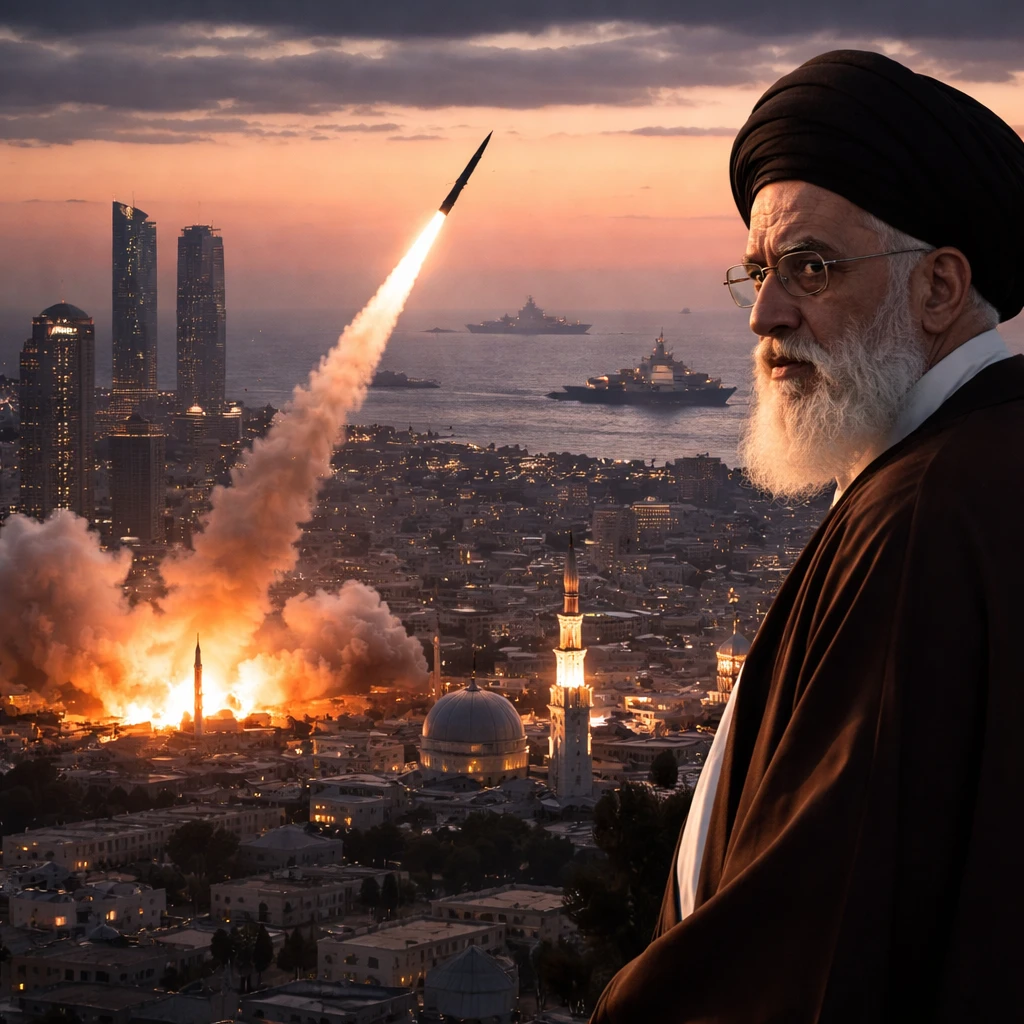
An influential Iranian religious leader has issued a stern warning that the Islamic Republic may retaliate against U.S. investments located in the Middle East if the United States launches an attack. The remarks come in the wake of President Donald Trump's announcement of a U.S. naval presence headed towards Iran, paired with stern cautions aimed at Tehran regarding its domestic protests and nuclear ambitions. Contradictory reports have also emerged concerning the status of executions of detainees from recent protests, while the U.N. is set to discuss the violent crackdown on demonstrators.

Key Points

  • An Iranian cleric warned that U.S. investments in the Middle East region could be targeted by Iranian missiles if the U.S. attacks Iran.
  • U.S. President Trump dispatched naval forces toward Iran while seizing the opportunity to warn Tehran against repressing protests or advancing its nuclear program.
  • Contradictory accounts exist regarding the execution status of protest detainees, with Iranian officials dismissing claims of halted executions and denying plans for carrying out hangings.

In a charged address delivered during Friday prayers in Tehran, Mohammad Javad Haj Ali Akbari, a prominent Iranian cleric, signaled that the country’s missile capabilities are actively monitoring U.S. investments scattered throughout the region and warned these assets could become targets if the United States initiates any form of aggression against Iran. He emphasized that the substantial financial investments, totaling approximately one trillion dollars, that the U.S. has in the Middle East are under close surveillance by Iranian defenses. However, Akbari did not enumerate the specific U.S. holdings or sectors that could be at risk.

The background to this escalation includes U.S. President Donald Trump's recent declaration that an "armada" is en route to the Persian Gulf region, intended as a show of strength to discourage Iran from harming protesters within its borders or pursuing its nuclear program. Despite this military posturing, Trump expressed a hope to avoid escalating conflict.

Amid these heightened tensions, conflicting statements have emerged regarding the fate of individuals detained during widespread protests that have challenged Iranian authorities. Iran’s chief prosecutor, Mohammad Movahedi, categorically denied claims made by President Trump that the Iranian judiciary had halted the execution of 800 protest detainees, labeling such assertions as baseless. In a related interview, Iranian Foreign Minister Abbas Araqchi assured that there are no plans to carry out hangings linked to the recent civil unrest.

Internationally, the United Nations Human Rights Council is poised to convene an emergency session focused on the reported severe violence against protesters in Iran. Multiple nations will urge for comprehensive investigations into alleged human rights abuses, with the intention of supporting potential future judicial proceedings. Human rights organizations have reported thousands of casualties amid the demonstrations, which represent a significant challenge to Iran's clerical leadership since the previous year.

Risks

  • Escalation of military tensions between Iran and the United States could threaten stability and safety of U.S. investments in the Middle East, impacting the energy and defense sectors.
  • Potential continuation or intensification of human rights abuses during protests may lead to international condemnation and sanctions, affecting diplomatic relations and regional economic conditions.
  • Uncertainty around Iran’s judicial processes related to protest detainees adds unpredictability to the domestic political climate, which may influence international investor confidence and market stability.

More from World

Greenland’s premier says U.S. still aims for control despite ruling out military action Feb 2, 2026 Kremlin says Russia has long offered to process or store Iran’s enriched uranium Feb 2, 2026 Long-Awaited Rafah Reopening Prompts Hope and Anxiety Among Palestinians Stranded Across Border Feb 2, 2026 Rafah Reopens but Core Questions Persist Over Implementation of Trump’s Gaza Blueprint Feb 2, 2026 Rafah Crossing Reopens on Foot with Strict Limits as Gaza Remains Under Strain Feb 2, 2026