
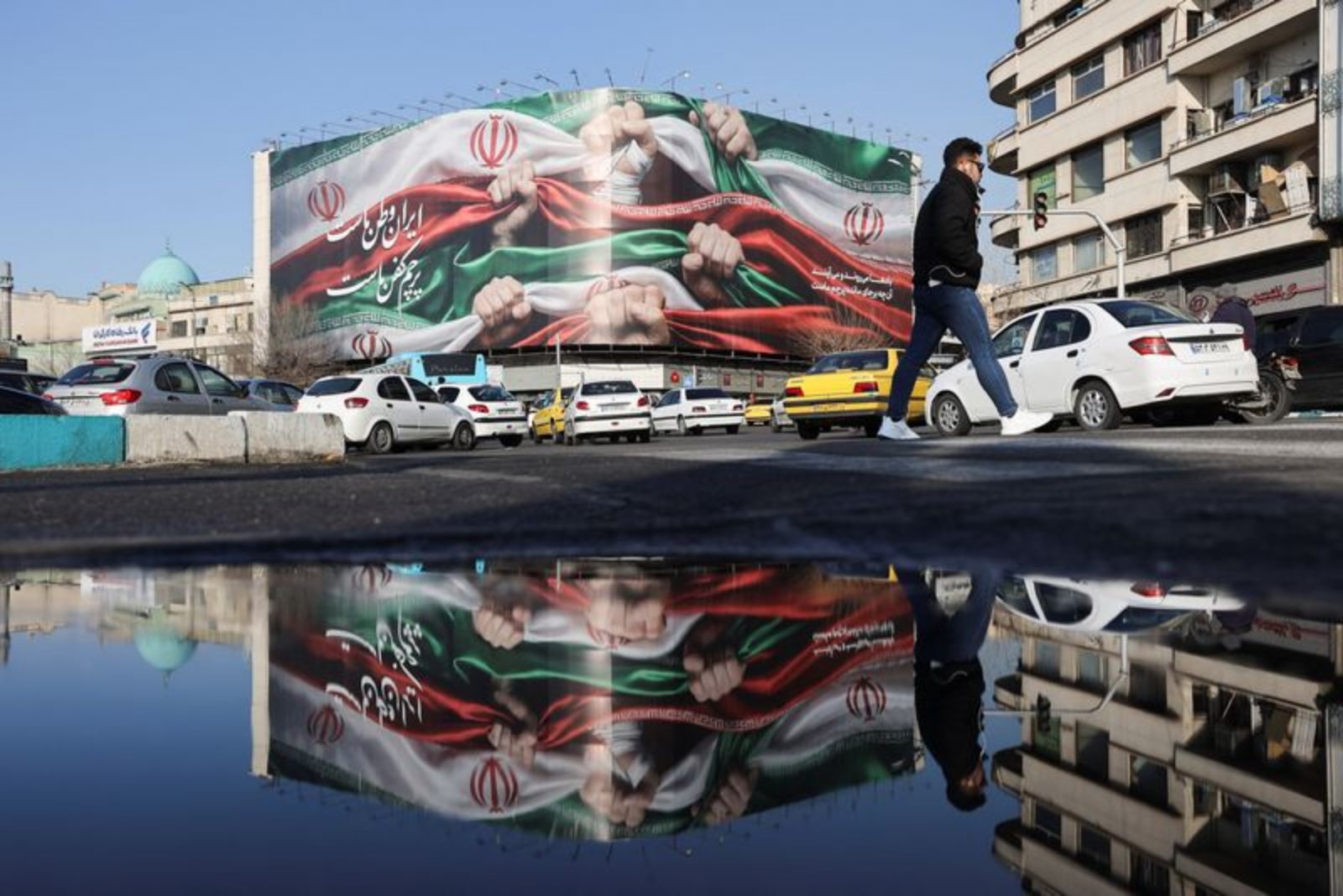
The recent consideration by the United States of fresh military strikes in response to Iran’s harsh suppression of protests has put renewed focus on how power is distributed inside the Islamic Republic. Iran’s system blends religious doctrine with formal political institutions and a security apparatus that answers directly to the clerical leadership. Below is an explanation of the main organs of power and the people who occupy them, and why their roles matter for stability and policy in Iran.
Why a Supreme Leader?
Iran’s political theory is founded on the doctrine of vilayat-e faqih - rule of the jurist - which argues that, in the absence of the 12th Imam, supreme temporal authority should be exercised by a senior cleric. That model placed a religious jurist above electoral politics and remains the cornerstone of the Islamic Republic’s constitutional order.
Ayatollah Ruhollah Khomeini first put this model into practice after the 1979 revolution, establishing a framework in which a single clerical figure stands above the elected government. His successor, Ayatollah Ali Khamenei, who became Supreme Leader in 1989, has preserved and strengthened that arrangement. The office of the Supreme Leader retains the final word on major policy choices and has cultivated a parallel governance structure staffed by loyalists that operates alongside formal state institutions.
Khamenei, now in his mid-eighties, has not publicly designated a successor. Several figures have been discussed at times as potential replacements - including his son, Mojtaba Khamenei, and Hassan Khomeini, the grandson of the revolution’s founder - as well as a range of elder clerics. However, no clear mechanism for an uncontested transition has been made public, leaving succession an open and sensitive question.
Is Iran a theocracy?
Clerics play a central role across Iran’s governing institutions. The Assembly of Experts, a body composed of senior ayatollahs elected every eight years, has the constitutional authority to appoint the Supreme Leader and to question or dismiss him, though it has never exercised the latter power. The Guardian Council, with half its members appointed by the Supreme Leader and half by the judiciary chief, can veto parliamentary legislation and disqualify candidates from running for office. That vetting role has been used to bar critics of the clerical establishment from electoral contests.
Another body, the Expediency Council - whose members are appointed by the Supreme Leader - adjudicates disputes between parliament and the Guardian Council, serving as an additional check on elected institutions.
Iran’s legal system follows Shi’ite interpretations of sharia and is administered by clerics appointed under a judiciary chief selected by the Supreme Leader. The current judiciary head, Gholamhossein Mohseni Ejei, previously served as intelligence minister and was sanctioned by Western governments over his role in the 2009 crackdown on protesters.
Other prominent clerical figures include Sadiq Larijani, who leads the Expediency Council and is a former judiciary chief; Mohsen Araki, who sits on both the Assembly of Experts and the Expediency Council; and Ahmad Khatami, who leads Tehran’s Friday prayers. Yet the clerical class is not monolithic - some senior religious figures oppose the current system or have tried to press for reform, and others have acted as dissidents at times. Former President Mohammed Khatami, for example, tried to pursue a reformist agenda within the established framework but was ultimately unsuccessful at altering the balance of power.
The Revolutionary Guards - scope and influence
The Islamic Revolutionary Guards Corps (IRGC) operates separately from the conventional armed forces and reports directly to the Supreme Leader rather than the elected Defence Ministry. Created in the aftermath of the 1979 revolution, the IRGC’s role expanded substantially during the 1980-88 war with Iraq. It has since become the most capable and best-equipped element of Iran’s armed forces, and its responsibilities now extend far beyond battlefield duties.
Across the years the Guards have entrenched themselves in politics and commerce, accruing influence domestically and regionally. The Quds Force, an IRGC unit, is the principal instrument of Iran’s regional policy of supporting allied Shi’ite groups in the Middle East, notably in Lebanon and Iraq. That external posture suffered blows with the U.S. killing of Quds Force commander Qassem Soleimani in a 2020 strike in Iraq and with Israel’s intensive campaign against Hezbollah in 2024.
At home, the Basij militia - a part-time paramilitary force under the IRGC - is frequently employed to suppress domestic protests. Economically, the Guards have expanded into major contracting through Khatam al-Anbiya, a company that has been awarded multi-billion-dollar projects in Iran’s oil and gas sector, strengthening the organization’s financial base.
Last year’s selective strikes against senior Guards commanders and the targeting of Hezbollah leaders have raised questions about possible intelligence penetration at senior levels of the corps. Despite such concerns, several IRGC commanders remain central to the organisation’s leadership - including Mohammad Pakpour, his deputy Ahmad Vahidi, naval chief Alireza Tangsiri, and the current Quds Force commander Esmail Ghaani.
Electoral politics and the limits of democratic elements
Alongside these clerical and security structures, Iranians do elect a president and a parliament for four-year terms. Those elected institutions manage day-to-day governance within boundaries set by the Supreme Leader and the clerical oversight apparatus. In the early years of the republic, elections drew broad public participation, but subsequent measures - such as the Guardian Council’s candidate vetting and a disputed 2009 vote - have eroded public confidence in electoral outcomes and reduced the scope for meaningful contestation.
In 2024, Masoud Pezeshkian, regarded as a moderate, won the presidency. He took office after a first-round vote in which turnout was around 40 percent and a second-round contest that engaged roughly half of eligible voters. His chief opponent, Saeed Jalili, is viewed as a close ally of the Supreme Leader and a hardliner on foreign policy. The speaker of parliament since 2020 is Mohammad Baqer Qalibaf, a former IRGC commander.
What this means for governance and stability
The operating model of Iran’s political system concentrates ultimate authority in the hands of the Supreme Leader, supported by a set of clerical institutions and a security apparatus with deep reach into politics and the economy. This configuration complicates efforts to predict how Iran will respond to external military pressure or internal unrest. Uncertainties surrounding succession, the resilience of the IRGC to targeted decapitation, and the limits of electoral legitimacy are central to understanding how Tehran may act in a crisis.
Those constraints and ambiguities are important not only for analysts and policymakers, but for sectors within Iran where the IRGC already exerts influence - most notably in oil and gas through state contracting, and in security and domestic enforcement through the Basij and other units. The interplay between elected officials and the clerical-security establishment defines decision-making in Tehran and shapes the country’s domestic and regional posture.