
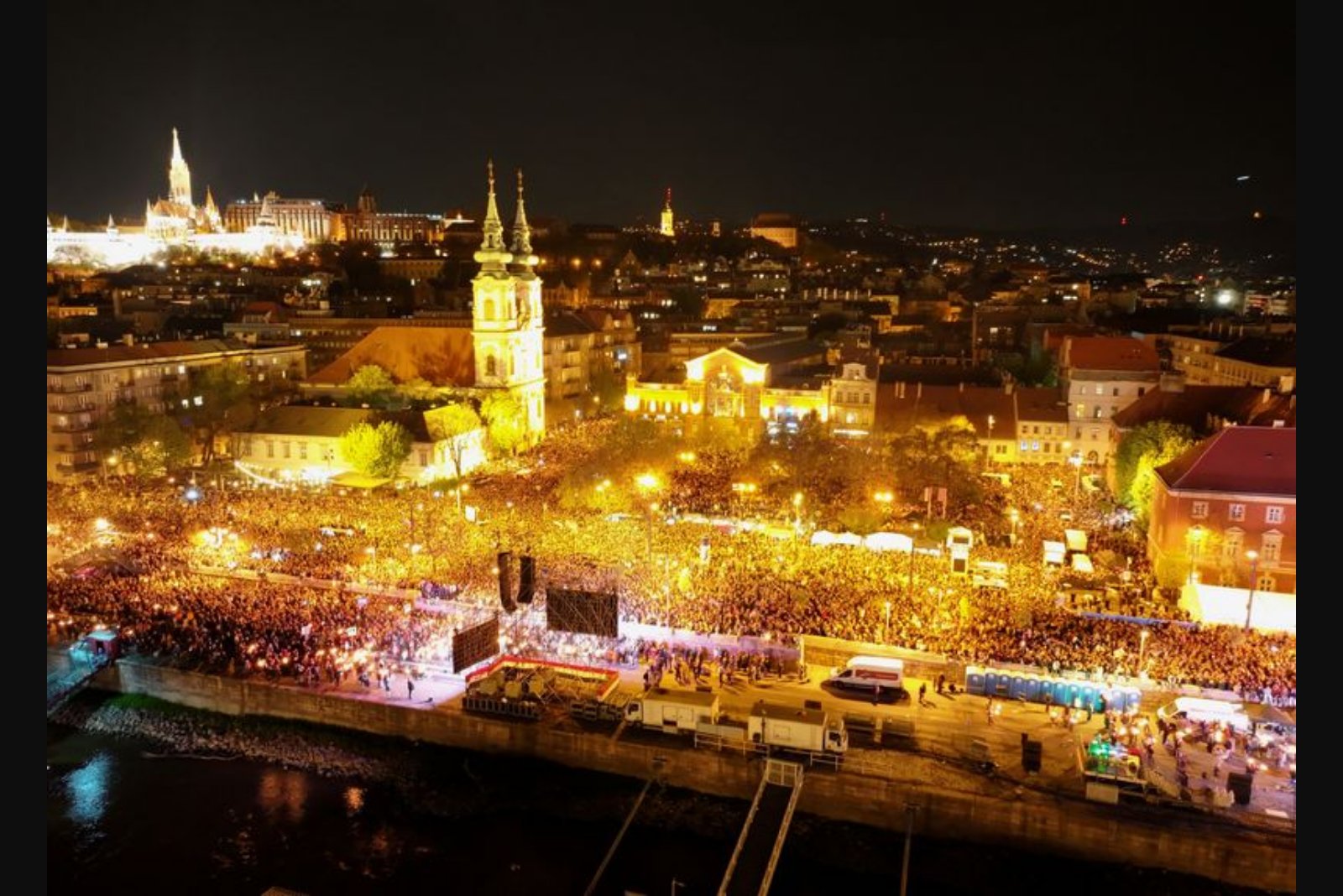
BUDAPEST, April 13 - Hungary awoke to a dramatic political shift after the centre-right opposition led by Peter Magyar won a decisive electoral victory, a result that has resonated from Washington to Kyiv and transformed the Hungarian capital into a scene of large-scale celebration.
The outcome carried implications well beyond Hungary's borders. Supporters of Magyar's Tisza party pointed to a two-thirds parliamentary supermajority as the means to tackle what they describe as institutional capture during the 16-year rule of outgoing Prime Minister Viktor Orban and to secure the release of billions in European Union funds that have been frozen over concerns about democratic standards.
Markets reacted quickly to the outcome. The Hungarian forint strengthened by 2.5% to reach a more than four-year high against the euro, while the Budapest stock exchange rose almost 3% as investors anticipated that EU funds could begin to flow again under the new administration.
Magyar posted on X that it was "an immense honour" to have been empowered to form a government with the most votes ever received, and pledged to work over the next four years for "a free, European, functioning, and humane Hungary." His supporters have framed his victory as a potential turning point in relations with Brussels and as an opportunity to restore judicial independence and tighter public procurement rules.
Domestic scene and pledges
In central Budapest, revellers remained in the streets into the early hours celebrating the result. The jubilant atmosphere included viral footage of Zsolt Hegedus, a leading candidate for health minister, dancing on stage after Magyar's remarks.
On policy, Magyar has vowed a broad anti-corruption drive. He has called for stronger judicial independence and tougher oversight of public procurement as mechanisms to reassure EU institutions and accelerate the unfreezing of funds. On the night after the vote, he urged Hungary's chief prosecutor, the heads of the top court and the media authority, and other officials to resign, asserting that public institutions had been brought under the influence of Orban loyalists.
Speaking on the morning after the election, a network engineer, Gyula Ferenc Teleki, summed up the sentiments of many in the capital: "We are part of the European Union and we want to stay within the European Union." Another voter, who gave his first name as Peter and declined to provide his surname, expressed emotional relief at the result and optimism that EU funds would begin to arrive and help repair the state.
International reactions
The election drew positive comments from a range of international figures. EU leaders, Ukraine's President Volodymyr Zelenskiy and opponents of former U.S. President Donald Trump in the United States publicly welcomed Magyar's victory. Observers noted that Viktor Orban had previously been an ally of both Donald Trump and Vladimir Putin, and that his tenure had been an obstacle to some European efforts to assist war-damaged Ukraine.
German Chancellor Friedrich Merz said the result would make EU decision-making, including on matters related to Russia, easier. The Kremlin said it respected the choice made by Hungarian voters and indicated it would continue what it described as "pragmatic ties" with the incoming government in Budapest.
The outgoing government had previously resisted a 90-billion-euro loan to Ukraine, a point emphasised by critics and by those watching how Hungary's foreign policy and EU voting might shift under new leadership.
Domestic dissent and regional concerns
Not all reactions were celebratory. Some conservative voices outside Hungary lamented the result. Among them was Marcin Romanowski, a former Polish minister who had been granted asylum in Hungary under the previous administration. He described the election outcome as a loss for conservative Poland and Europe. Romanowski is wanted by Polish prosecutors on charges of abuse of power, a detail noted as part of his response.
Outlook and immediate priorities
Supporters of the new government have placed emphasis on restoring perceived institutional integrity and unlocking EU financing. How swiftly Brussels might respond and how the new authorities will proceed with personnel changes in key public institutions were highlighted as immediate priorities by Magyar and his allies.
The election and its market effects underline both the domestic appetite for change among segments of Hungarian voters and the broader geopolitical attention on Budapest's orientation within the European Union and toward partners such as Ukraine and Russia.