
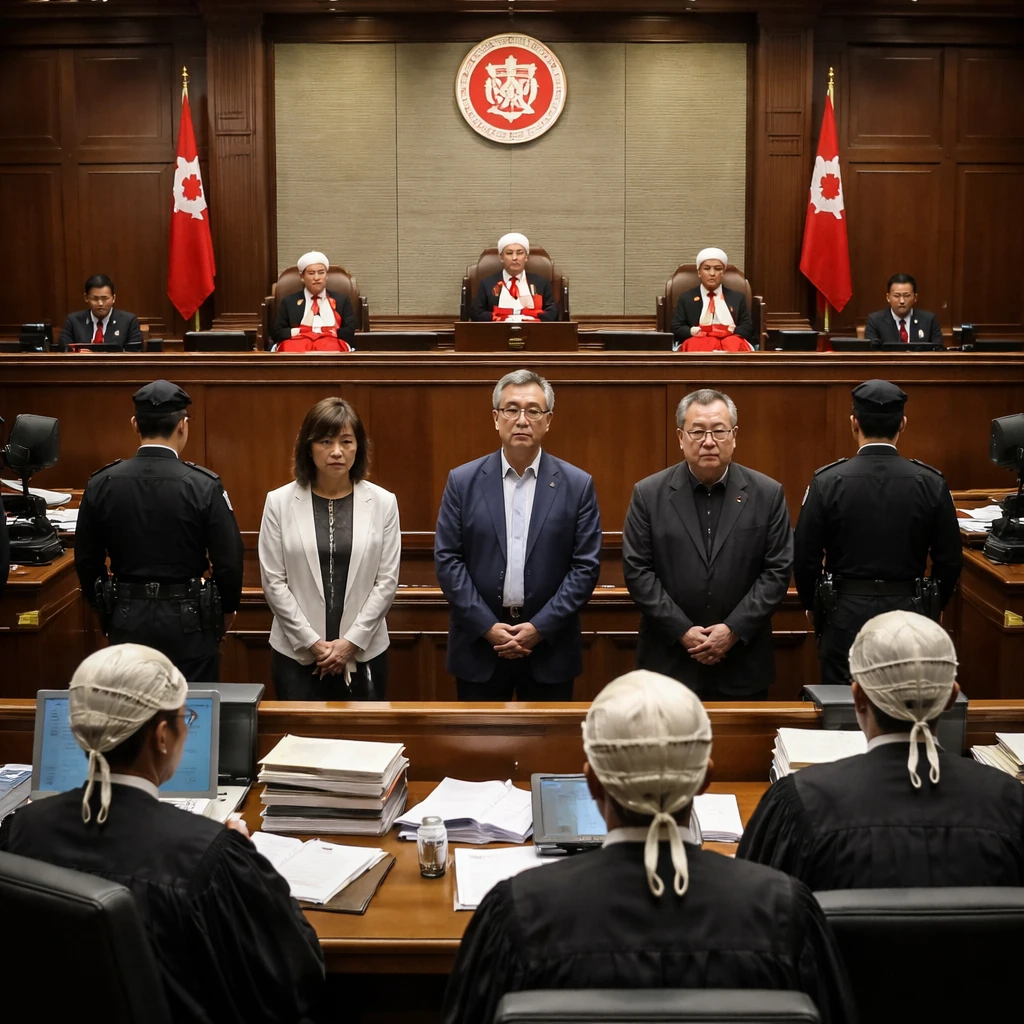
The High Court of Hong Kong has commenced a landmark national security trial involving three ex-leaders from a group formerly responsible for organising annual observances of the 1989 Tiananmen Square incident. This group, now dissolved, represented one of the last bastions of public remembrance of the crackdown in Hong Kong, a city that once allowed such commemorations despite China’s strict suppression of the topic on the mainland.
Held on June 4, 1989, the Tiananmen Square protests were violently ended when Chinese military forces fired on pro-democracy demonstrators. In mainland China, the event remains officially unacknowledged, with public commemoration effectively banned as a taboo subject.
In Hong Kong, several memorials marking the event, including the notable "pillar of shame" — a sculpture depicting contorted human figures symbolising the victims — were removed from university campuses. The annual gatherings ceased in 2020 after being blocked on the grounds of COVID-19 restrictions and have not resumed since Beijing enforced its comprehensive national security legislation.
Under this national security law, three individuals — Lee Cheuk-yan (68), Albert Ho (74), and Chow Hang-tung (40) — all former leaders of the disbanded alliance known as the Hong Kong Alliance in Support of Patriotic Democratic Movements of China, face charges of "inciting subversion of state power." Conviction under these allegations can result in sentences of up to ten years imprisonment.
This trial is among the concluding major cases related to the national security law, with Chow Hang-tung, the alliance's former vice chair, having been held without bail for more than 1,500 days. She is notable for continuing to publicly oppose the Chinese Communist Party’s actions despite her prolonged detention.
During the trial’s opening, prosecutors outlined that the core legal question revolves around whether the Alliance’s public aim to "end one-party rule" constituted unlawful incitement to subvert state authority. Authorities also intend to assess whether the alleged acts represent attempts to dismantle or undermine China's governmental framework.
These proceedings have drawn criticism from human rights organisations and several foreign governments, stating that national security cases are being misused as tools to suppress political dissent under the guise of legality. Conversely, Beijing defends the legislation as essential for reinstating stability after the tumultuous and at times violent protests in Hong Kong throughout 2019.
Chow Hang-tung, a barrister educated at Cambridge, has taken an active role in her defense, representing herself in court while challenging prison regulations she deems unjust, including restrictions on summer attire for female prisoners. In earlier interviews, she asserted that while authorities may imprison individuals and suppress information, they cannot imprison thought or alter facts and truth.
In late 2023, the High Court denied Chow’s petition to discontinue the trial and prohibited her from summoning overseas witnesses to give testimony via virtual means in 2024. The court cited amendments to criminal procedure laws barring remote testimony in national security cases, emphasizing that these rules apply equally to both prosecution and defense, ensuring no unfair disadvantage.
Judges have assured that their rulings will be grounded strictly in evidence and legal principles, explicitly stating that the trial process will not be exploited for political persecution or manipulations of judicial procedures, a claim previously made by Chow.