
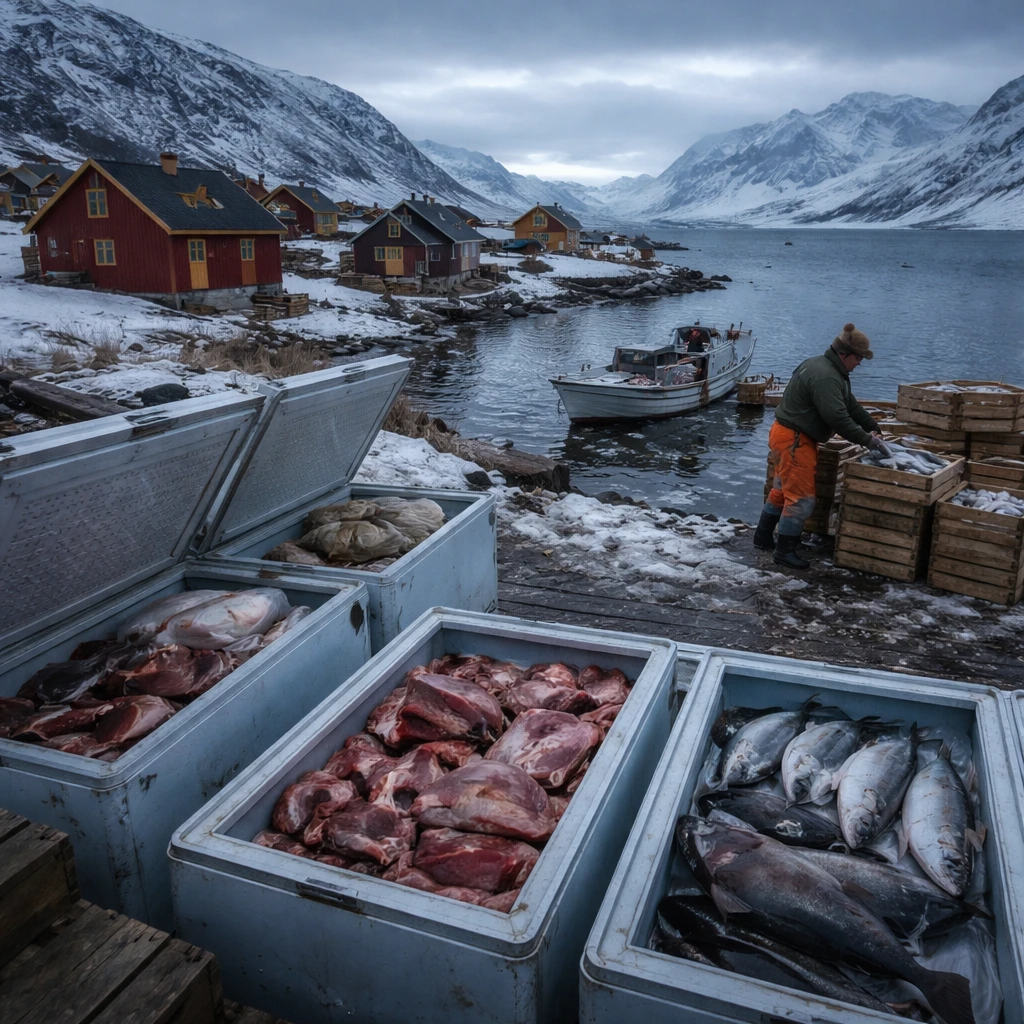
In the remote settlement of Kapisillit, Greenlanders demonstrate resilience by relying on traditional hunting and food storage to maintain stability in times of uncertainty, including recent geopolitical concerns. Local residents like Kaaleeraq Ringsted keep ample supplies of varied meat and fish, ensuring self-sufficiency despite external pressures. The Greenland government supports crisis preparedness by encouraging stockpiles of food, water, and necessary hunting equipment. This way of life reflects an enduring balance between modernity and ancestral survival skills in Greenland's challenging environment.
Key Points
- Traditional hunting and food storage practices remain central to Greenlanders’ self-sufficiency, especially in remote settlements.
- The Greenland government actively promotes crisis preparedness with guidelines encouraging stockpiling of food, water, and necessary hunting equipment.
- Political tensions regarding Greenland’s sovereignty have coincided with renewed local emphasis on resilience through food independence.
In Kapisillit, a small Greenlandic settlement situated within the Nuuk fjord, residents maintain a profound connection to their traditional lifestyle, especially in terms of food security and emergency preparedness. Kaaleeraq Ringsted, aged 73, exemplifies this mindset; although no longer active in hunting due to health concerns, he conserves his sustenance through two well-stocked chest freezers filled with reindeer meat, halibut, cod, redfish, and seal meat. Ringsted noted confidently, "I have enough food here for more than a year," underscoring the role of community support as family and friends supplement his stores with fresh fish and game from the surrounding fjord.
This localized approach to sustenance is particularly crucial given the vulnerability of Greenland’s supply chains, which can be disrupted abruptly by harsh weather. The solitary grocery outlet servicing Kapisillit receives shipments only once per week, supplying basic essentials to residents. Recognizing these challenges, Greenland's government recently updated its crisis readiness guidelines, urging citizens to accumulate at least five days’ worth of water and food, alongside accessible hunting weapons, ammunition, and fishing implements.
The guidance coincided with a significant political event: the United States President announced a retreat from his previous statements regarding imposing tariffs on European allies and abandoned notions of forcibly acquiring Greenland. Instead, he indicated ongoing negotiations aimed at resolving disputes over the Danish-governed territory.
For many Greenlanders, including Aslak Wilhelm Jensen, 50, from Nuuk, reliance on local resources is second nature. Jensen maintains three large freezers filled with fish and meat, reflecting a lifestyle intertwined with the natural abundance surrounding him. As he managed his small fishing vessel in the depths of the Nuuk fjord, Jensen remained unperturbed by political turmoil, emphasizing the plentiful presence of fish, seals, and reindeer nearby. He remarked, "You're not really afraid of dying of hunger if someone comes and takes over your land."
Despite mid-20th century initiatives by Denmark aimed at modernizing Greenlandic society and encouraging urban living—factors that reduced traditional hunting and fishing—the local population frequently upholds a dual existence, combining contemporary occupations with enduring ancestral skills. Jensen, who had recently harvested 900 kilograms of cod, illustrated this resilient perspective shaped by adaptation to Greenland's formidable environment. "When something happens in the world, we do not panic," he explained. "We Greenlanders find peace knowing that there is food on the table. We live alongside the animals as neighbors."
This comprehensive approach to food security and self-reliance in Greenland connotes much more than mere precaution; it is embedded into the culture and daily routine as a natural response to the region’s isolation, unpredictable climate, and intermittent supply lines. Maintaining stored provisions and proficiency in hunting and fishing is less about dystopian preparedness and more about sustaining a viable, secure way of life in one of the world's most challenging landscapes.
Risks
- Supply chains in isolated Greenlandic communities are highly susceptible to disruption by severe weather conditions, impacting access to necessities.
- Political uncertainties stemming from international interest in Greenland could create instability, although currently residents maintain calm based on traditional self-reliance.
- Health issues can limit individuals' ability to engage in hunting, increasing dependence on communal support networks for sustenance.