
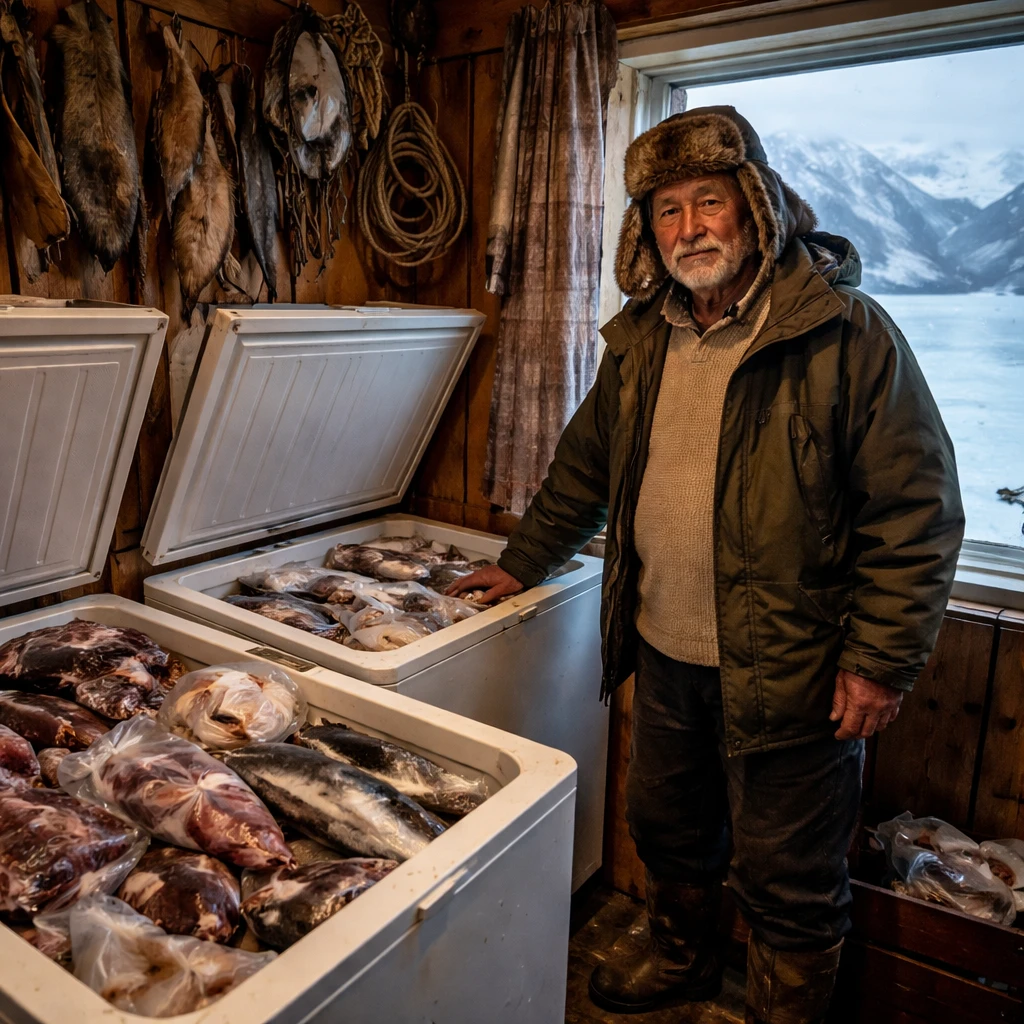
In the isolated Kapisillit settlement along the Nuuk fjord in Greenland, 73-year-old Kaaleeraq Ringsted stands calm amid global political unrest, surrounded by his well-stocked chest freezers filled with locally sourced reindeer, halibut, cod, redfish, and seal meat. Despite his inability to hunt due to health reasons, Ringsted benefits from a network of family and friends who ensure his freezer remains abundant with provisions from the nearby fjord.
Ringsted's preparedness is emblematic of a broader Greenlandic tradition deeply embedded in daily life, where self-sufficiency through hunting and fishing remains critical, particularly as local grocery supplies are limited and infrequent, with deliveries arriving only once weekly. This reality is exacerbated by the region's susceptibility to abrupt weather changes that can disrupt supply chains, posing challenges for remote communities.
Highlighting the importance of readiness, Greenland’s government recently updated crisis preparedness guidelines, urging residents to maintain five days’ worth of food and water while also having access to hunting weapons, ammunition, and fishing gear. This advisory coincided with former U.S. President Donald Trump’s withdrawn proposal to impose tariffs on European allies and his softened stance on acquiring Greenland, noting negotiations were ongoing to resolve disputes over the Danish territory’s status without military intervention.
For many Greenlanders, like 50-year-old fisherman Aslak Wilhelm Jensen of Nuuk, traditional food reserves remain an ingrained safeguard rather than a reaction to threats. Jensen’s three large chest freezers brim with fish and game caught locally, underscoring the area’s abundant natural resources—an environment rich with fish stocks, seal populations, and reindeer herds. Jensen dismisses concerns about food scarcity or geopolitical upheavals affecting local sustenance, confident in Greenland’s enduring capacity for survival.
Despite concerted modernization and urbanization efforts by Denmark since the 1950s, which have steered many away from hunting and fishing livelihoods, a significant portion of Greenland’s population continues to fuse contemporary employment with ancestral subsistence skills. Jensen emphasizes that such resilience and composure in the face of external uncertainty are fundamental attitudes cultivated to withstand the island's notoriously harsh climate and isolated geography.
He expresses a sentiment prevalent among Greenlanders: tranquility is secured by having food available, as communities maintain a symbiotic relationship with the natural wildlife surrounding them. The storage of frozen fish and game is not akin to extreme prepping but is instead a customary lifestyle adapted to the island’s environmental and logistical realities.