
World January 22, 2026

German Finance Minister Advocates for Stability in US-Europe Relations Amid Tariff Concerns

Lars Klingbeil emphasizes cooperation over conflict at the World Economic Forum in Davos

By Caleb Monroe
German Finance Minister Advocates for Stability in US-Europe Relations Amid Tariff Concerns

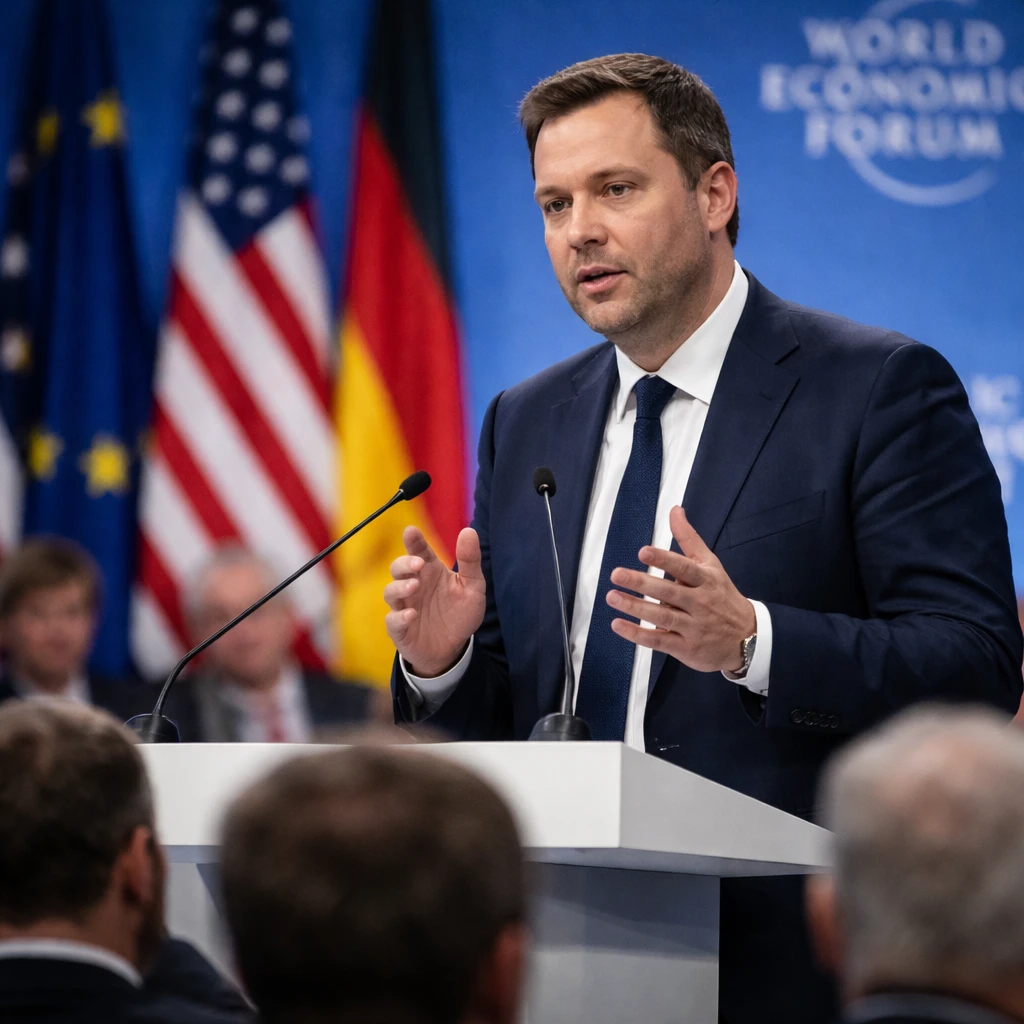
At the World Economic Forum in Davos, German Finance Minister Lars Klingbeil addressed concerns over rising tensions between the United States and Europe, urging calm and rejecting retaliatory measures following recent U.S. tariff threats and financial market reactions. Klingbeil underscored the importance of maintaining strong transatlantic ties while expressing Europe's readiness to manage its economic and security interests responsibly.

Key Points

  • German Finance Minister Lars Klingbeil opposes escalation between US and Europe amidst tariff threats.
  • Klingbeil rejects financial retaliation, emphasizing the importance of maintaining strong transatlantic relations.
  • Europe views itself as resilient with options available, but focuses on cooperation rather than conflict.

During a session in Davos on January 22, German Finance Minister Lars Klingbeil firmly opposed any intensification of conflicts between the United States and Europe amid looming tariff threats that have unsettled global markets. Stressing the importance of the transatlantic partnership, Klingbeil stated, "The transatlantic relationship is not about harming each other," emphasizing cooperation rather than confrontation.

In response to reports that a Danish pension fund offloaded U.S. government bonds, which some interpreted as a financial snub, Klingbeil resisted calls within Europe for retaliatory action against the United States. "This is absolutely not about breaking with the Americans or dissolving the relationship," he assured attendees at the World Economic Forum.

The minister acknowledged Europe's strong position and its array of available options but clarified that the priority was to avoid escalation. After engaging with investors in Davos, Klingbeil noted that the international landscape remains unsettled, with established alliances under strain. Despite these challenges, he observed a prevailing trend of countries and regions seeking closer collaboration with Germany and the broader European community.

Addressing the contention over Greenland, Klingbeil welcomed ongoing dialogue as a positive step, cautioning against premature conclusions until any formal agreement is established in clear terms. He condemned any threats of military action or attempts by the United States to annex Greenland, labeling such moves as unacceptable to Europe. Nonetheless, Klingbeil conveyed a willingness to negotiate on legitimate security concerns within the framework of NATO.

Risks

  • Tensions between the United States and Europe due to tariff threats could strain economic and political alliances, affecting international trade and investment sectors.
  • Uncertainty in global alliances creates instability which may impact financial markets, particularly bond markets as seen with the Danish pension fund's actions.
  • Potential geopolitical disputes over Greenland pose risks to regional security and could influence defense and diplomatic relations within NATO and beyond.

More from World

Greenland’s premier says U.S. still aims for control despite ruling out military action Feb 2, 2026 Kremlin says Russia has long offered to process or store Iran’s enriched uranium Feb 2, 2026 Long-Awaited Rafah Reopening Prompts Hope and Anxiety Among Palestinians Stranded Across Border Feb 2, 2026 Rafah Reopens but Core Questions Persist Over Implementation of Trump’s Gaza Blueprint Feb 2, 2026 Rafah Crossing Reopens on Foot with Strict Limits as Gaza Remains Under Strain Feb 2, 2026