
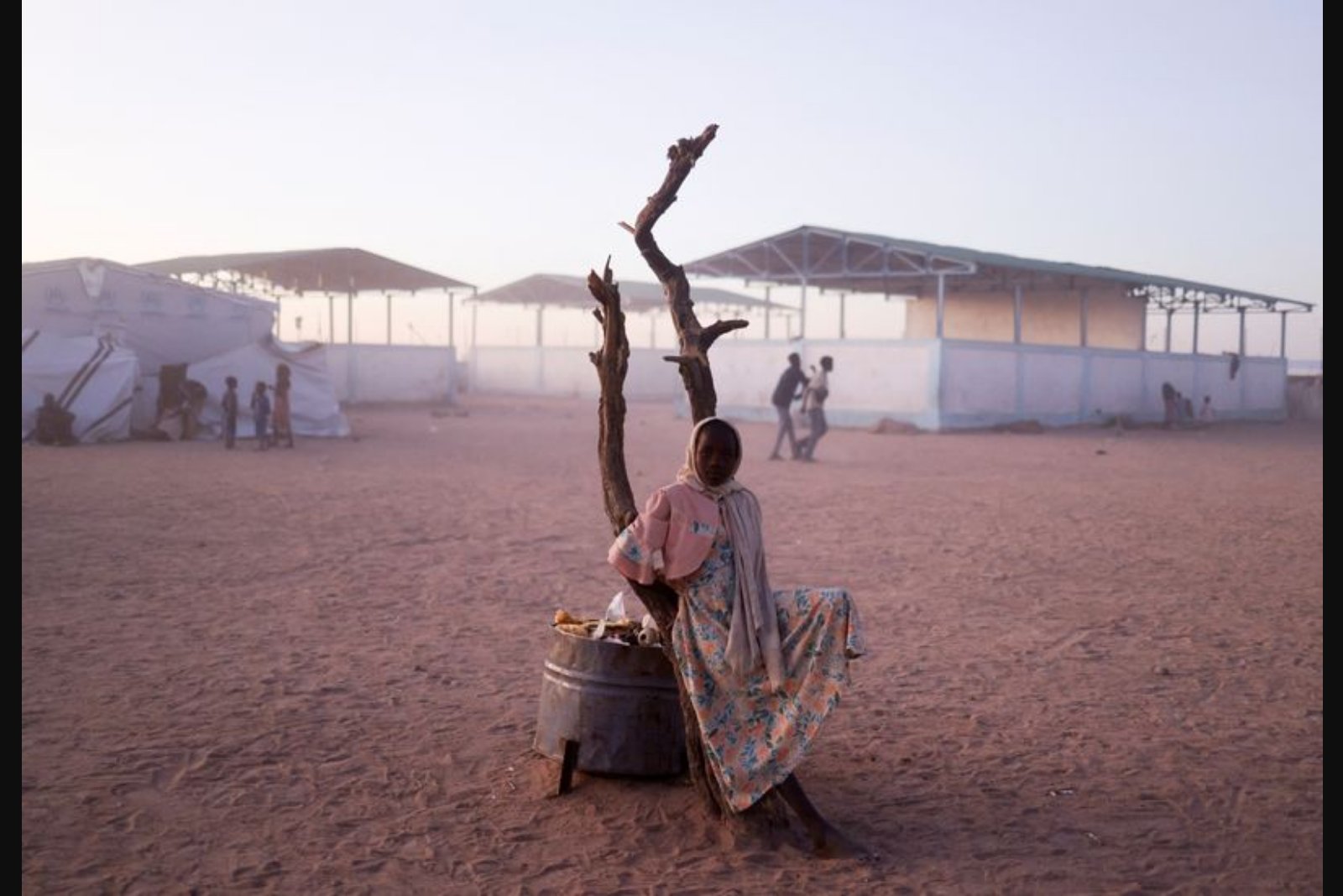
Humanitarian agencies warn that humanitarian relief for the more than 1.3 million Sudanese who have fled to Chad since fighting erupted in Sudan last April is at risk of severe contraction without a rapid infusion of funds. The World Food Programme (WFP) and the U.N. refugee agency (UNHCR) said they face a combined shortfall of $428 million that threatens life-saving assistance.
Most of the refugees in Chad arrived after the outbreak of armed conflict between Sudan's army and the paramilitary Rapid Support Forces in April 2023. Aid agencies say the refugee population includes survivors of mass killings and famine originating in Darfur.
In a joint statement, the two U.N. agencies said current resources amount to less than half of what is required to sustain operations. WFP Chad Country Director Sarah Gordon-Gibson warned of the direct consequences for those who depend on aid, saying: "With less than half the resources we require, we cannot deliver sufficient food to the people who need it most. This will force them into devastating coping strategies and put lives at risk."
The UNHCR said it is already able to assist only four out of every 10 refugees in Chad, leaving a majority without regular access to shelter support. Educational services are strained as well, with most classrooms reportedly holding in excess of 100 children per teacher. In the northeastern province of Ennedi Est, the agency said refugees are receiving less than half the minimum daily water standard.
Humanitarian groups outside the United Nations system have also reported alarming conditions. The Norwegian Refugee Council cited a survey indicating that 70% of refugee households in Chad had cut the number of meals eaten in the previous month.
The joint U.N. statement did not list which donors had reduced funding. UNHCR has previously indicated that cuts in U.S. foreign aid have been a significant factor in funding shortfalls. The agencies noted that Sudan and Chad are among 17 countries slated to receive a portion of a $2 billion U.S. aid package in 2026. They also observed that other Western donors have reduced allocations to foreign aid while redirecting resources toward defence spending.
Unless the $428 million gap is closed, the WFP and UNHCR said they expect further program reductions in the coming months. Those cuts would likely deepen food insecurity, reduce access to water and shelter, and worsen overcrowding in educational settings for the displaced population in Chad.
Immediate implications
- Humanitarian assistance to over 1.3 million Sudanese refugees in Chad is at risk without $428 million in additional funding.
- Current operations are running on less than half the required resources, according to WFP and UNHCR.
- Already limited services mean only four in 10 refugees receive assistance from UNHCR; classrooms and water provision are severely strained.