
The Federal Communications Commission (FCC) announced a significant policy update Wednesday concerning the application of its "equal time" rules to interviews with political candidates on broadcast television talk shows. Traditionally, these rules require broadcasters to provide equivalent airtime to opposing political candidates, ensuring balanced exposure during election periods.
Previously, the FCC's Media Bureau had ruled in 2006 that an interview segment on "The Tonight Show with Jay Leno," featuring then-Governor Arnold Schwarzenegger of California, was exempt from these equal opportunity requirements. That landmark decision provided broadcast networks with a framework to conduct candidate interviews without the obligation to offer equal airtime to opposing candidates.
However, the FCC's recent announcement reverses this interpretation, indicating that such talk show interviews may no longer be exempt from the equal time mandate. Consequently, broadcasters may now be required to allocate similar airtime to rival candidates when they feature interviews with political figures on late-night or daytime talk shows.
This policy revision represents a considerable shift for television networks, which have relied on the 2006 ruling to guide their programming choices around political interviews. The new guidance implies additional compliance measures for networks during the election season to uphold regulations fostering equitable political representation.
The updated stance underscores the FCC's commitment to maintaining fairness in political broadcasting. While the agency has not detailed the specific implementation process, broadcasters should anticipate adjustments in how political interviews are scheduled and balanced across competing candidates to adhere to these rules.
This development has potential implications for the broadcast sector, particularly with respect to programming strategy, legal compliance, and election-season content management. Networks may need to invest in additional planning to ensure all candidates receive equal exposure to audiences when interviews are aired.
Overall, the FCC's announcement marks a pivotal reconsideration of long-standing precedents governing political candidate interviews on broadcast television, emphasizing equal access and opportunity in an era of heightened scrutiny around media influence in electoral politics.
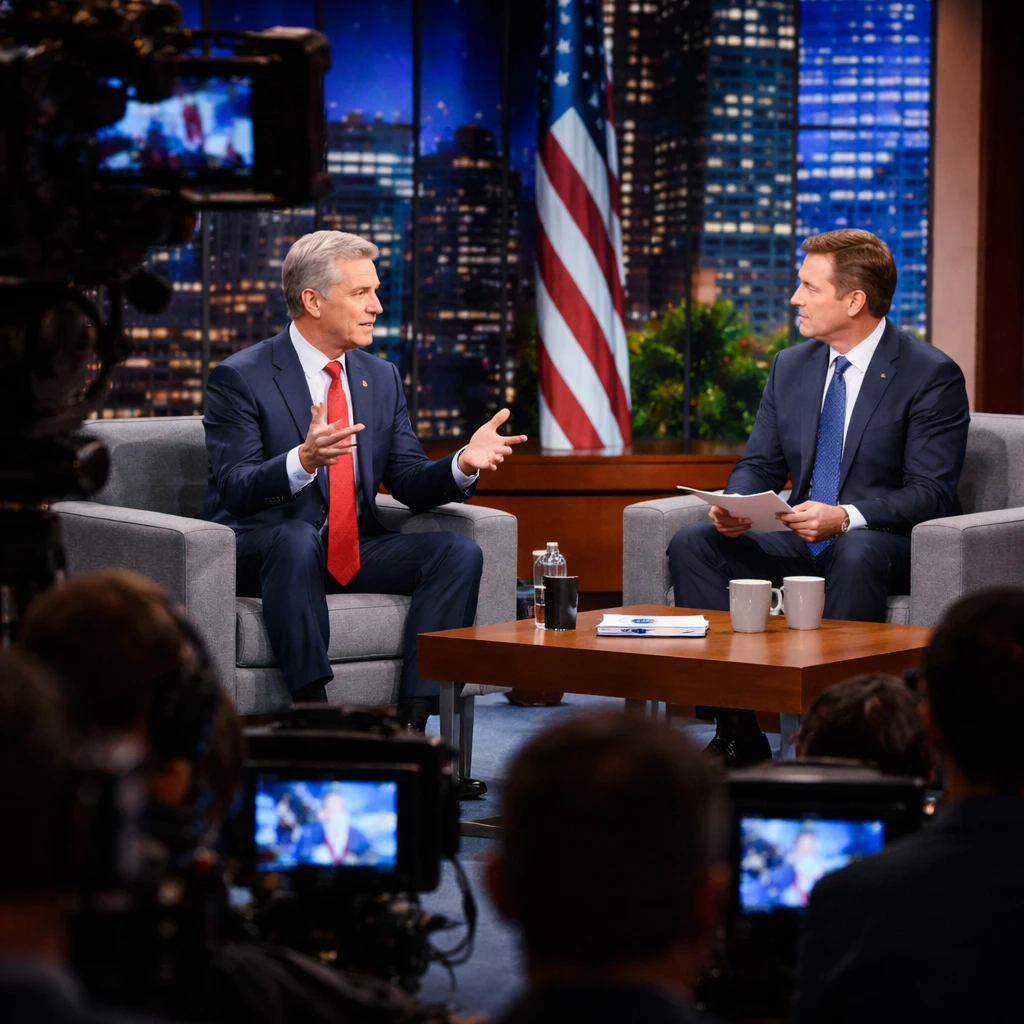
The Federal Communications Commission (FCC) has updated its stance on the application of equal time regulations to political candidate interviews conducted on broadcast talk shows, signaling a possible increase in airtime obligations for networks. This revises a prior 2006 decision and may influence how broadcasters manage interviews during election cycles.
Key Points
- The FCC has reversed a 2006 precedent allowing political candidate interviews on talk shows to be exempt from equal time rules.
- Broadcasters may now have to provide equal airtime to opposing political candidates following interviews on late-night or daytime talk programs.
- This policy shift impacts television networks' programming strategies and compliance responsibilities, especially during election cycles.
Risks
- Broadcast networks face increased regulatory obligations that may complicate scheduling and increase operational costs around political programming.
- There may be challenges in fairly applying equal time requirements, potentially leading to disputes or legal scrutiny for broadcasters.
- Changes in airtime allocation could affect advertising revenue and audience engagement metrics for talk shows that host political candidates.