
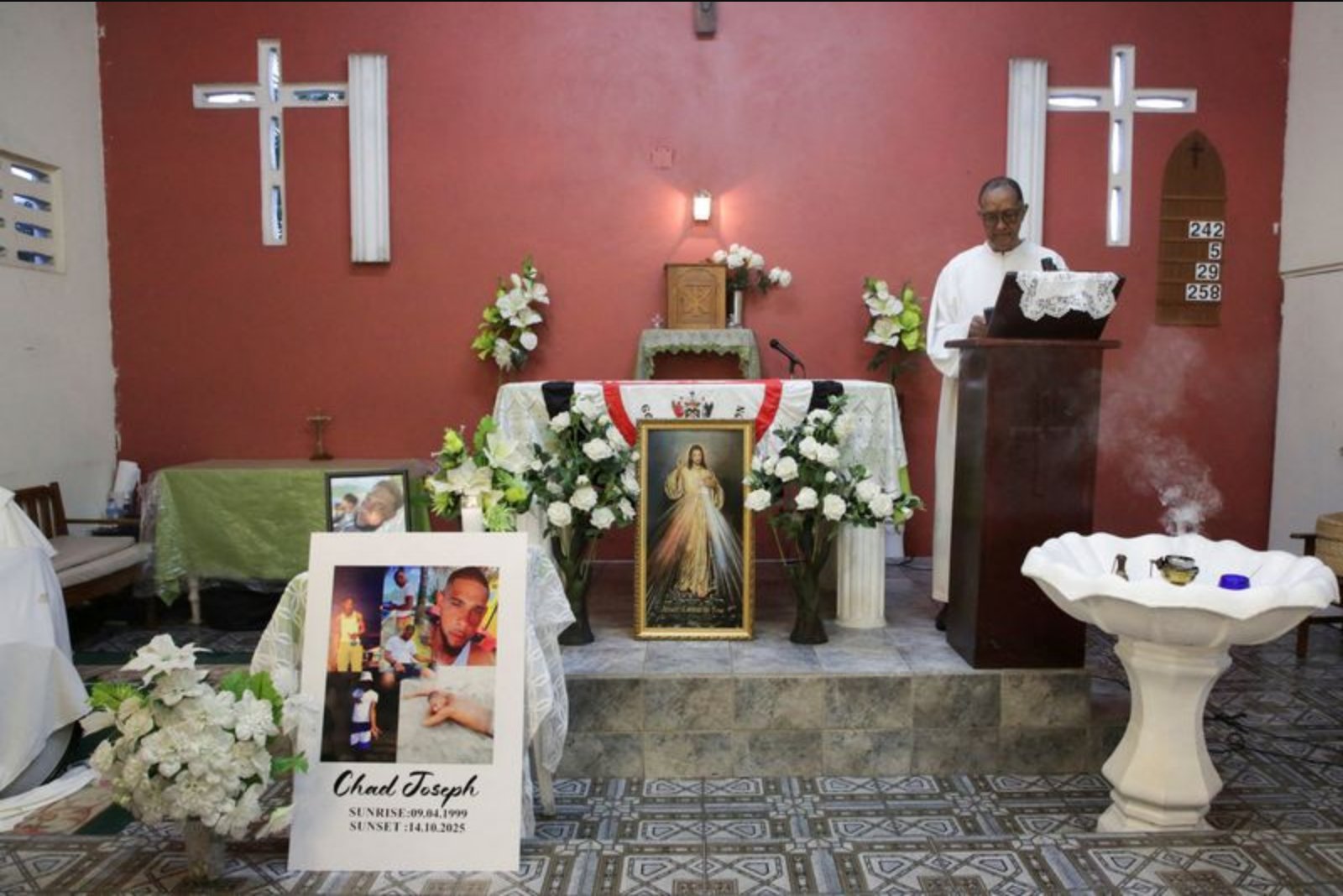
Family members of two men killed in a U.S. missile strike on a vessel near Venezuela have initiated litigation in federal court, asserting the October attack was an unlawful killing of civilians. The complaint, filed in Boston, names the U.S. government as the defendant and marks the first judicial challenge to a sequence of maritime strikes authorized by the Trump administration.
The lawsuit centers on the deaths of Chad Joseph and Rishi Samaroo, two Trinidadian nationals who plaintiffs say were returning to their homes in Las Cuevas, Trinidad after doing fishing and farm work in Venezuela. Joseph and Samaroo were among six people killed during the strike on October 14, according to the complaint.
Plaintiffs Lenore Burnley, Joseph's mother, and Sallycar Korasingh, Samaroo's sister, are seeking damages for the two deaths. Civil rights lawyers from the Center for Constitutional Rights and the American Civil Liberties Union filed the case under two statutes that provide avenues for suits arising from maritime and international law violations.
Lawyers point to the Death on the High Seas Act - a maritime law that permits family members to bring wrongful death claims for deaths occurring on the high seas - and the Alien Tort Statute, a federal law dating to 1789 that allows foreign citizens to sue in U.S. courts for certain violations of international law. The filing requests monetary relief only and does not ask the court to issue an injunction that would halt further strikes.
Baher Azmy, a lawyer for the plaintiffs at the Center for Constitutional Rights, described the killings in a statement: "These are lawless killings in cold blood; killings for sport and killings for theater, which is why we need a court of law to proclaim what is true and constrain what is lawless."
In an accompanying statement, Korasingh said the family sought accountability: "If the U.S. government believed Rishi had done anything wrong, it should have arrested, charged, and detained him, not murdered him. They must be held accountable."
The legal action follows a broader U.S. campaign: the Trump administration authorized a total of 36 missile strikes on vessels operating in the Caribbean Sea and the Pacific Ocean since September, strikes that have resulted in more than 120 deaths, according to figures cited in the complaint.
The administration has characterized the operations, conducted under the direction of U.S. Defense Secretary Pete Hegseth, as part of a campaign against drug cartels, describing the targeted vessels as armed groups. Officials have asserted the strikes comply with international rules known as the law of war or the law of armed conflict.
However, the strikes have drawn criticism from members of both parties in Congress and condemnation from human rights organizations. The complaint notes that some lawmakers have raised questions because Congress has not authorized hostilities against the cartels, and legal scholars cited in background materials have previously argued that drug cartels do not meet widely accepted international definitions of an armed group.
The lawsuit contends that Joseph and Samaroo were not participating in hostilities against the United States when they were killed, and that their deaths therefore constitute murder outside the bounds of an armed conflict. The plaintiffs argue those circumstances qualify the killings as wrongful deaths on the high seas and as extrajudicial killings under international law.
The Pentagon did not immediately respond to a request for comment on the filing. The case could potentially provide a federal court the opportunity to examine whether the October 14 strike conformed with U.S. and international legal standards, although the remedy sought in this filing is limited to damages for the two named victims.
Context and possible legal implications
Because the suit invokes statutes specifically designed to address deaths on international waters and alleged violations of international law, a court ruling could have implications for how similar maritime strikes are assessed legally. The filing does not seek to stop ongoing operations, but it does ask a court to determine whether the actions that led to the deaths of Joseph and Samaroo were lawful.