
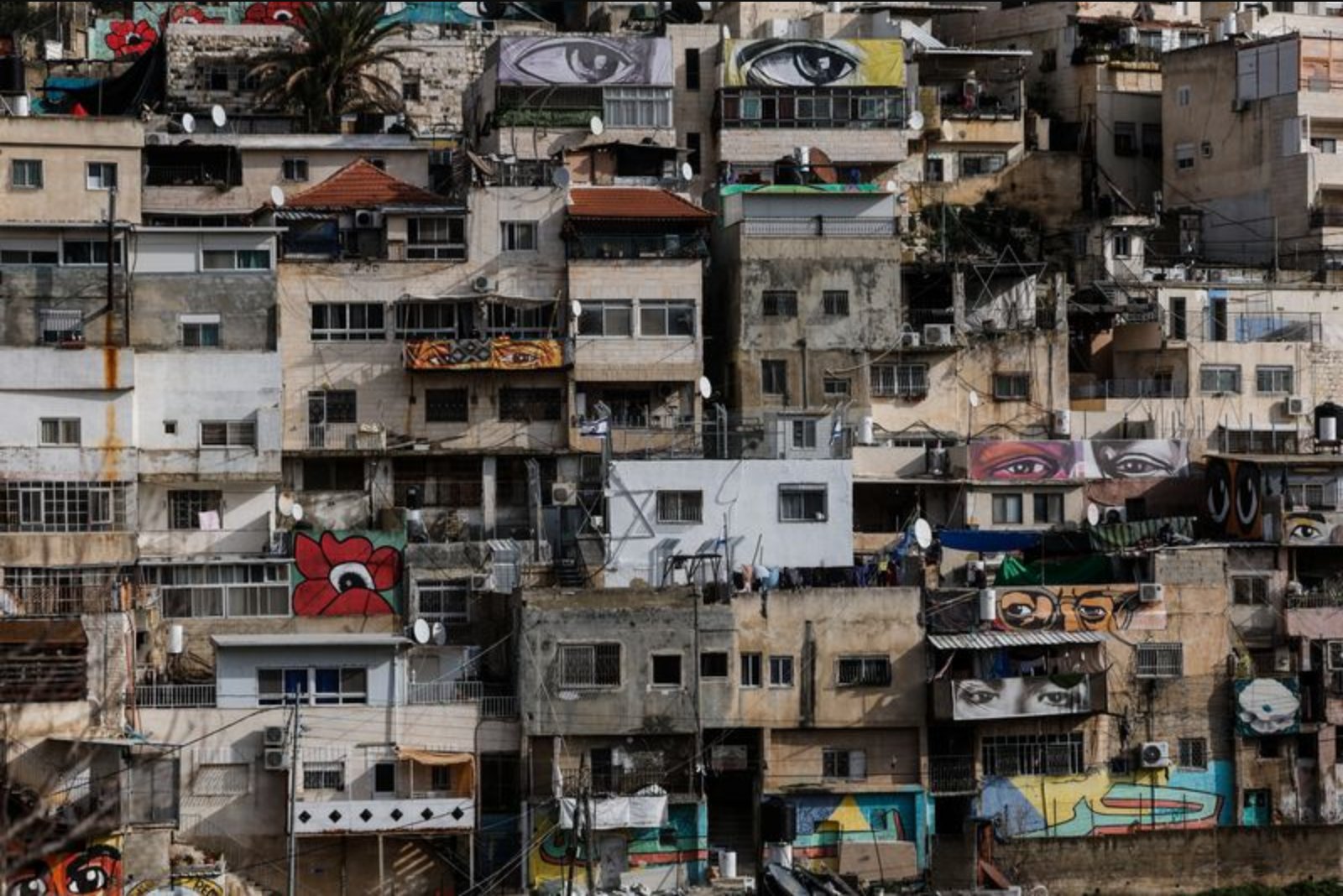
In the Silwan neighbourhood of East Jerusalem, located just south of the Al-Aqsa Mosque, Palestinian residents are confronting court-mandated evictions that transfer property control to a Jewish settler organization.
Kayed Rajabi, whose family has lived in Silwan since 1967, is among those handed an eviction order. He said his home is now surrounded by buildings flying large Israeli flags - a marker, he said, that the structures are controlled by settlers. He told reporters that settlers began buying homes in the area in 2004 and that the group now holds roughly 40 buildings in Silwan, many of which Rajabi described as obtained through forced evictions.
Rajabi said he and other neighbours were offered financial compensation by the settler organization Ateret Cohanim but that most residents rebuffed such proposals. He said he is one of 32 families in his neighbourhood ordered to leave, and that he and his brothers have been given until the end of Ramadan - mid-March - to vacate under a Supreme Court order he produced.
"They want to force me out of the house I was born in, where my eyes first opened to life," Rajabi said, explaining that his family purchased the land from a Jordanian officer and have occupied it since 1967.
Daniel Luria, the executive director of Ateret Cohanim, described Palestinian residents in Silwan as "illegal squatters," asserting that the land was owned by Yemeni Jews before 1929 and characterizing the return of Jewish residents as a correction of a historical wrong. Rajabi disputed that account.
The Supreme Court did not immediately respond to a request for comment.
East Jerusalem is claimed by Palestinians as the capital of a future state, and residents say that forced departures from their homes would undermine those aspirations. Israel captured East Jerusalem in the 1967 war and regards all of the city as its capital - a position not recognised internationally - while successive governments have encouraged Jewish settlement in predominantly Palestinian neighbourhoods.
Political rhetoric from inside Israel has reflected opposition to Palestinian statehood in some quarters. Israel's far-right Finance Minister Bezalel Smotrich has said the aim is to "bury" the idea of a Palestinian state.
Settler activity and incursions have increased since an October 2023 attack by Hamas that led to the Gaza war, according to residents and observers, with some incidents of violence reported. Silwan's proximity to the Al-Aqsa Mosque makes it a particularly sensitive and contested location.
Rajabi recounted that Ateret Cohanim offered him a blank check to leave - an offer he rejected. "I wouldn't sell them even a grain of soil. They told me, 'Put whatever number you want and we're ready to pay,'" he said. He added that while a small number of neighbours have opted to sell their homes, most families have refused to accept compensation and move.
Luria confirmed that Ateret Cohanim had made financial offers to residents as part of its efforts to acquire properties in Silwan. "This is part of an unfolding Zionist dream," he said, describing the purchases.
Numerous UN Security Council resolutions have called on Israel to halt settlement activity, a policy stance echoed in international criticism. Israeli governments, by contrast, have defended settlements as vital to national security.
Officials and residents say that when Palestinians refuse orders to leave, armed police carry out evictions and heavy machinery is used to demolish homes.
Rajabi said he and his family face an uncertain future given high rental costs in Jerusalem. "People will live in the streets," he warned, describing the prospect of displacement and the difficulty of finding alternative housing in the city.