
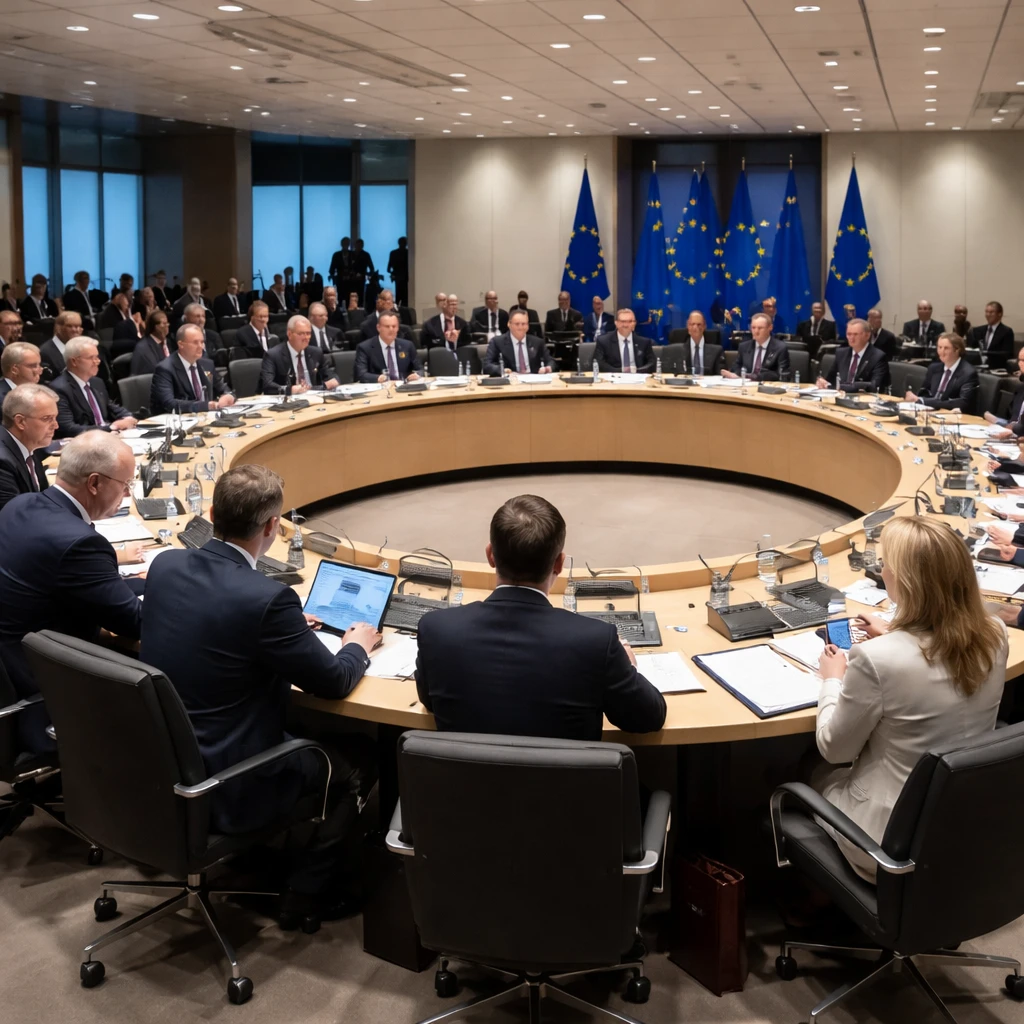
The European Union’s external diplomatic body has expressed apprehensions concerning the extensive control exercised by U.S. President Donald Trump over the recently established Board of Peace, as evidenced by an internal EU document reviewed on January 23.
President Trump has advocated for global leaders to partake in his Board of Peace initiative, which aims to mediate worldwide conflicts. However, the reception among Western governments has been largely hesitant.
A confidential EU analysis dated January 19, circulated among member states, outlined serious concerns about an excessive consolidation of authority within President Trump’s hands. According to the European External Action Service, the governance framework of the Board of Peace conflicts with fundamental EU constitutional principles. Specifically, the document notes that the board's charter raises constitutional issues within the EU context, emphasizing that the autonomy inherent to the EU legal system is incompatible with such a concentration of power in the chairman’s role.
The report further remarks that the Board of Peace diverges notably from the previously authorized mandate by the United Nations Security Council in November, which focused exclusively on the conflict in Gaza.
The new board, inaugurated by President Trump on a Thursday, is organized with Trump as lifelong chairperson. It is initially dedicated to addressing the Gaza conflict but has plans to broaden its jurisdiction to encompass other disputes over time. Membership for states is limited to three-year terms unless they contribute $1 billion toward the board’s funding, which would grant them permanent membership status.
Trump has stated, "Once this board is completely formed, we can do pretty much whatever we want to do. And we’ll do it in conjunction with the United Nations," additionally remarking on the unrealized potential of the U.N.
Following an EU leaders’ meeting on the transatlantic relationship, European Council President Antonio Costa conveyed to the press that the EU harbors substantial reservations regarding various aspects of the Board of Peace charter. These concerns relate to the board’s scope, governance structure, and its alignment with the United Nations charter.
Costa also affirmed the EU’s readiness to collaborate with the United States on implementing a comprehensive Peace Plan for Gaza, envisioning a Board of Peace functioning as a transitional administrative body consistent with United Nations Security Council Resolution 2803.
Nevertheless, multiple European Union member states, including France and Spain, have already confirmed their decision not to join the board.
The EU diplomatic service report highlights another contentious point: the stipulation that a member state’s decision regarding its level of participation must receive approval from the chairman. This provision is characterized as an undue interference with each member state’s organizational independence.