
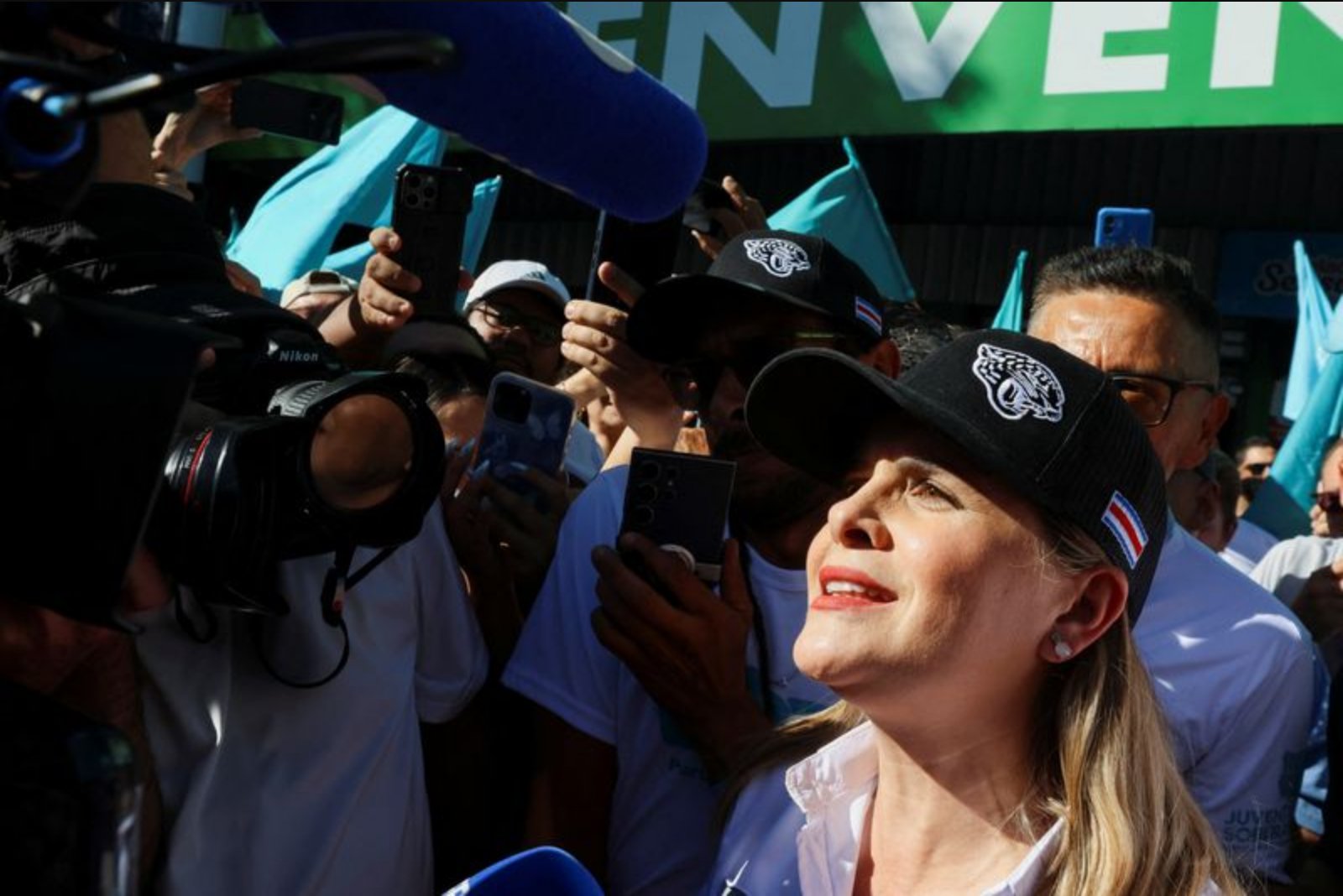
Twenty individuals are on the ballot to become Costa Rica’s next president, yet polling consistently points to a single right-wing populist as the frontrunner. Laura Fernandez, 39, of the Sovereign People’s Party (PPSO), has risen in the surveys and is aiming to secure the 40% threshold that would allow her to win outright and sidestep an April runoff.
Laura Fernandez, 39, Sovereign People’s Party (PPSO)
Fernandez is widely seen as a protégé of the current president. Her platform emphasizes tough measures to confront a surge in crime that authorities attribute to increased drug trafficking. Beyond security, she has proposed changes to state pension arrangements as well as reforms to the judiciary and the constitution. Fernandez’s ascent in the polls has been steady, with most surveys placing her above the 40% mark necessary to avoid a second-round contest.
Her government experience includes serving as political scientist and heading the Ministry of National Planning and Economic Policy from 2022 to 2025. She also held the post of the president’s chief of staff for a brief period.
Alvaro Ramos, 42, National Liberation Party (PLN)
Economist Alvaro Ramos, 42, represents one of Costa Rica’s traditional political parties, the National Liberation Party (PLN). Although his polling numbers remain below 10%, he is regarded as among the candidates most likely to reach a runoff. Ramos has had a role overseeing public health infrastructure, briefly supervising the country’s extensive network of public health clinics in 2022. He was dismissed from that position following a dispute with the president over salaries.
Ramos has pledged a tougher posture on crime. His party, however, has struggled to regain momentum in recent electoral cycles.
Claudia Dobles, 45, Citizen Action Party (PAC)
Claudia Dobles, 45, is an architect and former researcher at the Massachusetts Institute of Technology. She is the spouse of former President Carlos Alvarado, who served from 2018 to 2022. During her husband’s administration, Dobles managed urban planning and decarbonization projects. Her party, the Citizen Action Party (PAC), endured one of its worst electoral setbacks following the end of that presidency and was nearly erased from the political map.
Ariel Robles, 34, Broad Front (FA)
Ariel Robles, a 34-year-old teacher and sitting legislator from the left-wing Broad Front (FA), is polling at approximately 4%. His party is registering comparatively strong support in legislative contests, and in Congress it has established itself as the most vigorous opposition to the ruling party. Robles and his party are making a concerted effort to capture the youth vote, which constitutes the largest segment of undecided voters.
Jose Miguel Aguilar, 47, Avanza
Jose Miguel Aguilar, 47, of Avanza is polling at about 3% but has drawn notable media attention because of his marriage to a cousin of El Salvador’s President Nayib Bukele. Aguilar has sharply criticized Costa Rica’s president in televised debates, an element observers have highlighted given the president’s ideological affinity with Bukele, who is described in the public record as a hard-liner.
The other candidates
The remaining 15 candidates span the political spectrum and are currently polling below the margin of error. Many of these smaller campaigns have aligned with principal opposition figures in cautioning against what they characterize as the risk of an emerging authoritarian model being advanced by the frontrunner.
With a crowded field and one candidate polling above the threshold to avoid a runoff, the election presents competing dynamics: consolidation behind a security-focused frontrunner on the right, and a fragmented opposition where several parties that perform strongly in legislative contests are not translating that support into the presidential race. The interplay between public-security priorities, institutional reform proposals, and the distribution of undecided voters will shape whether the contest is decided in the first round or proceeds to a second-round vote.