
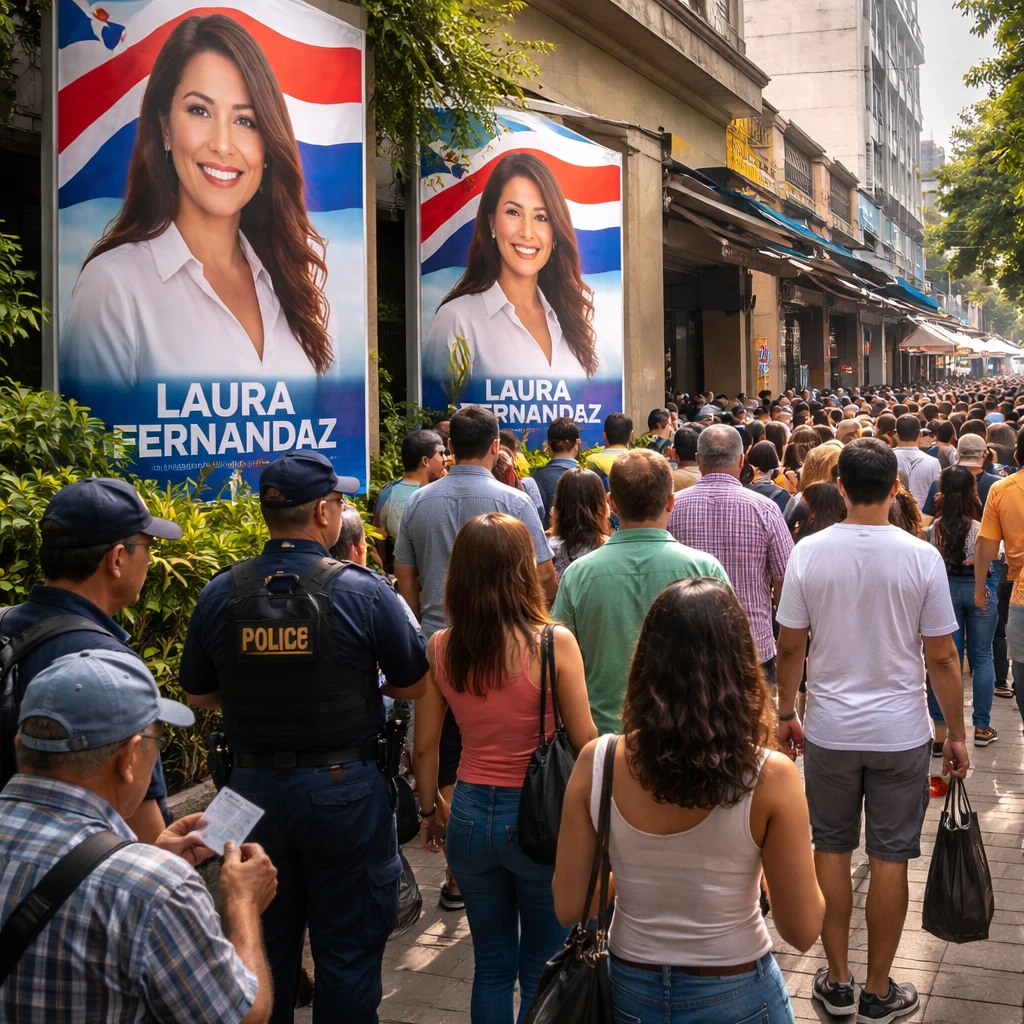
A University of Costa Rica survey, released on January 21, shows that Laura Fernandez, representing the current ruling party in Costa Rica, has garnered sufficient voter support to potentially secure the presidency outright in the upcoming February 1 election. Fernandez, a former government minister and close ally of incumbent President Rodrigo Chaves, achieved 40% support in the poll—a threshold which would allow her to win without a runoff election.
This upward trend in Fernandez's backing, observed between December and January, could also help her party clinch a legislative majority for the 2026–2030 term. The survey was administered between January 12 and 16 and has a margin of error of three percentage points. Other private polling sources have reported comparable figures for Fernandez, a 39-year-old political scientist who has leveraged Chaves' popularity to boost her campaign.
President Chaves, barred by law from immediate re-election, holds a 58% approval rating according to the same poll conducted by the university's Center for Research and Political Studies. In contrast, opposition candidates, including the leading challenger Alvaro Ramos — an economist and member of the center-left National Liberation Party (PLN) — have struggled to build momentum, polling at only 8%. The PLN, emblematic of traditional political structures, faces challenges as Chaves seeks to disrupt established elites through his so-called 'peaceful revolution.'
Amid the campaign, Chaves is confronting multiple allegations submitted to the Supreme Electoral Tribunal accusing him of unlawful interference. Despite these challenges, he has urged voters to support the continuation of his administration's policies and to expand his party's influence in the Legislative Assembly. He has proposed ambitious reforms, including constitutional amendments, which have provoked concerns among opposition groups accusing him of authoritarian tendencies.
Fernandez has committed to following through on Chaves’ agenda, particularly emphasizing a stronger crackdown on crime. This campaign promise addresses the significant public concern over a recent surge in homicides largely attributed to drug gang violence.
Economic indicators under Chaves’ leadership have remained favorable, a point highlighted by the ruling coalition. Additionally, the administration underscores President Chaves’ international connections, including ties with El Salvador’s President Nayib Bukele—whom he regards as 'an international security reference'—and cooperation with the U.S. administration under former President Donald Trump, described as a 'favorite partner' in anti-narcotics efforts.
The election is expected to engage over 3.7 million Costa Rican voters during a 12-hour polling period. Electoral authorities have urged strong voter turnout, particularly after a 40% abstention rate in 2022. Analysts suggest that low opposition enthusiasm and voter abstention could favor the ruling party's prospects for an outright first-round victory.