
New analysis by the data firm Vox Harbor finds that organized waves of messaging are circulating on Telegram to amplify concerns about the consequences if Prime Minister Viktor Orban were to lose the upcoming parliamentary vote. Researchers behind the study, which the firm shared with Reuters, reported patterns of near-identical phrases appearing across separate Telegram channels within tight timeframes - a distribution profile they say is consistent with an orchestrated campaign.
The Vox Harbor dataset covers messages posted on Telegram this year through April 7, totaling more than 628,000 messages from over 30,000 groups. Within that corpus, the firm identified many posts advancing narratives that mirror Orban's own public talking points - for example, claims that the European Union aims to undermine national sovereignty, that external forces seek to draw Hungary into the Ukraine-Russia conflict, and that pro-EU leaders in Kyiv are plotting against the prime minister.
Researchers highlighted that a recurring theme across channels is the assertion that anti-Orban actors might try to manipulate the election result to prevent his victory. Reuters independently sampled Hungarian Telegram channels and corroborated that such messages are widespread.
Vox Harbor's work further points to a substantial share of pro-Orban content arriving from creators and distributors who are Russian or linked to Russia. The research names a right-wing German-language platform, Uncut-News.ch, as the single largest source of messaging by forwarded volume inside the Hungarian Telegram ecosystem. Following that, the next six most-forwarded sources identified in the analysis are connected to Russia, including Ukraina.ru, an outlet associated with the Rossiya Segodnya media group.
The report describes a flow of outside material into Hungarian-language Telegram channels via operators who translate and curate content for a local audience. One of the channels singled out is Oroszok Az Igazság Oldalán - which translates to "Russians on the Side of Truth" - and the analysis says the channel forwards large amounts of material originating from the Hungarian arm of Rybar, a blogger reported to be aligned with the Russian military.
Although Telegram is less widely used in Hungary than platforms such as Facebook and TikTok, the researchers characterize Telegram as functioning like an incubator for pro-Orban narratives that later migrate into broader social media environments. Reuters' cross-platform sampling of Facebook and Twitter turned up hundreds of posts mirroring Telegram themes, frequently with identical headlines.
Hungary-based analysts provided results that align with Vox Harbor's findings. Peter Kreko, director of the think tank Political Capital, and the Hungarian Digital Media Observatory examined content on TikTok and Facebook and, when presented with the Telegram research, concluded that the narratives are "absolutely the same." Kreko said their work also identified significant coordinated activity on both TikTok and Facebook and that in many instances the material appears to be Russian content translated into Hungarian.
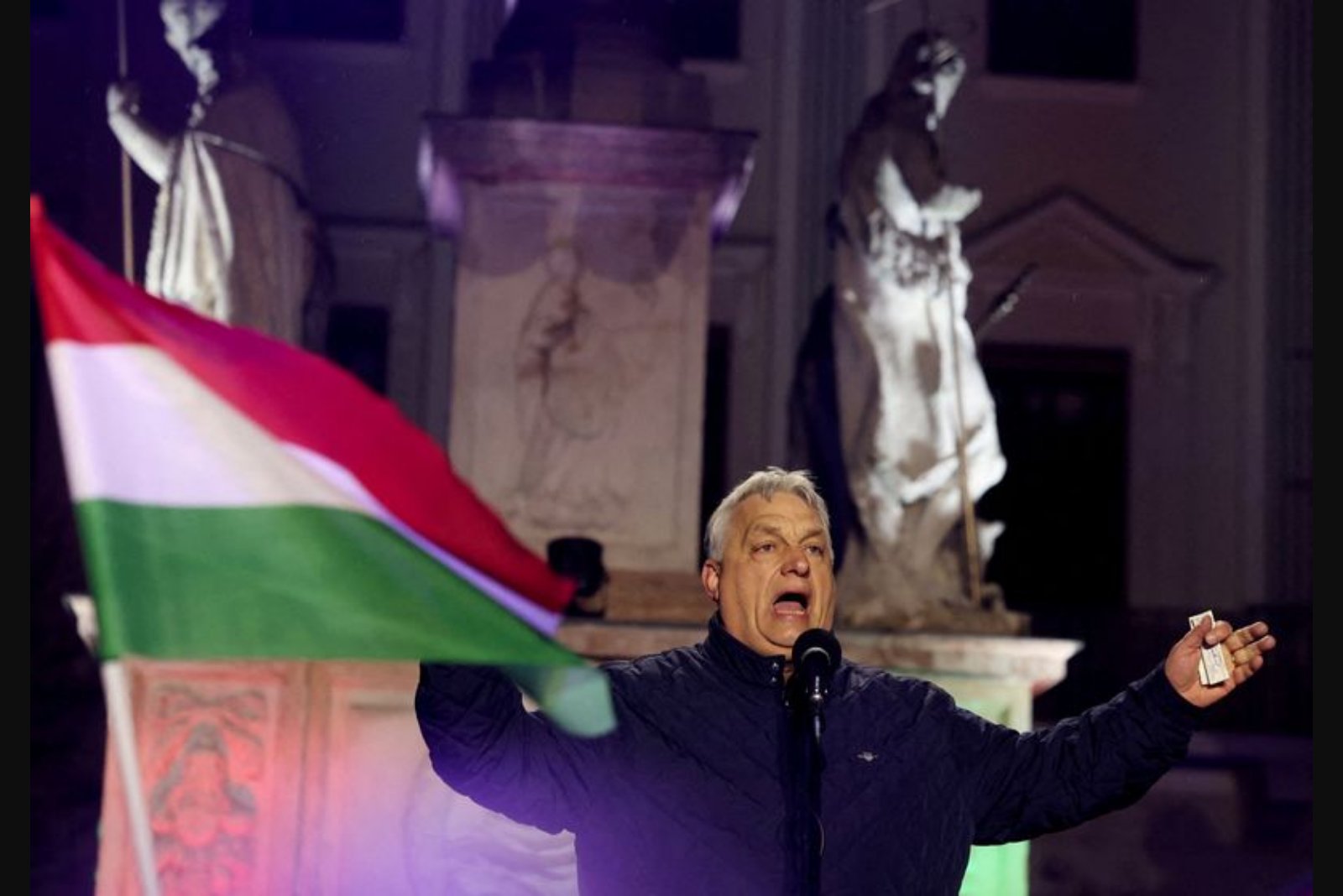
The political context is a tightly contested election in which opinion polls have suggested that Orban - a nationalist leader who has had repeated disputes with Brussels and maintains cordial relations with the Kremlin - could be removed from power after 16 years by a former lieutenant turned opposition leader. Hungary's opposition accuses Orban and his Fidesz party of conducting an aggressive disinformation campaign across traditional media, social platforms, and through AI-generated material to stoke fear about the country's prospects under an opposition government led by Peter Magyar.
Orban and his supporters, for their part, assert they are presenting facts to Hungarian voters and contend that their political opponents benefit from a large pro-EU propaganda effort backed by Brussels. The Vox Harbor findings prompted requests for comment to both the Kremlin and to Zoltan Kovacs, a spokesman for the Hungarian government; neither responded immediately to those requests. Telegram told Reuters it is a politically neutral platform that supports everyone's right to peaceful free speech.
Vox Harbor's report is careful in its scope - it focuses solely on Telegram content - but the researchers maintain that the patterns observed there have downstream effects across other social networks. The firm's analysis highlights both the concentrated origins of forwarded material and the role of translation and curation in adapting external content for Hungarian audiences.
The research and independent sampling together point to a complex messaging environment in which foreign-produced material is being amplified by local and international channels. Analysts who reviewed platform-level activity on Facebook and TikTok reported similar coordination and translation practices, reinforcing the view that content flows from a narrower set of originators into a wider social media landscape ahead of the vote.
Context note - The Vox Harbor analysis covers activity on Telegram through April 7 and documents the distribution patterns and sources described above. The broader questions about the impact of the messaging on voter behavior are not addressed by the research and remain uncertain.