
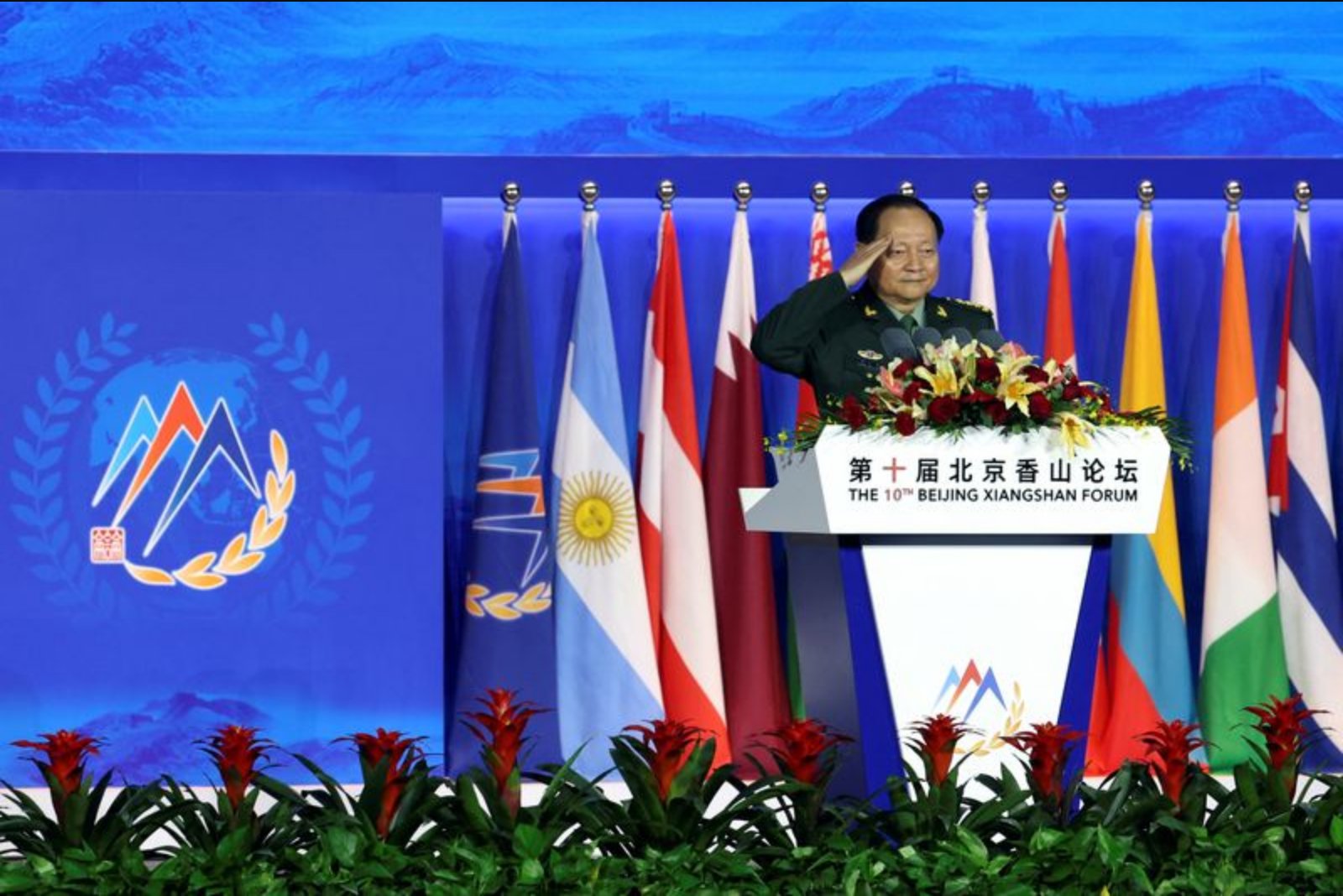
Correction: Removes an incorrect reference to Zhang Youxia’s Moscow visit in November as his last public appearance and reflects a December appearance on Dec. 22.
China’s defence ministry said on Saturday that one of the country’s most senior military figures, Zhang Youxia, is now the subject of an investigation for suspected serious violations of discipline and law. The ministry also said Liu Zhenli, chief of staff of the Central Military Commission’s Joint Staff Department, is under investigation.
Zhang serves as vice-chairman of the Central Military Commission - the body with supreme command over the People’s Liberation Army - and is widely regarded as the second-in-command under President Xi Jinping. He is also a member of the Communist Party’s Politburo and has been described within official accounts as one of the relatively few senior officers with combat experience.
The announcement is the highest-profile removal of senior military leadership in recent memory and comes while Beijing is pressing ahead with efforts to modernise its armed forces and project military capability regionally. The defence ministry statement did not provide further details about the nature of the suspected violations or the timeline of the investigation.
Scope of the anti-graft campaign
The military has been a central focus of President Xi’s wide-ranging anti-corruption campaign since 2012. That drive reached senior echelons of the PLA in 2023 when the elite Rocket Force was singled out for investigation, and has continued to extend into the top ranks.
Zhang’s removal from active duties represents only the second time a sitting general on the Central Military Commission has been removed since the Cultural Revolution of 1966-76. His investigation follows the recent expulsion from the Party and PLA of former CMC vice-chair He Weidong in October of last year on corruption charges; He had been replaced by Zhang Shengmin.
Authorities also expelled eight top generals from the Communist Party on graft charges in October 2025, a group that reportedly included He Weidong, and two former defence ministers have been purged from the ruling party in recent years on corruption allegations. The anti-graft measures have had tangible operational consequences, slowing procurement of advanced weaponry and reducing revenues at some of China’s largest defence companies.
Public appearances and immediate signals
State materials indicate that both Zhang and Liu Zhenli were present with President Xi at a military promotion event on December 22, where photographs and a government announcement documented their attendance. The ministry’s announcement did not detail when the probe began or how it will be conducted.
Foreign diplomats and security analysts have been monitoring the situation closely because of Zhang’s close political ties to President Xi and because the Central Military Commission holds central responsibility for the PLA’s command structure as well as its modernisation agenda.
Analysts’ perspectives
Observers based in the region note that day-to-day military operations could continue despite leadership purges, but see the targeting of someone as prominent as Zhang as a signal that the anti-graft campaign is widening beyond earlier, more selective actions. James Char, a Singapore-based scholar at the S. Rajaratnam School of International Studies, said that Xi has been appointing second-tier PLA officers to fill roles vacated by predecessors, often on an interim basis. Char added that China’s military modernisers remain focused on the two goals Xi has set for the PLA - to substantially complete modernisation by 2035 and to develop world-class armed forces by 2049.
Implications for military modernisation and defence industry
Officials and industry watchers say the crackdown has already affected defence procurement and corporate revenues. The announcement that Zhang is under investigation reinforces concerns that the anti-corruption campaign is disrupting the procurement pipeline for advanced weaponry and creating headwinds for major defence contractors whose revenues are tied to state orders.
While Beijing has not engaged in a major external war in decades, it has adopted a more assertive posture in regional disputes - including the East China Sea, the South China Sea, and over Taiwan. Late last year, China mounted what it described as its largest-ever military exercises around Taiwan. Analysts and foreign missions are therefore attentive to any changes in PLA leadership that could influence command, procurement, or operational focus during this period of intensified regional activity.
Zhang Youxia’s background
Zhang, born in Beijing, joined the army in 1968 and rose steadily through the ranks. He became a member of the Central Military Commission in late 2012 as the PLA’s modernisation push intensified. State accounts note that Zhang has combat experience from the brief but intense border war China launched against Vietnam in 1979 and in a later border clash in 1984; reports describe him as having been promoted rapidly after his frontline service and as exhibiting strong performance during combat.
A Pentagon profile from late 2023 noted that Zhang had been expected to retire in 2022 at the age of 72 under typical military practice; that document suggested his continuation on the CMC for a third term likely reflected President Xi’s desire to retain a close and experienced ally as a senior military adviser.
What remains uncertain
The defence ministry disclosure gives limited detail on investigative procedures, possible sanctions, or timelines. It is not clear how long Zhang or Liu will be suspended from their roles or what interim arrangements may be put in place for the key duties the two men performed. Observers have noted that Xi has been placing second-line officers in interim positions to cover vacancies, but the ministry’s brief statement leaves many questions unanswered about the immediate leadership transition at the CMC and the potential operational repercussions.
For now, the announcement is being interpreted as a continuation and expansion of a long-running anti-corruption campaign within the PLA, one that has already produced significant personnel changes and has affected defence procurement and the commercial fortunes of defence suppliers.