
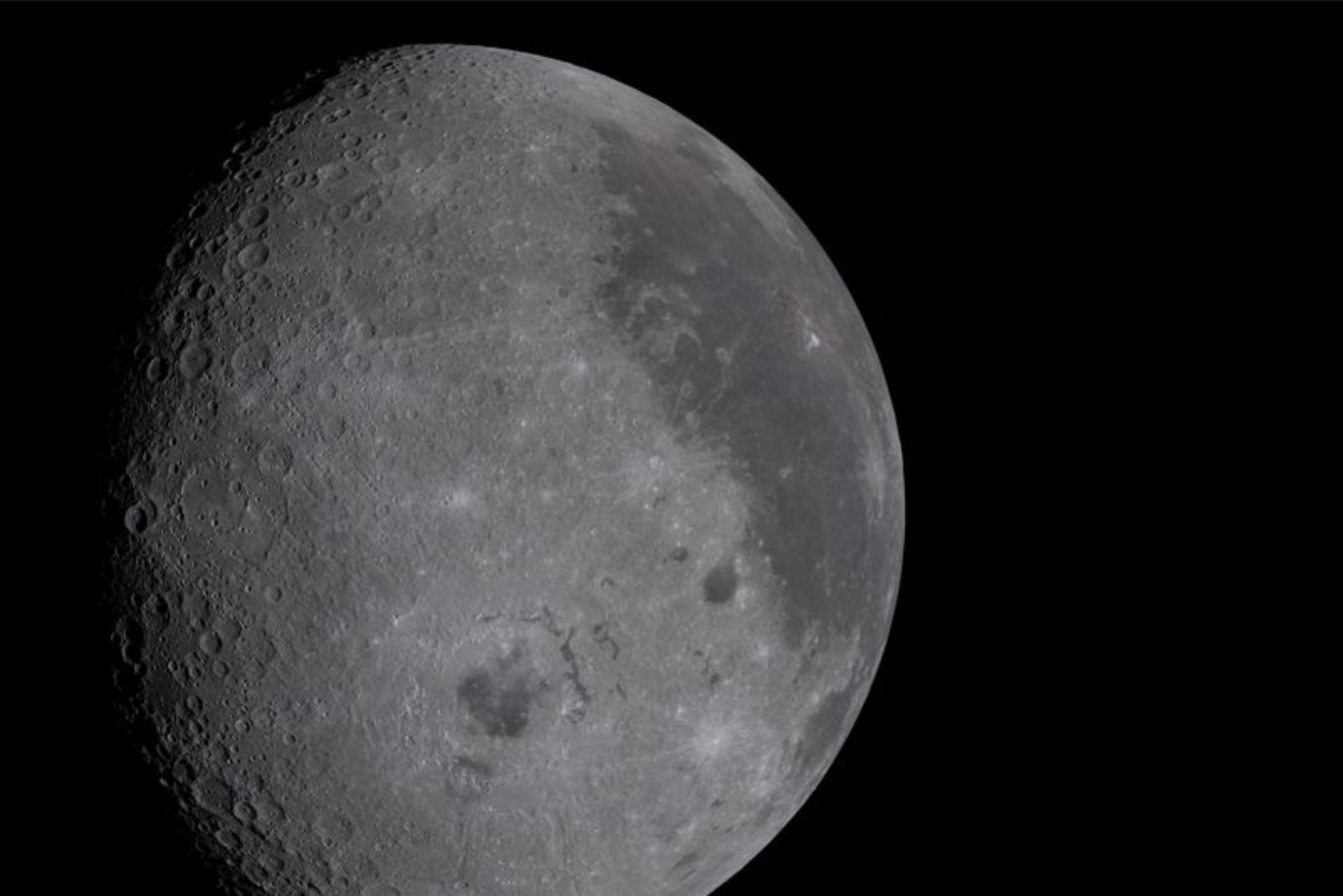
NASA’s latest Artemis milestone - sending a crewed capsule deeper into space than any humans before - has sharpened international focus on China’s declared objective to put astronauts on the moon by 2030. With the United States mapping a path back to the lunar surface that includes a planned landing in 2028, Beijing’s timetable for a crewed touchdown carries growing geopolitical and programmatic significance.
China is constructing the full mission architecture needed for its first crewed lunar landing. That architecture spans heavy-lift launch vehicles, a crewed spacecraft capable of carrying multiple astronauts, and a purpose-built lunar lander intended to transfer crew to and from the surface. The principal elements named by Chinese authorities include the Long March-10 rocket, the Mengzhou crew capsule, and the Lanyue lunar lander.
Chinese space officials and analysts point to recent technical achievements as evidence of substantive progress. Beijing has completed robotic lunar missions that returned samples from both the moon’s near side and its far side, a milestone that has expanded experience in communications, navigation and lunar surface operations. In low Earth orbit, China’s human spaceflight programme has operated long-duration space station missions and managed in-orbit contingencies, building a record of crewed operations and emergency response capabilities.
Hardware still largely unproven for crewed missions
Despite those advances, a central technical challenge remains: China must validate a largely new lunar mission architecture within a compressed timeframe to meet the 2030 goal. That validation will require demonstrating that every major subsystem - from heavy-lift rockets to crewed capsules, landers and life-support systems including spacesuits - will perform reliably on their first crewed uses.
According to the mission concept outlined by China’s manned space agency, the plan for a single crewed lunar sortie would use two Long March-10 rockets. One rocket would loft a crewed spacecraft into space while the other would deliver a lunar lander into lunar orbit. The two vehicles would then rendezvous and dock in lunar orbit. Two astronauts would transfer to the lander, descend to the surface, carry out surface activities and sample collection, and then return to lunar orbit to redock with the crewed spacecraft for the trip back to Earth.
The Mengzhou crewed spacecraft is designed to carry up to seven astronauts, according to the manned space agency, though official details on the planned crew size and roster for a 2030 landing have not been released.
Recent tests and remaining certification work
China has conducted a series of tests intended to mature components of the lunar architecture. In February, authorities carried out the first low-altitude escape test for the Long March-10 rocket with a Mengzhou capsule aboard. During that test the return capsule separated after an abort command and completed a successful splashdown at sea. In separate testing last year, the Lanyue lunar lander demonstrated ascent and descent capabilities during trials in Hebei province.
Those milestones are important steps in systems development, but program managers will need to accelerate the pace of testing and certification to demonstrate reliability in a crewed flight context. Crewed missions entail much stricter safety requirements than robotic flights, and certain critical elements of the mission chain remain under test.
Geopolitical context and institutional competition
Beyond technical validation, the effort to reach the moon by 2030 has become a symbolically loaded component of broader U.S.-China strategic competition. Lunar exploration now features as another domain in which institutions, norms and cooperative frameworks are being shaped. Washington’s Artemis Accords and the Chinese and Russian-led International Lunar Research Station (ILRS) represent competing approaches to governance and partnership in a future where humans may have a lasting presence on the moon.
Observers and analysts interpret China’s broader posture - including increased defence spending, the use of space diplomacy to expand overseas influence, growth in its private launch sector and successful robotic lunar missions - as indicators of a high level of motivation to achieve a crewed lunar landing quickly. That motivation is often described in strategic terms rather than overt ‘‘race’’ rhetoric in public communications.
No single milestone defines success for either side. As one aerospace academic observed, the measure of future leadership on the moon may hinge not only on who lands first but on which actors can sustain longer stays and execute more extensive operations from the surface.
Outlook and timeline assessment
Some analysts judge China’s progress as steady and view the 2030 target as attainable. China has previously set ambitious deadlines for space activities and has a record of meeting many of those timelines. Program officials themselves have indicated a degree of conservatism in public targets; one senior program designer characterized the 2030 date as intentionally modest relative to the program’s internal expectations.
Still, the path from current testing to a fully validated, crewed lunar landing involves a sequence of successful, interdependent demonstrations across rockets, crew systems, landers and operational procedures. Each of those steps must meet stringent safety and reliability thresholds for crewed operations, and the program will need a concentrated tempo of testing and certification over the coming years.
Key points
- China aims to land astronauts on the moon by 2030 while the U.S. plans a lunar landing in 2028, increasing geopolitical stakes in lunar exploration - sectors affected include aerospace manufacturing, defence procurement and space services.
- Beijing is developing new mission hardware - Long March-10, Mengzhou spacecraft and Lanyue lander - but must validate the end-to-end architecture for crewed lunar operations, affecting launch providers, spacecraft integrators and spacesuit suppliers.
- Recent robotic sample returns and orbital crewed operations have advanced China’s operational experience, but crewed missions demand higher safety certification and accelerated testing - implications for private launch companies and suppliers in the space supply chain.
Risks and uncertainties
- Technical risk: Major components of the lunar architecture still require validation in crewed contexts; failures or delays in testing could push timelines - this impacts aerospace manufacturers and mission insurers.
- Program tempo risk: The pace of necessary testing and certification must increase materially to meet the 2030 objective; constrained testing could lead to schedule slips - affecting suppliers, launch schedules and investor expectations in space-related firms.
- Geopolitical risk: Institutional competition over lunar governance may affect international partnerships, procurement decisions and market opportunities for companies in countries aligned with different lunar frameworks.