
World January 23, 2026

Chancellor Merz Voices Reservations Over Current U.S. Peace Board Framework While Expressing Willingness to Collaborate

Germany's Friedrich Merz open to new international cooperation models targeting global peace, but rejects present U.S. peace board structure

By Maya Rios
Chancellor Merz Voices Reservations Over Current U.S. Peace Board Framework While Expressing Willingness to Collaborate

German Chancellor Friedrich Merz has articulated his readiness to participate in U.S. President Donald Trump's initiative, the Board of Peace, specifically aiming at resolving issues in Gaza. However, Merz emphasized that the governance model proposed in the current iteration of the plan conflicts with German constitutional principles, rendering acceptance impossible in its existing state. The Chancellor also highlighted openness to exploring alternative cooperative approaches with the United States, potentially extending beyond Gaza to other conflict zones such as Ukraine.

Key Points

  • German Chancellor Friedrich Merz opposes the current structure of the U.S.-proposed Board of Peace on constitutional grounds but supports peace efforts in Gaza.
  • Merz indicates Germany's openness to alternative cooperation forms with the United States aimed at promoting peace internationally, including in regions beyond the Middle East such as Ukraine.
  • The position reflects Germany’s constitutional limitations on accepting specific international governance structures and highlights a willingness to adapt frameworks for peace collaboration.

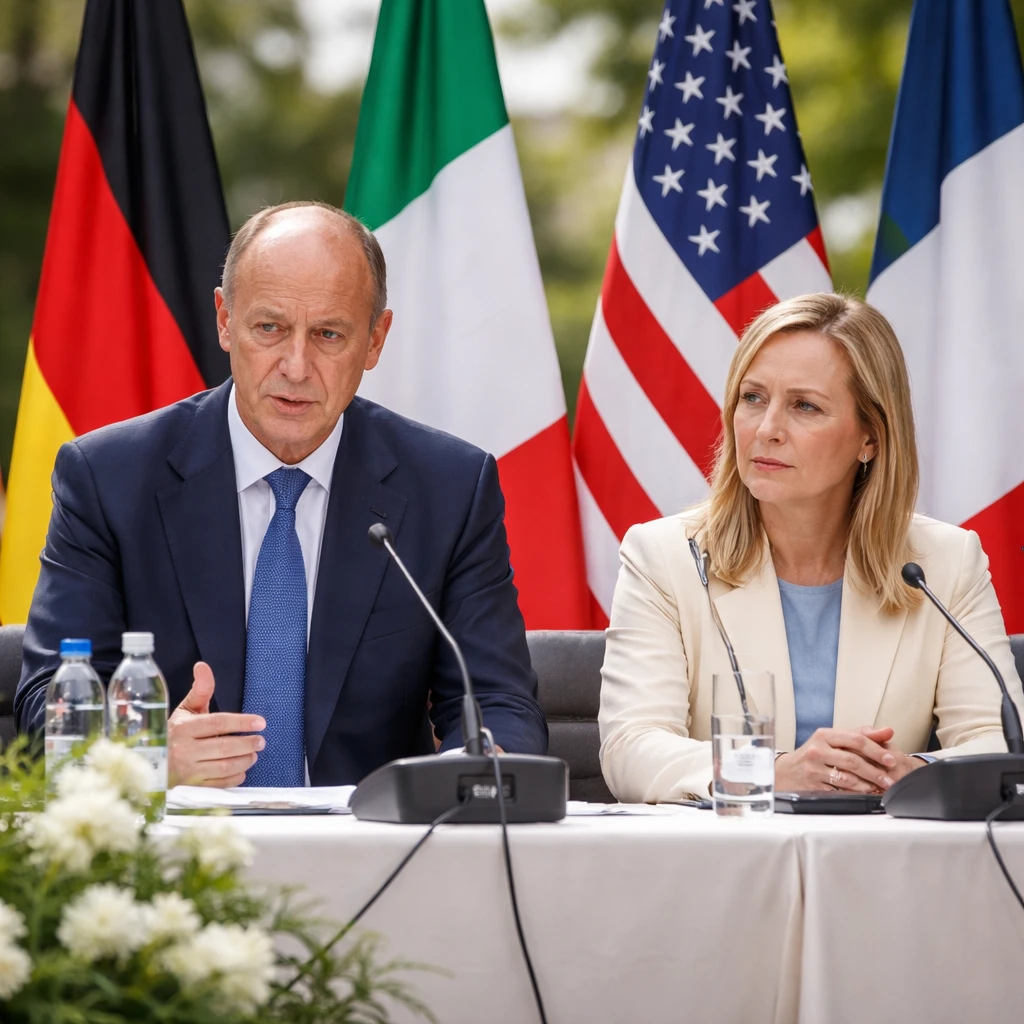
During a joint press conference in Rome alongside Italian Prime Minister Giorgia Meloni, German Chancellor Friedrich Merz addressed the potential involvement of Germany in the United States-led Board of Peace initiative, a proposal advanced by U.S. President Donald Trump focused on fostering peace efforts in Gaza.

Merz acknowledged the humanitarian and geopolitical importance of seeking solutions in Gaza and communicated Germany's willingness to engage in the initiative’s broader objectives. However, he made clear that the current organizational and governance setup of this peace board is incompatible with Germany’s constitutional framework, thus precluding acceptance of the proposal as it presently stands.

"In the form in which the peace board is currently structured, we cannot accept its governance structures in Germany due to constitutional restrictions," Merz declared. Despite these reservations, he expressed intent to pursue collaboration with the United States in alternative formats designed to advance peace. He indicated that such cooperation might not be confined solely to regions like Gaza or the Middle East, proposing that similar cooperative frameworks could potentially address other conflict-affected areas, including Ukraine.

By outlining these positions, Chancellor Merz strikes a balance between supporting peace initiatives and safeguarding constitutional compliance within Germany. His openness to devising new modalities for cooperation suggests a flexible approach to international conflict resolution efforts, conditioned on frameworks that align with domestic legal and institutional requirements.

This stance may influence diplomatic dialogues between Germany and the United States, as well as shape international peacebuilding strategies across conflict zones with significant geopolitical consequences.

Risks

  • Constitutional incompatibility may limit Germany's formal participation in the current Board of Peace, potentially affecting the initiative's effectiveness in Gaza.
  • Ambiguity around the new cooperation formats and their scope could delay or complicate coordinated peace efforts between Germany, the U.S., and affected regions.
  • Geopolitical uncertainties persist given expansions of potential peace cooperation beyond the Middle East, introducing complex diplomatic and operational challenges.

More from World

U.S. Olympic hospitality site renamed 'Winter House' after protests over ICE shootings Feb 2, 2026 Greenland’s premier says U.S. still aims for control despite ruling out military action Feb 2, 2026 Kremlin says Russia has long offered to process or store Iran’s enriched uranium Feb 2, 2026 Long-Awaited Rafah Reopening Prompts Hope and Anxiety Among Palestinians Stranded Across Border Feb 2, 2026 Rafah Reopens but Core Questions Persist Over Implementation of Trump’s Gaza Blueprint Feb 2, 2026