
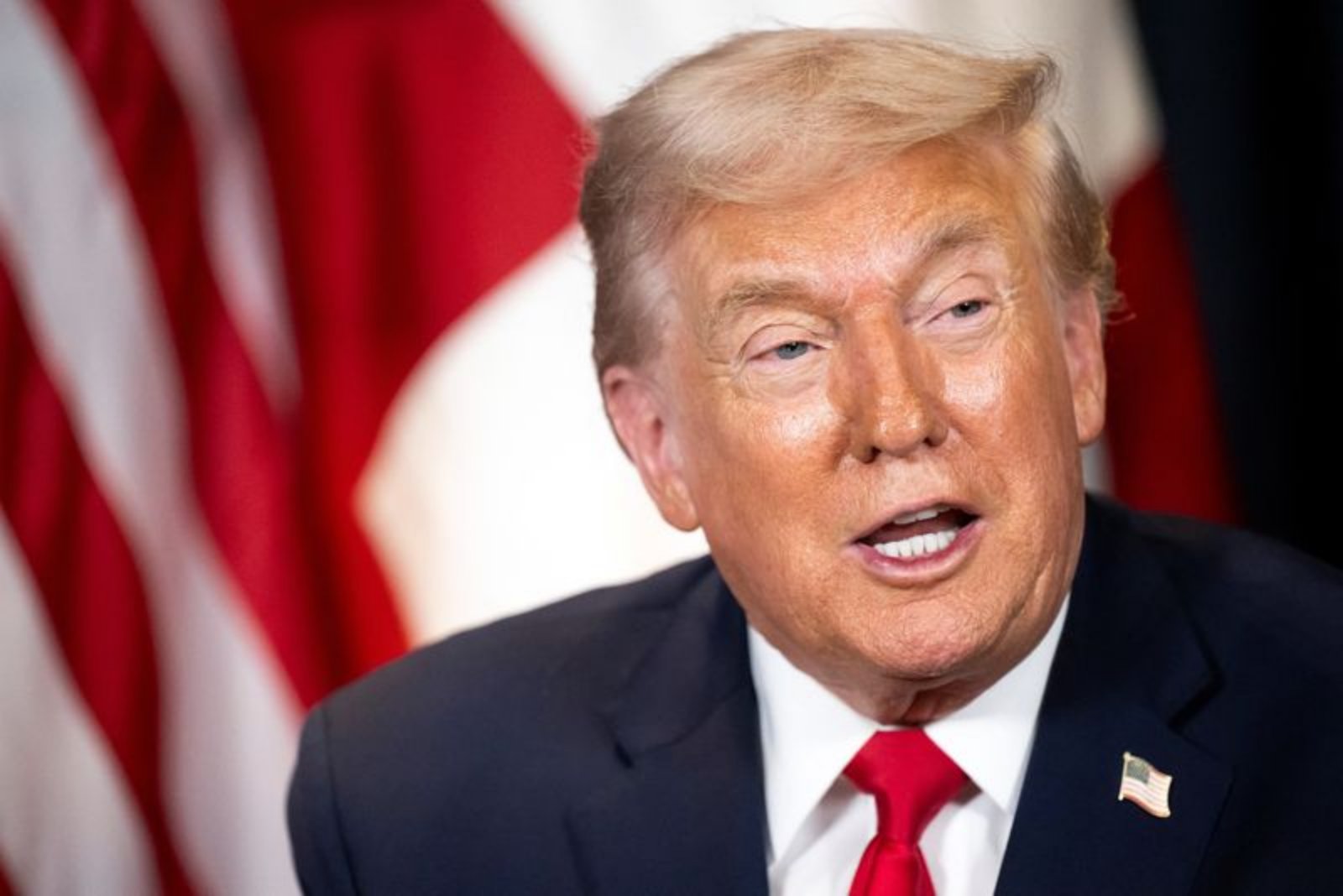
When delegations from the United States, Denmark and Greenland met in Greenland's capital last month, attendees described the session as routine and without any discussion of a U.S. military or financial takeover of the Danish territory. Yet within two weeks, the dynamics shifted sharply after the president named a special envoy for Greenland, Jeff Landry, who publicly declared on social media his intent to help "make Greenland part of the U.S."
The public appointment and Landry's post stunned officials in Copenhagen and caught senior U.S. officials who normally work on European and NATO matters off guard, according to multiple people familiar with the discussions. Insiders said the exclusion of the usual diplomatic channels reflected a broader pattern in the administration's foreign policy-making - one marked by rapid swings, limited participation by national security professionals and a reliance on a narrow circle of trusted aides.
That pattern, as described by people familiar with internal deliberations, has produced a string of high-profile moves that were developed without the broad consultation typically seen in prior administrations. Those steps included a public suggestion that the United States might seize Greenland by force, a proposal for new tariffs on allies, and an effort to extract concessions from Denmark, which retains sovereignty over Greenland. People familiar with the internal discussions said the push on tariffs was proposed by Commerce Secretary Howard Lutnick, and that Vice President JD Vance, Secretary of State Marco Rubio and others in the president's inner circle sought to dissuade the president from considering military options.
For the president, this tighter, more centralized decision-making model appears to align with a distrust of Washington's bureaucratic apparatus and a preference for rapid implementation of policy. Yet that same model produces abrupt announcements and reversals that risk straining relationships with key allies.
When asked to respond to several instances in which foreign ministry officials and U.S. diplomats said they were surprised by White House actions - including in Greenland, Ukraine and Syria - White House spokeswoman Anna Kelly said those who "leak to Reuters" were not part of sensitive discussions. Kelly defended the president's approach, saying the national security team had delivered achievements and asserting: "The president was elected to implement America First foreign policy, and he has done so more effectively through his top-down approach."
Military options and public alarm
The risks of a personalized, centralized foreign policy surfaced vividly in early January. On January 5, White House Deputy Chief of Staff Stephen Miller, in a televised interview, declined to rule out military action to acquire Greenland - an exchange that followed a military operation in Venezuela two days earlier. In subsequent interviews and social media posts, the president and other administration officials appeared to emphasize the possibility that force could be used in Greenland, comments that sowed confusion and alarm in Washington and among allied capitals.
On Capitol Hill, members of both parties raised concerns that the administration might be contemplating major military operations without prior consultation with Congress. Two people familiar with the matter said lawmakers phoned Secretary Rubio and senior White House staff to express reservations and urge restraint. Some Republican legislators also warned that any military invasion of Greenland could spark impeachment inquiries, the sources said.
In the days that followed, the president stepped back from the most confrontational rhetoric. He abandoned plans to impose tariffs on allies who supported Denmark over Greenland and said he had worked out the outlines of an agreement with NATO on the island's future. The president said he and NATO Secretary General Mark Rutte had "formed the framework of a future deal with respect to Greenland and, in fact, the entire Arctic Region" after talks in Davos, Switzerland.
Two sources close to the administration told reporters that military action had never been seriously considered. Still, analysts and former officials worry the episode has lasting consequences. Kori Schake, formerly with the Pentagon and the White House, said the mere suggestion of seizing Greenland by force had damaged U.S. credibility. "The president is so erratic with his threats, there's no way to establish that he won't turn right around and do it again. He has made the United States untrustworthy to our closest friends," Schake said.
White House spokeswoman Anna Kelly later framed the president's actions as strategic gains, saying: "If this deal goes through ... the United States will be achieving all of its strategic goals with respect to Greenland, at very little cost, forever." Jeff Landry's office did not immediately respond to requests for comment. A Danish embassy spokesperson did not offer comment for this story.
The president and his supporters have argued that Greenland is a critical strategic asset for countering perceived threats from Russia and China in the Arctic, and have suggested Denmark cannot adequately provide for the island's security. The United States already operates a military base on Greenland and, under a 1951 treaty with Denmark, retains the legal ability to expand its presence there.
Centralization beyond Greenland - Ukraine and Syria
Officials and observers say the centralized model has been visible in other theaters, notably in discussions aimed at ending Russia's war in Ukraine. In the autumn, a 28-point plan to bring the conflict to an end reportedly emerged from meetings involving the president's special envoy Steve Witkoff, the president's son-in-law Jared Kushner, and Russian official Kirill Dmitriev, who heads the Russian Direct Investment Fund. Two people familiar with the plan said many senior State Department and National Security Council officials were not briefed during the formation of that 28-point package.
The same pattern appeared in the administration's approach to Syria. In May, the president met publicly with Syrian President Ahmed al-Sharaa in Saudi Arabia, a meeting that, according to people familiar with administration dynamics, effectively signaled U.S. support for al-Sharaa despite internal advice to the contrary. The subsequent decision to lift all U.S. sanctions on Syria surprised many officials in Washington.
Since that policy shift, U.S. envoy Tom Barrack has largely taken the lead in implementing Syria policy, with State Department and other interagency officials reportedly having limited opportunity to shape the approach. Sources said that communications between Barrack and subject-matter experts in Washington have not been frequent. A State Department spokesperson defended the administration's record, saying: "There is tremendous collaboration throughout President Trump's administration, and there are dedicated public servants dutifully advancing key priorities. Then there are the anonymous sources whining to the press who clearly don't have the judgment or temperament to implement President Trump's agenda."
What this means for allies and policy coherence
Across the described episodes, a consistent theme is the marginalization of the usual diplomatic and national security processes in favor of rapid, top-down decisions made by the president and a limited group of advisers. Officials who would typically be central to foreign policy formulation said they were often kept out of the loop - a reality that allies and lawmakers found disconcerting when announcements carried strategic implications.
Those left to manage the fallout domestically and abroad have had to reassure partners and explain policy shifts that, at times, reversed or softened the administration's initial posture. Whether in Greenland, Ukraine or Syria, the sources said, the result has been uncertainty - among allies about U.S. intentions, and among domestic institutions about the processes behind major foreign-policy moves.
For partners that rely on predictable diplomatic behavior and sustained consultation, the described approach presents a challenge. Officials and former officials quoted by those familiar with these episodes argued that strategic relationships are not only about capabilities but also about trust and predictability - attributes that, they said, can be undercut by abrupt public pronouncements and sudden changes in posture.
As these episodes illustrate, the president's preference for a concentrated decision-making model can achieve fast, headline-grabbing results. But the approach also carries the risk that strategic partners, and the career officials who execute long-term policy, will be left uncertain about where U.S. policy is headed and who is authorized to represent it.