
World January 25, 2026

Carney Says Canada Will Honor USMCA Limits on Deals with Non-Market Economies

Prime Minister Mark Carney reiterates Canada will not pursue free trade agreements with non-market economies while signaling targeted protections for key export sectors

By Marcus Reed
Carney Says Canada Will Honor USMCA Limits on Deals with Non-Market Economies

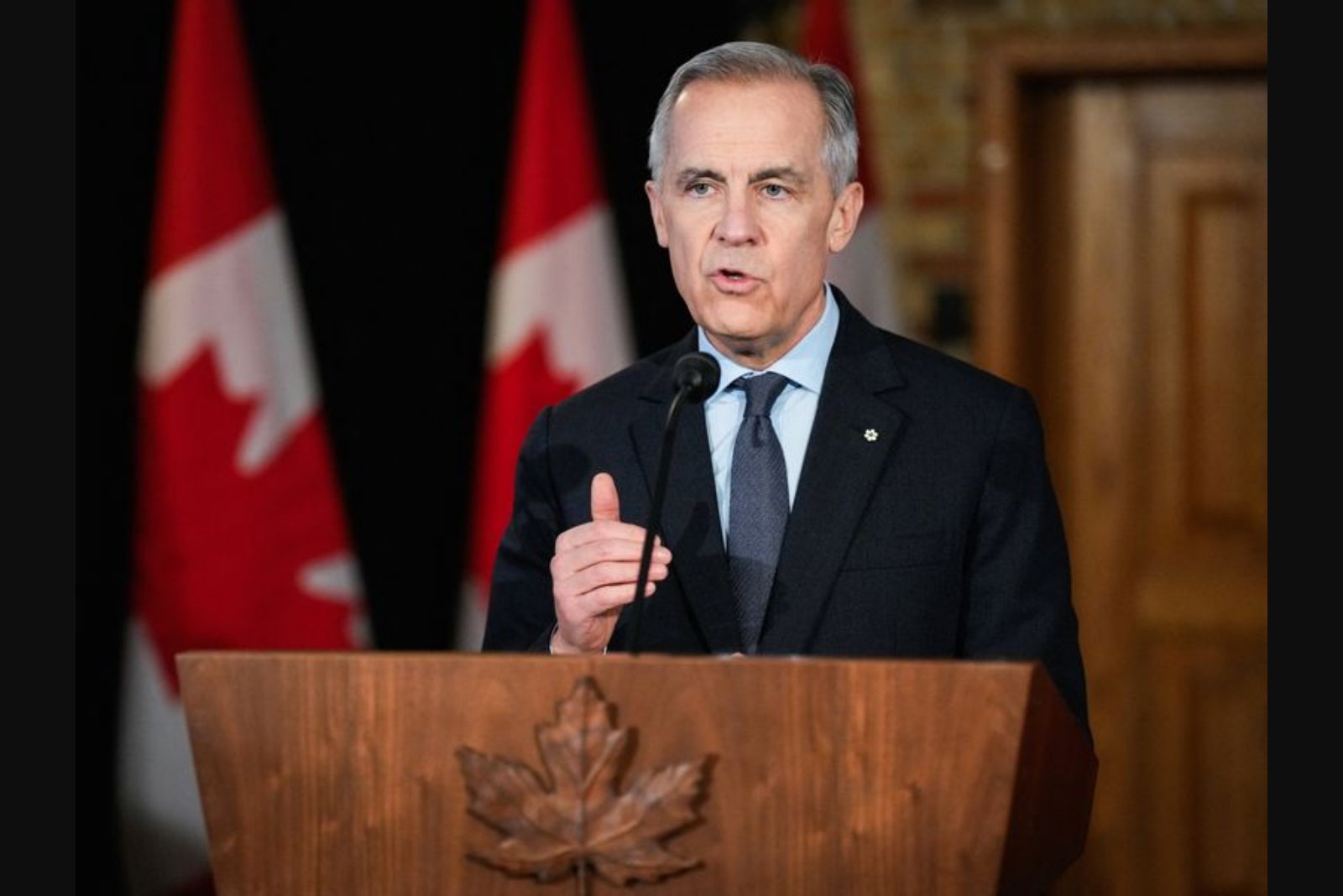
Canada affirmed its adherence to the United States-Mexico-Canada Agreement commitment not to pursue free trade agreements with non-market economies, Prime Minister Mark Carney said in Ottawa. Responding to a U.S. threat of steep tariffs if Canada struck a deal with China, Carney said Canada has no intention of such an agreement, while noting recent efforts to resolve bilateral trade frictions with China and to strengthen protection for certain sectors.

Key Points

  • Canada reaffirmed that it will respect USMCA commitments not to pursue free trade agreements with non-market economies.
  • Prime Minister Mark Carney said Canada has no intention of striking a free trade pact with China and highlighted steps taken to address bilateral issues.
  • Carney indicated additional protections for electric vehicles, agriculture and fish products while seeking to diversify trade and resolve tariff disputes with China.

Prime Minister Mark Carney said from Ottawa that Canada intends to abide by the commitments and engagements it made under the United States-Mexico-Canada trade agreement - including the pledge not to pursue free trade agreements with non-market economies. Carney's remarks came in response to a U.S. statement that it would impose a 100% tariff on Canada if Ottawa were to enter a trade deal with China.

Carney told reporters that Canada has no plans to negotiate a free trade agreement with China or any other non-market economy. At the same time, he noted that Ottawa has taken steps to address particular issues that have emerged in trade relations with China over the last couple of years.

Explaining changes to Canada’s approach, Carney said the government is "going back to the future" in areas such as electric vehicles, agriculture and fish products - indicating additional protections for those sectors. He framed these moves as targeted adjustments rather than the pursuit of a comprehensive free trade agreement with a non-market economy.

Carney also referenced a recent trip to China earlier this month. The visit, he said, was intended to diversify Canada’s trade ties and to help resolve tariff issues with what the government characterizes as its third largest trading partner. Those efforts, according to Carney, are focused on resolving specific points of friction and supporting export sectors rather than negotiating a broader market-opening pact.

Carney’s comments come amid heightened rhetoric over trade between Canada, the United States and China. The potential for unilateral tariffs by the United States - raised publicly by the U.S. side as a response to any Canadian-China deal - adds an element of immediate political and commercial uncertainty for exporters and policymakers.

Officials and industry participants will be watching actions taken to protect domestic producers in EVs, agriculture and fish products, as well as the outcomes of Ottawa’s engagement with Chinese counterparts. Those developments will influence how Canada balances commitments under the trade agreement with efforts to address bilateral trade disputes and to diversify export markets.


Source note: Remarks summarized from statements by Prime Minister Mark Carney in Ottawa and from his recent visit to China earlier this month.

Risks

  • U.S. threat to impose a 100% tariff on Canada if it were to strike a trade deal with China - risk to exporters and cross-border trade flows, especially if political tensions escalate.
  • Ongoing tariff issues with China despite recent engagement - uncertainty for sectors targeted for protection, including EVs, agriculture and fish products.
  • Potential domestic and international policy friction as Canada balances USMCA commitments with efforts to resolve bilateral trade disputes and diversify trade relationships.

More from World

U.S. Olympic hospitality site renamed 'Winter House' after protests over ICE shootings Feb 2, 2026 Greenland’s premier says U.S. still aims for control despite ruling out military action Feb 2, 2026 Kremlin says Russia has long offered to process or store Iran’s enriched uranium Feb 2, 2026 Long-Awaited Rafah Reopening Prompts Hope and Anxiety Among Palestinians Stranded Across Border Feb 2, 2026 Rafah Reopens but Core Questions Persist Over Implementation of Trump’s Gaza Blueprint Feb 2, 2026