
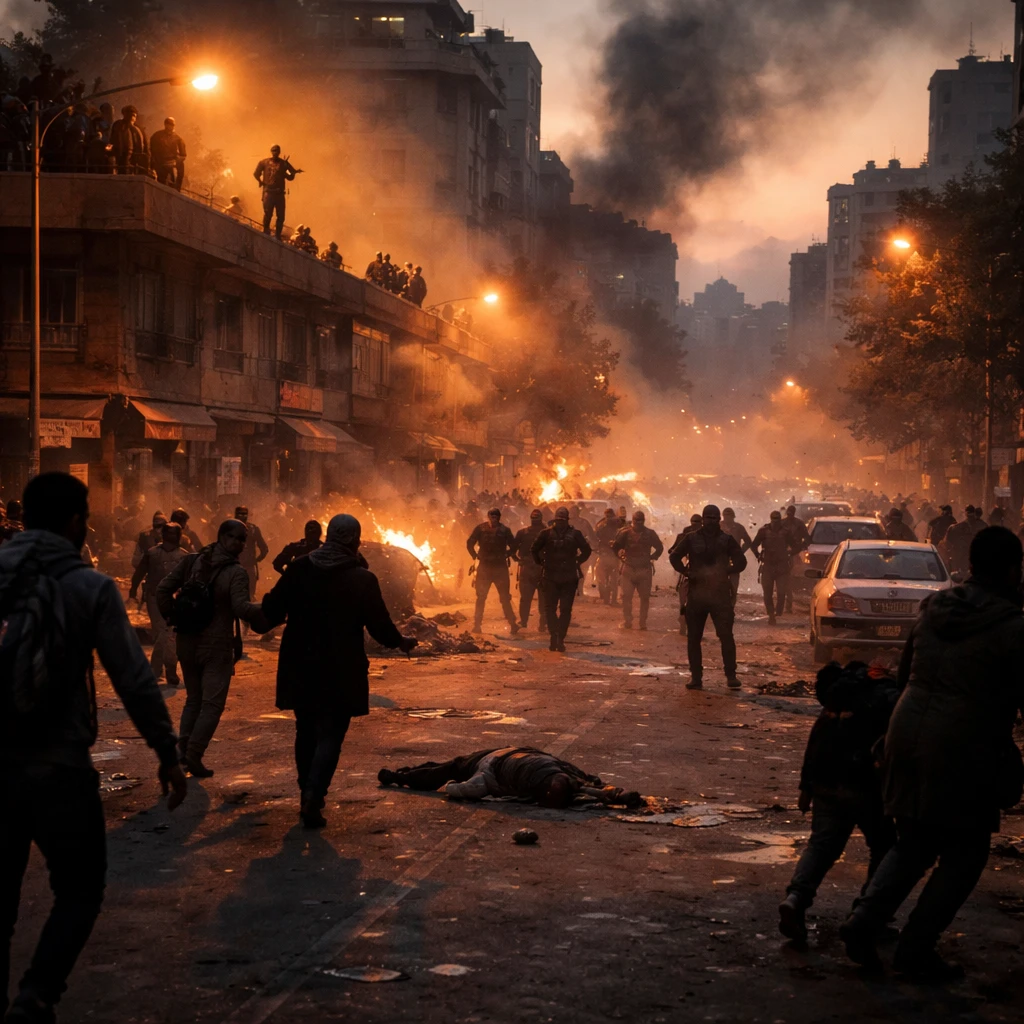
In Tehran, a 22-year-old art student named Arash lost his life after a shotgun blast struck him while he was walking home. He was neither participating in the protests nor expressing opposition when the fatal shot was fired. A close friend who witnessed the incident recalled watching a protest near Vanak Square with Arash when security forces wearing black uniforms arrived and discharged firearms indiscriminately toward the crowd. According to the friend, who spoke on condition of anonymity due to security concerns, Arash collapsed instantly, dying on the pavement.
This tragic incident exemplifies a disturbing pattern during Iran's latest anti-government protests, where individuals uninvolved in demonstrations have been caught within security forces' lethal suppression. Numerous eyewitnesses and family members describe indiscriminate firing that has left many innocent civilians either dead or missing amid the unrest.
Due to restricted access to reliable information and government-imposed communication blackouts starting January 8, independent verification of these deaths remains challenging. Authorities have substantially limited access by restricting internet and telephone lines coinciding with the nationwide spread of protests. From January 13, outgoing international calls were restored but incoming calls remain blocked. Requests for comment from Iranian officials and U.N. missions have gone unanswered.
In official discourse, the Iranian government attributes the unrest and fatalities to "terrorists and rioters" supported by external enemies like the United States and Israel. These claims have been portrayed through state media footage of damaged police stations, mosques, and financial institutions allegedly targeted by violent agitators.
Human rights organizations, in particular the U.S.-based HRANA group, have documented thousands of deaths linked to the unrest. To date, HRANA has verified 4,519 fatalities, including 4,251 protesters, 197 security personnel, 35 individuals under 18 years old, and 38 bystanders who were neither demonstrators nor security members. An Iranian official informed news outlets that the confirmed toll surpasses 5,000, which includes approximately 500 security personnel deaths.
The protests erupted on December 28 in Tehran’s Grand Bazaar due to mounting economic difficulties, rapidly amplifying to nationwide calls for systemic change. Footage broadcast on state television depicted protesters burning images of Supreme Leader Ayatollah Ali Khamenei, intensifying the volatility.
Amnesty International reported that security forces have been stationed not only on streets but also atop rooftops of residential buildings, mosques, and police stations. There, they discharged rifles and shotguns loaded with metal pellets, targeting predominantly unarmed civilians with shots to the head and torso. These actions indicate a coordinated and widespread escalation in the state's unlawful use of lethal force against peaceful protesters and those caught nearby, with the deadliest violence recorded from January 8 onwards.
The unrest represents one of the most significant challenges to Iran’s clerical leadership in recent years. Internationally, U.S. leaders have issued warnings of intervention should killings on the streets persist, while Iran’s judiciary has signaled possible executions of detainees arrested during the protests.
Eyewitnesses and former residents recount scenes comparable to combat zones as security forces utilized live ammunition during early January crackdowns. In one instance, Fariba, a 16-year-old described by her mother as inquisitive and lively, accompanied her mother to observe protests and was caught in the ensuing gunfire unleashed by security personnel on motorcycles. Separated amid the chaos, Fariba went missing; her family later discovered her lifeless body at Tehran’s Kahrizak Forensic Medical Centre. She had been fatally shot in the heart, contradicting official statements blaming her death on "terrorists." Her mother emphatically attributes it to security forces’ actions.
Videos circulating on social media platforms depict grieving families searching morgues and forensic centers for loved ones, reinforcing the extent of civilian casualties. While the grief and locations have been verified, specific identities and video dates remain unconfirmed.
A physician who left Iran mid-January reported that medical facilities were overwhelmed with patients suffering gunshot wounds. Regions such as Karaj and Kermanshah witnessed security forces employing automatic weapons, armored vehicles, and even tanks to contain demonstrations, further escalating violence against civilians and protesters alike.
Another poignant case involves Masoud from Isfahan recounting the shooting death of his 43-year-old brother, who was killed while sheltering teenage protesters within his shop. Similarly, the family of Nastaran, a 28-year-old elementary school teacher in Tehran, found her shot dead in a warehousing area after she disappeared following a visit to a cousin.
Authorities reportedly permitted Nastaran’s family to collect her remains only on condition that they hold the burial in their hometown and attribute her death to "terrorists," a claim the family denied. In the northern city of Rasht, security forces forcibly entered the home of Sepideh, a 33-year-old woman observed watching protests from a window, and detained her. Her family remains uncertain of her location, and warnings have been issued to her spouse against trying to locate her amid ongoing repression.