
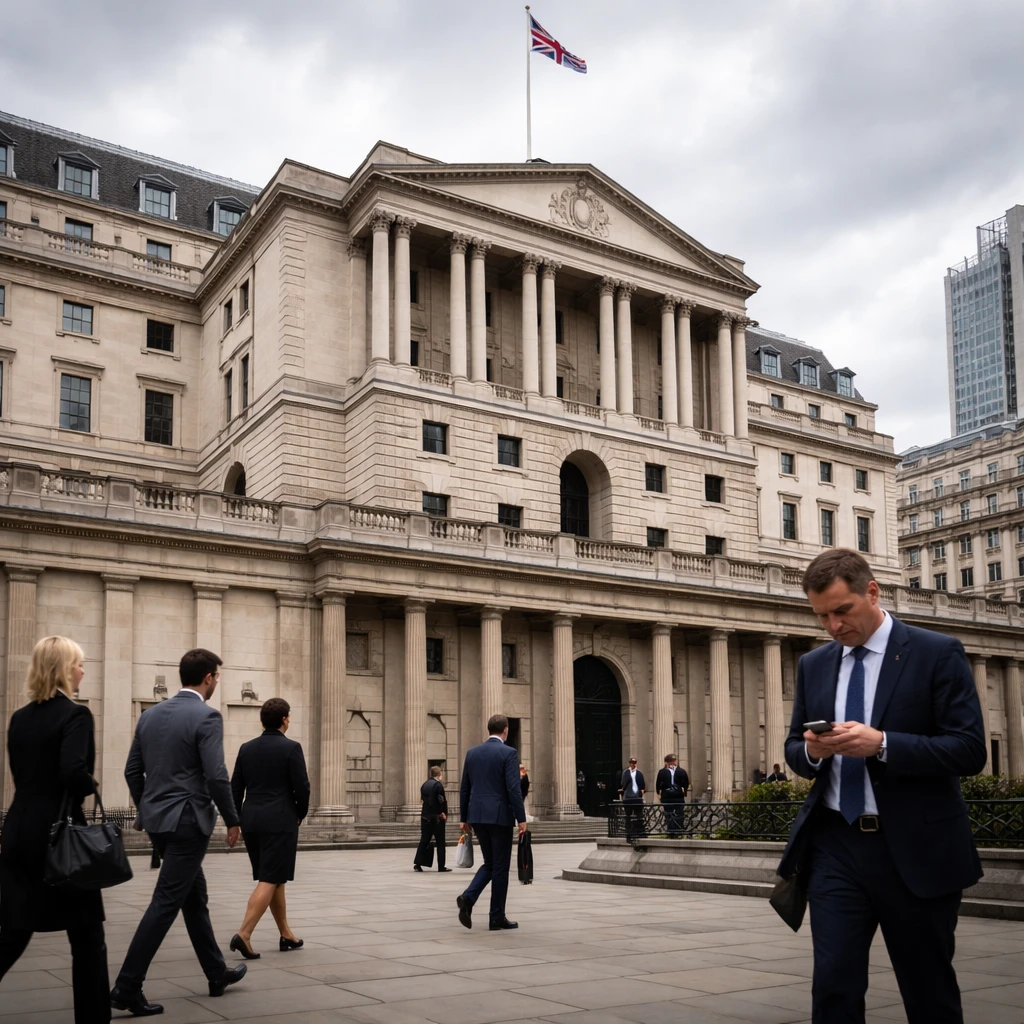
Bank of England Governor Andrew Bailey said he views market pricing that puts a March interest rate cut at roughly even odds as sensible, following a narrowly split policy decision to maintain the central bank’s key rate.
Speaking in a Bloomberg TV interview after the Monetary Policy Committee opted to keep the benchmark rate at 3.75% in a tight 5-4 vote, Bailey said:
"I think going into March, 50-50 is not a bad place to be,"
The vote surprised some market participants who had anticipated officials would display greater caution about stepping toward easier policy. Within the nine-member committee, four members registered their preference to cut rates to 3.5%, a level of dissent that the article notes was higher than the two that economists had expected.
Bailey, who served as the swing voter in the decision, told Bloomberg he remains focused on the inflation outlook and is looking for additional confirmation that price growth will stay close to the Bank of England’s 2% objective. The bank has projected that inflation will approach that target in April.
On the question of how markets are interpreting the decision, Bailey offered a candid assessment:
"In a sense, markets are asking themselves the same question that I’m asking, or perhaps they’re just working out what question I’m asking,"
That stance represented a change from his position at the December meeting, when he had backed a rate cut. At the most recent gathering he chose to hold rates steady instead.
The governor’s remarks underline the narrow balance of views within the committee and the sensitivity of policy direction to incoming evidence on inflation. With the central bank forecasting that inflation will move toward its 2% target in April, Bailey’s emphasis on needing "more evidence" frames the Bank of England’s path to any potential easing as conditional on developments in price dynamics.
Analysis
The combination of a slim majority to hold rates and Bailey’s public assessment that markets are reasonable to price a 50-50 chance for March keeps the outlook for UK monetary policy finely balanced. The larger-than-expected number of committee members preferring a cut illustrates divergent interpretations of economic data within the MPC.