
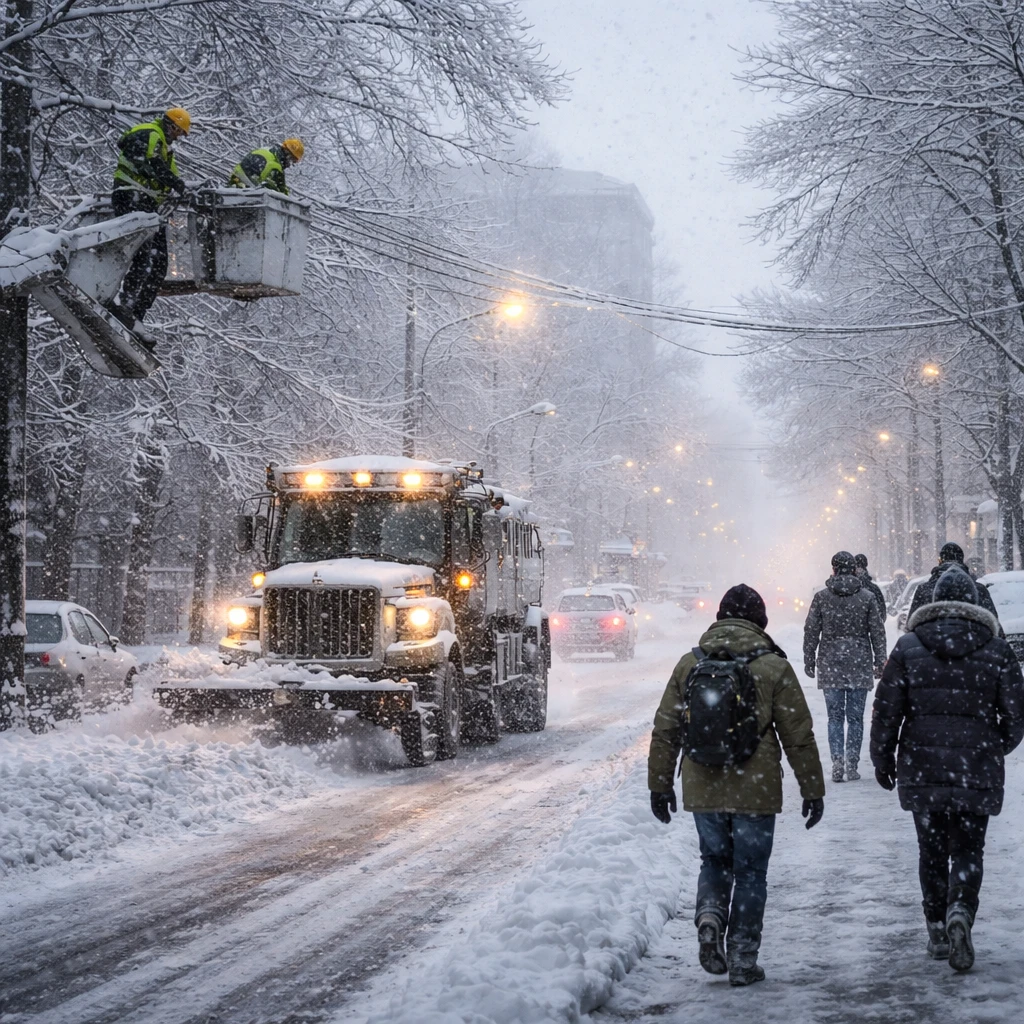
On Friday morning, regions in Northwest Texas and Oklahoma City experienced substantial snowfall as a powerful winter storm advanced eastward through the United States. This weather system, propelled by an intense surge of Arctic air originating in Canada, poses considerable hazards including life-threatening cold, widespread power disruptions, and dangerously icy roadways. The National Weather Service has issued weather emergency alerts covering more than 150 million people, which amounts to nearly half of the national population.
Meteorologists predict that the storm will traverse the country from the southern Rocky Mountains to the East Coast through early Monday, affecting much of the eastern United States throughout the weekend. To prepare for these conditions, at least 14 states along with the District of Columbia have declared states of emergency. These declarations facilitate the mobilization of resources such as road salting operations, emergency crews for power outage response, and public safety measures to mitigate the storm’s impact.
Brandon Buckingham, a meteorologist with AccuWeather, noted that the initial phases of the storm began on Thursday evening with snow and sleet in parts of the Central Plains. He highlighted that the accumulation of ice on roads, trees, and power lines presents a significant danger. In Dallas, for example, up to half an inch of ice could develop, creating treacherous conditions that may persist. Buckingham advised residents to anticipate power outages potentially lasting several days, particularly in areas most affected by ice buildup, although the storm is expected to lessen by Monday morning.
In Oklahoma City, projections estimated snowfall reaching up to 12 inches coupled with icy conditions before the weekend’s end. Temperatures were forecasted to plunge as low as 8 degrees Fahrenheit on Friday, stressing the severity of the cold. Morgan Mayo, a supervisor at the local cafe Not Your Average Joe, reported that patrons gathered indoors seeking refuge from the freezing weather. Despite the extreme forecast, the cafe intended to remain open on Saturday, albeit with a high temperature around 10 degrees. Employees living nearby volunteered to commute on foot, demonstrating community resilience amidst the storm.
The looming storm evokes memories of the 2021 ice storm in Texas, an event responsible for severe power outages affecting nearly 40 percent of the state's grid and leaving over 2.7 million people without electricity for multiple days. That episode resulted in more than 200 fatalities, predominantly linked to extreme cold exposure. The Electric Reliability Council of Texas (ERCOT), responsible for managing the state's primary electrical grid, confirmed it is prepared for the upcoming weather challenges. Officials indicated that generation capacity would be sufficient to meet winter demand during the storm.
As the storm shifts eastward over the weekend, cities including Atlanta, Charlotte, and Raleigh may see ice accumulations reaching a quarter of an inch. On Sunday, the National Weather Service forecasts significant snowfall across the Mid-Atlantic and Northeastern urban centers — with Washington D.C., Baltimore, New York City, and Boston expecting between 4 and 8 inches of snow. Certain areas within the Ohio Valley and Mid-Atlantic might experience snowfall totals exceeding a foot.
Washington D.C.'s Mayor Muriel Bowser proactively declared both a state of emergency and a snow emergency, effective from Saturday through Tuesday. She requested National Guard support through the deployment of high-ground-clearance vehicles to enable first responders to navigate the District effectively under adverse conditions.
In New York City, this storm presents a significant early challenge for newly inaugurated Mayor Zohran Mamdani. The mayor announced plans to activate the city’s sanitation workforce as the largest snow removal operation in the nation to manage the anticipated snowfall on Sunday. Despite the weather, he indicated that schools would remain open on Monday, offering options for either in-person attendance or remote learning to accommodate varying circumstances.