
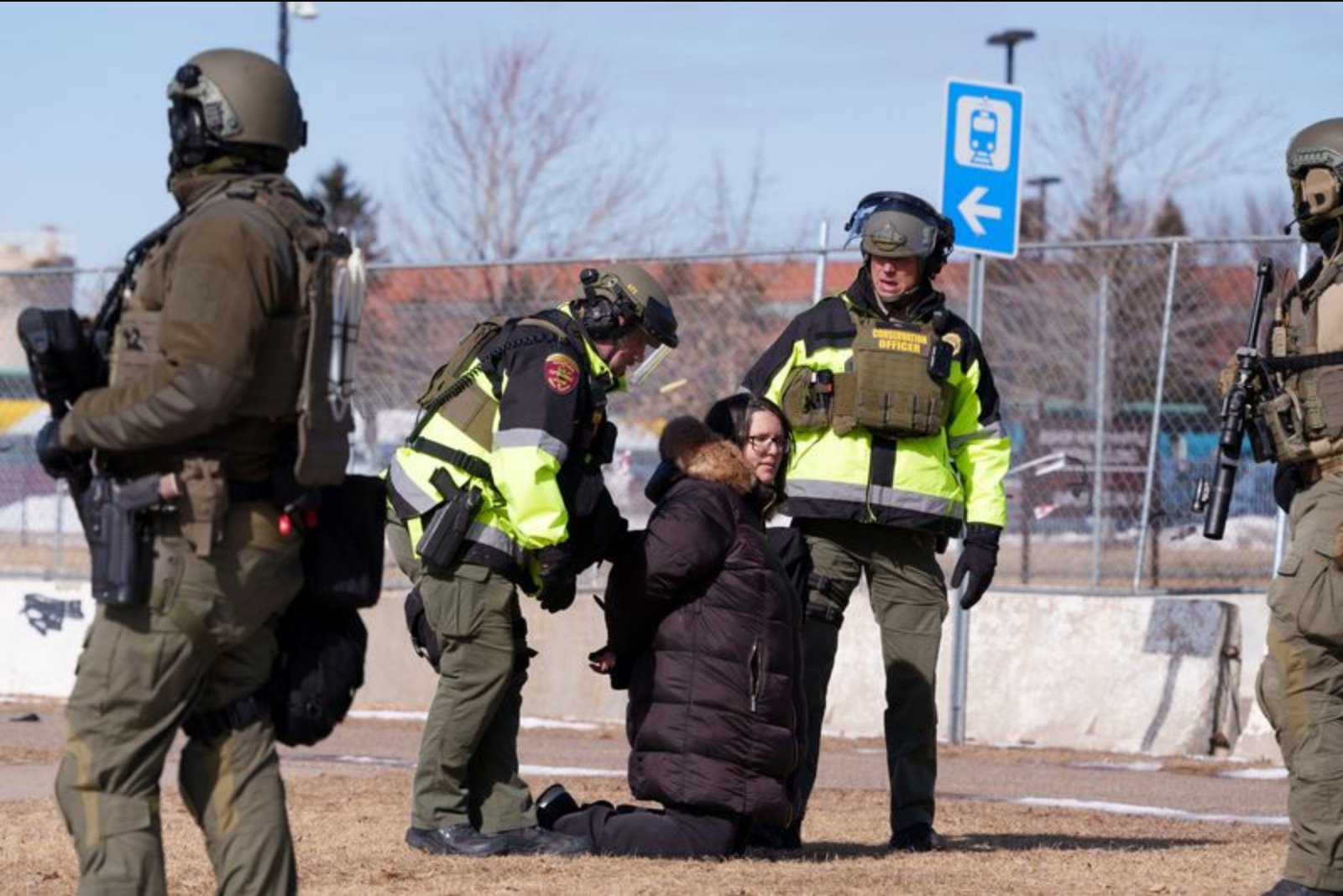
The 8th U.S. Circuit Court of Appeals in St. Louis on Wednesday affirmed the federal government’s position that people arrested under the recent immigration enforcement campaign may be held without a bond hearing, a ruling that will have repercussions across seven states under the court’s jurisdiction, including Minnesota.
In a 2-1 decision, the appeals court sided with the administration’s interpretation of federal immigration law, concluding that non-citizens who are already inside the United States can be treated as "applicants for admission" and therefore subject to mandatory detention. The panel’s majority opinion was authored by U.S. Circuit Judge Bobby Shepherd.
The ruling represents the second time that a regional appeals court has upheld the policy after numerous lower-court judges had found it unlawful. Earlier this year, on February 6, the 5th U.S. Circuit Court of Appeals in New Orleans issued the first appellate endorsement of the same policy, and the Justice Department has pursued further appeals in other cases contesting the enforcement approach.
Federal officials in the Department of Justice argued that the surge of litigation prompted a rapid appellate review. The department noted that over 400 lawsuits were filed in Minnesota in January by people who said they had been improperly detained during the enforcement action referred to as "Operation Metro Surge," according to department statements cited in court filings.
Last year the Department of Homeland Security adopted a departure from the long-standing reading of the relevant statute by asserting that the category of "applicants for admission" can include non-citizens already present in the country, not only those arriving at a port of entry. A Minnesota judge rejected that view in October in a case involving Mexican national Joaquin Herrera Avila, ordering that Herrera Avila be given a bond hearing before an immigration judge. That order prompted the administration’s appeal and the subsequent review by the 8th Circuit.
Writing for the majority, Judge Shepherd said the text of the Illegal Immigration Reform and Immigrant Responsibility Act of 1996 supports the administration’s interpretation. Both judges in the majority were appointees of Republican presidents.
U.S. Circuit Judge Ralph Erickson, a Trump appointee, wrote the lone dissent. In his opinion he observed that five prior presidential administrations had treated the statute as applying only to individuals arriving at the border. "This conduct is something courts ought to consider," he wrote in the dissent.
The decision drew a public reaction from the U.S. attorney general, who celebrated it as a victory for the administration’s law-and-order agenda. "MASSIVE COURT VICTORY against activist judges and for President Trump’s law and order agenda!" she posted on social media.
Advocates for Herrera Avila said they were evaluating potential next steps in litigation. Michael Tan, who represents Herrera Avila for the American Civil Liberties Union, said they were assessing what actions to take following the appeals court ruling.
The appeals court ruling comes even as the administration scaled back the enforcement campaign in the wake of the fatal shootings of two U.S. citizens in Minneapolis by immigration agents. The Justice Department had noted that the enforcement operation wound down as other legal developments unfolded.
With the 8th Circuit’s decision now in place, federal courts in the affected states will have to account for the appellate ruling as they handle the many pending suits challenging detentions carried out during the enforcement surge. The appellate split within the federal system - with different circuits reaching affirmations at different times - means further litigation and possible appeals will continue to shape how the policy is applied across jurisdictions.
Context and implications
The appeals court ruling affirms a statutory reading that broadens the set of non-citizens subject to mandatory detention under existing federal law. It will directly influence litigation in multiple states and could limit immediate access to bond hearings for individuals detained under similar circumstances while appeals and challenges proceed.