
Hook & thesis
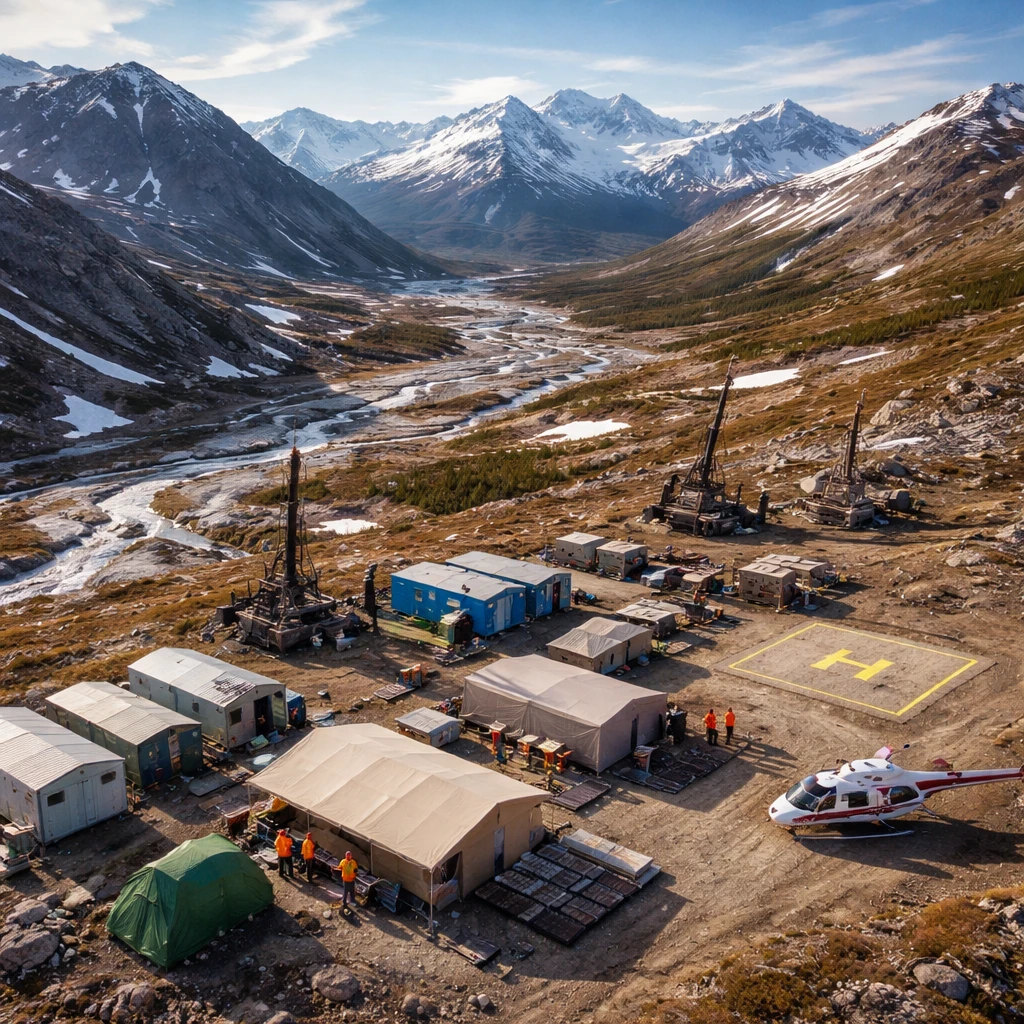
U.S. GoldMining's initial PEA for the Whistler gold-copper project, announced 03/02/2026, is a concrete step that validates the economics of a previously speculative Alaska asset. The mining industry and resource investors dislike uncertainty; a PEA converts blue-sky value into a quantifiable economic case. With GoldMining Inc. (GLDG) trading at $1.09 and a market cap of $231.9M, the market appears to be discounting the Whistler PEA and the rest of an active project pipeline amid a weak gold price environment.
That weakness in the metal creates asymmetric upside potential for a tactical long. GLDG is trading near the low end of its recent range, the stock is technically oversold (RSI ~25), and the company has moved quickly to staff project development and corporate development roles to support a push toward development. For traders willing to take mid-term risk, GLDG presents a defined-entry opportunity where a successful metals rebound or continued project de-risking could re-rate the shares meaningfully.
What the company does and why the market should care
GoldMining Inc. is a project development and exploration company with a diversified portfolio across the Americas that includes Whistler (Alaska), Yellowknife Gold (Canada), So Jorge (Brazil), Crucero (Peru) and a handful of other assets. The company holds a majority stake in U.S. GoldMining Inc., which completed the Whistler PEA on 03/02/2026. The PEA is the first step in turning Whistler into a development candidate and provides investors with a baseline economic model for future optimization and financing discussions.
The market should care because a credible PEA can materially reduce the risk discount on a resource-stage company. It gives potential acquirers, lenders and strategic partners a metric for valuation and financing. Given GoldMining's market cap of $231,926,345 and a float of ~202.9M shares, there is scope for upside if further studies, permitting progress, or a favorable shift in gold prices improve project NPV or reduce perceived execution risk.
Snapshot metrics
| Metric | Value |
|---|---|
| Current price | $1.09 |
| Market cap | $231,926,345 |
| Shares outstanding | 213,757,000 |
| Float | 202,884,891 |
| 52-week range | $0.71 - $2.27 |
| PB ratio | 1.40 |
| RSI (current) | 24.95 (oversold) |
| 10/20/50-day SMA | $1.38 / $1.51 / $1.57 |
| Average daily volume (30d) | ~2.54M |
How recent news supports the thesis
- 03/02/2026 - The Whistler PEA by U.S. GoldMining was completed and described as positive, validating management's three-year vision for the asset.
- 03/05/2026 - GoldMining appointed Imola Gf6tz as VP, Project Development, a strong operational hire with >30 years of experience at major mining companies, signaling an intent to push Whistler further toward feasibility and permitting.
- 02/28/2026 - The company filed annual financial statements and the Form 40-F, providing updated corporate transparency for North American investors.
- 02/17/2026 - The Crucero update showing a marked increase in indicated resources demonstrates the firm's broader pipeline of assets beyond Whistler.
Valuation framing
At $231.9M market cap, GLDG sits in the lower-mid tier of publicly listed, project-stage gold developers. The company trades at a PB ratio of 1.40 and a negative P/E (reflecting project-level costs and corporate spending). A direct peer comparison is complicated because projects differ by size, metallurgy and jurisdiction, but the logic is straightforward: a PEA that lays out predictable cash flows (even if preliminary) reduces both technical and financing risk. If Whistler's PEA metrics - capex intensity, operating costs and payback - are competitive versus other Alaska and North American projects, even partial market recognition of that NPV could move the valuation substantially higher from current levels.
Remember the stock traded up to $2.27 earlier this year. That prior market high suggests there are scenarios where the market can re-value GLDG sharply, particularly if a recovery in the gold price coincides with further project delivery milestones.
Catalysts to watch
- Follow-up studies to the PEA - metallurgical optimization, updated resource estimates or trade-off studies that reduce capex or increase recovery can materially improve project economics.
- Drilling results at Whistler and other projects - step-out or depth results that increase ounces or upgrade resources.
- Permitting progress in Alaska and social / indigenous engagement milestones that reduce execution risk.
- Gold price: an uptick in bullion prices driven by macro or monetary developments will quickly improve project NPVs and investor sentiment toward junior developers.
- Corporate developments - strategic partnerships, offtake memoranda or project-level JV/financing announcements.
Trade idea - actionable plan
Thesis: Buy GLDG as a tactical swing trade to capture re-rating from the Whistler PEA and near-term project de-risking. The entry is predicated on the stock trading near the recent support band and showing oversold technicals while the company continues to publish developmental milestones.
| Trade element | Plan |
|---|---|
| Direction | Long |
| Entry price | $1.05 |
| Stop loss | $0.80 |
| Target price | $2.00 |
| Time horizon | Mid term (45 trading days) |
| Risk level | Medium |
Rationale for levels: Entry at $1.05 sits below the recent trade price of $1.09 and provides room to absorb near-term volatility. The stop at $0.80 respects the lower end of the year's trading action while limiting downside to a predefined risk per share. The target of $2.00 is below the 52-week high of $2.27 but represents a realistic re-rating should either metal prices move higher or the market begin to value the Whistler project's NPV more explicitly. Expect the trade to last about 45 trading days while monitoring catalysts and project news. If the stock moves quickly toward the target, consider trimming into strength.
Risk and counterarguments
No trade is without risk. Below are the principal downside scenarios and a counterargument to the bullish thesis.
- Gold price risk - The most obvious single factor is the direction of gold. Continued weakness in bullion prices will keep junior developers penalized, compressing NPVs and political appetite for financing. If gold drifts lower from current levels, GLDG may not re-rate regardless of project progress.
- Execution and capital risk - PEAs are preliminary. Moving from PEA to feasibility often uncovers higher capex or metallurgical challenges. The company may need to dilute or seek costly project financing, which would depress equity value.
- Jurisdictional and permitting risk - Alaska has high operating costs and stringent permitting frameworks. Social license and permitting delays can push timelines and increase carrying costs.
- Market sentiment and liquidity - GLDG has a large float (~202.9M) and average volumes around 2.5M. In a risk-off environment, the stock can gap down and take out stops quickly; short-volume data shows meaningful short activity in recent sessions, which can exacerbate downside moves before a squeeze develops.
- Dilution risk - Development-stage miners frequently issue shares or raise equity to fund studies. Share-based financing would reduce per-share value even if project fundamentals improve.
Counterargument: The market may already be rationally discounting both metal price risk and development execution risk. A positive PEA is only the beginning - without a clear path to finance and permit, the PEA alone may not be sufficient to sustain a large re-rating. If gold remains weak and financing markets stay tight, GLDG could languish or retest the 52-week low.
What would change my mind
I would materially change my bullish stance if any of the following occurs:
- Clear deterioration in the PEA economics is revealed via third-party commentary or a follow-up technical report showing materially higher capex or lower recoveries.
- The company announces a dilutive equity raise with terms that significantly depress per-share value and no immediate path to de-risk the project.
- Gold breaks decisively lower on macro factors, removing the potential catalyst that would lift junior developers.
Conversely, my conviction would increase if the company publishes optimized trade-off studies that lower capex or increase recovery rates, announces a strategic partner or offtake for Whistler, or if the gold price reverses upward into a sustained recovery.
Conclusion
GoldMining's Whistler PEA turns a previously speculative asset into a quantifiable economic case. The company has followed the PEA with experienced hires and ongoing resource work elsewhere, creating multiple pathways for value realization. At a $231.9M market cap and with the stock technically oversold, GLDG offers a tactical swing opportunity with asymmetric upside, provided traders accept the material execution and commodity risks. The trade plan above uses a defined entry, stop and target for a mid-term (45 trading days) swing - an approach that balances upside potential from project de-risking and metal price recovery with disciplined risk control.
Trade summary: Long GLDG at $1.05, stop $0.80, target $2.00, mid-term (45 trading days). Manage position size to reflect project and commodity risk and be prepared to act if new information changes the project's financing or permitting outlook.
Key points
- Whistler PEA (03/02/2026) provides the first economic baseline for a key Alaska asset.
- Company market cap $231.9M and float ~202.9M shares - upside exists if the market re-rates project NPVs.
- Technicals show oversold conditions (RSI ~25) and a mix of bearish momentum indicators - risk is present but measurable.
- Trade plan: Entry $1.05, stop $0.80, target $2.00, mid-term horizon (45 trading days), risk medium.