
Hook & Thesis
B2Gold (BTG) just flipped a major operational milestone into production: Goose moved to commercial production in October 2025 and reached roughly two-thirds of mill design throughput in the first 30 days. Management's expectation of roughly 300,000 ounces per year from Goose from 2026 through 2031 is not trivial for a company that produced between 970,000 and 1,075,000 ounces consolidated in 2025.
Put simply: incremental ounces from Goose plus the firm's existing asset base create a material free cash flow inflection. The company reported free cash flow of $116.245 million on a market cap of about $6.44 billion today — a sub-2% FCF yield. If Goose delivers at scale and costs remain controlled, the market is likely to re-rate BTG. This trade idea lays out a long entry, stop and target to capture that re-rate over the next 180 trading days, while respecting operational and price risks.
Why the market should care
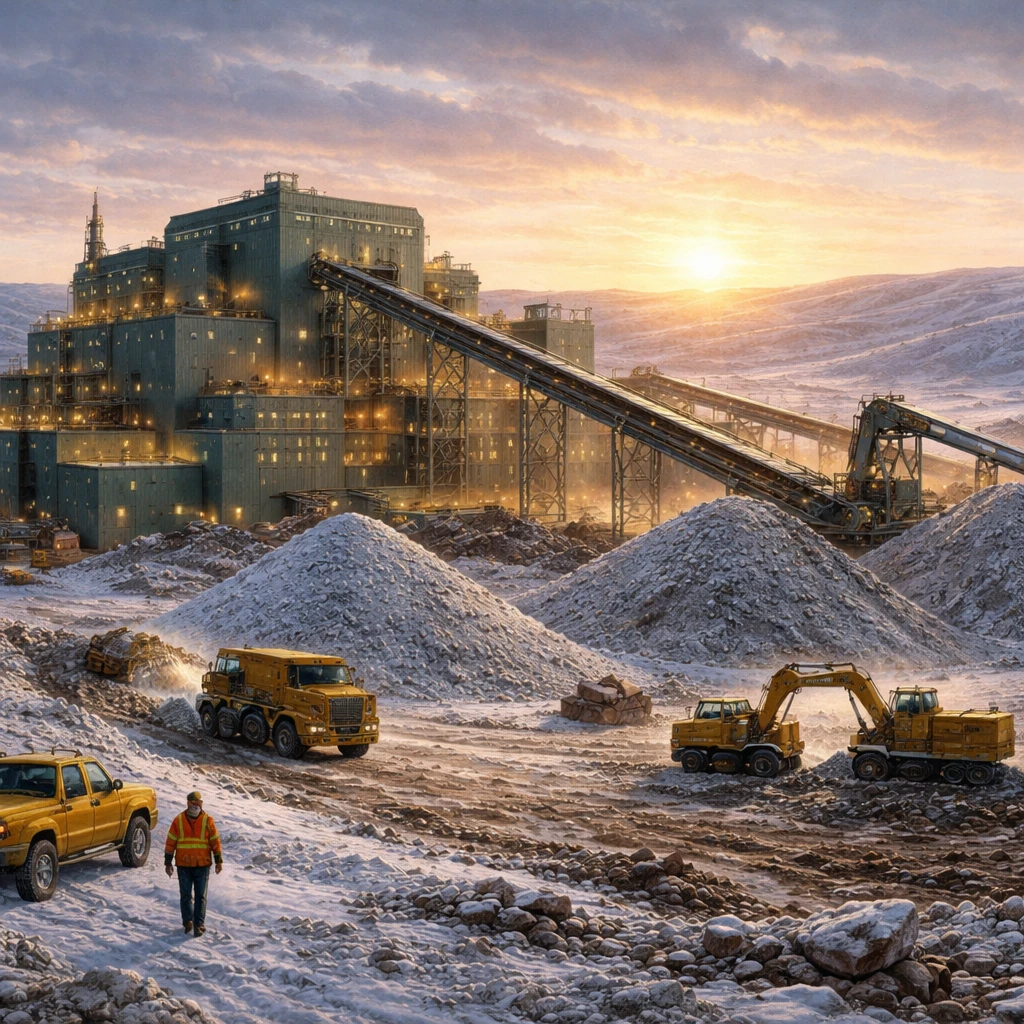
B2Gold is a multi-asset gold producer with producing operations in Canada, Mali, Namibia and the Philippines. The business segments include Fekola, Masbate, Otjikoto and the new Goose Project. The step-change is Goose: after first gold pour and commissioning in 2025, the company reported commercial production on 10/06/2025 and initial mill throughput of roughly 66% of design in the first 30 days. Management then guided Goose to approximately 300,000 ounces per annum from 2026 to 2031, which implies a sizable incremental contribution to consolidated production and cash flow.
Hard numbers that matter
| Metric | Value |
|---|---|
| Current price | $4.82 |
| Market cap | $6.44 billion |
| Enterprise value | $6.89 billion |
| Free cash flow (latest) | $116.245 million |
| Shares outstanding | 1.336 billion |
| Goose expected production (2026-2031) | ~300,000 oz/year |
| Consolidated 2025 guidance | 970,000 - 1,075,000 oz |
At today's market cap of about $6.44 billion, the reported free cash flow of $116.245 million implies an FCF yield near 1.8%. That yield is low for a senior gold producer and suggests the market is still pricing B2Gold for steady-state performance before Goose's full production and any re-rating for growth. If Goose reaches run-rate production and contributes a meaningful margin on incremental ounces, even a modest increase in FCF would materially raise the yield and justify a multiple expansion.
Technical backdrop
The stock trades at $4.82 with momentum indicators mixed-to-favorable: 50-day SMA is $4.65 and the 20-day SMA is $4.90, while the 10-day SMA sits at $5.22. The MACD shows a bullish momentum reading and RSI sits in neutral territory around 47. Short interest has increased through January 2026 (short interest ~69.6M as of 01/15/2026) but days-to-cover remain low (under 2), which makes squeezes possible but not automatic. Liquidity is ample — average volumes over recent windows are high — so sizing is flexible for most retail traders.
Valuation framing
B2Gold's valuation looks conservative relative to the opportunity embedded in Goose. On a simple basis the company trades at approximately $6.44 billion market cap versus $116 million in trailing free cash flow, which implies low FCF yield. The relevant re-rating case is not a multiple shift in isolation; it's a combination of higher absolute FCF (from incremental ounces) and a multiple expansion as the market upgrades B2Gold from 'steady producer' to 'growth plus strong FCF' profile.
History and peers aside, the logic is straightforward: 300,000 incremental ounces at reasonable margins meaningfully increases company-level cash generation. Even without precise AISC numbers in this note, an incremental production line that scales to hundreds of thousands of ounces with incremental capital already sunk is the kind of operational improvement that investors reward.
Catalysts
- 02/18/2026 Q4 and full-year 2025 results and 2026 guidance release - investors will get consolidated numbers and cash flow detail.
- 02/19/2026 conference call - management comments on Goose throughput, AISC, capital requirements and timing of steady-state production.
- Operational updates showing stable mill throughput above design or improving availability through 1H 2026.
- Higher gold prices or improved AISC across the portfolio, which would magnify the cash-flow impact from Goose.
Trade Plan - actionable
Trade direction: Long
Entry price: $4.82
Target price: $6.00
Stop loss: $4.40
Horizon: long term (180 trading days) - This position is meant to capture the operational ramp at Goose, confirmation of a cash-flow inflection in the upcoming 02/18/2026 results, and subsequent re-rating. Expect the trade to unfold over several months as production data and FCF figures are reported and digested by the market.
Rationale: Entering at $4.82 sits near current levels and offers upside to the 52-week high ($5.94) and beyond, contingent on positive results and operational evidence. The stop at $4.40 limits downside to structural risk (operational underperformance or market sell-off) while allowing room for near-term volatility around the results date. The $6.00 target captures a re-rate toward a higher FCF multiple as Goose demonstrates consistent output.
Position sizing & risk management
Because the thesis relies on operational execution — and because mining stocks can gap on news — size the position to limit portfolio exposure to any single mining project failure. Consider using a 1-2% of portfolio risk per trade (meaning the dollar difference between entry and stop), adjusting position size accordingly.
Risks and counterarguments
- Operational risk at Goose: Commissioning risks, lower-than-expected throughput beyond the initial 30 days, or higher-than-forecast operating costs could delay or reduce the expected production, compressing cash flow.
- Commodity price shock: A sharp decline in the gold price (recall miners benefit from gold at elevated levels) would undermine incremental cash flows and flatten the re-rate case.
- Capital & cost overruns: If sustaining or incremental capital to reach steady-state is larger than management anticipates, the FCF improvement could be reduced or pushed out in time.
- Geopolitical and permitting risk: B2Gold operates across multiple jurisdictions; any change in permitting, royalties or taxes could materially affect returns from Goose or other assets.
- Market multiple compression: Even with improved cash flow, macro risk or a revaluation of commodity names could keep multiples depressed, muting upside.
Counterargument: The market may already be pricing some of the Goose upside into the stock (52-week high was $5.94). If Q1/Q2 operational updates are only incremental improvements rather than clear evidence of sustained 300k oz production, BTG could remain range-bound and the trade might require more time or a higher target re-set.
What would change my mind
I will reduce or exit the long if the 02/18/2026 results show materially lower-than-expected cash flow contribution from Goose, higher-than-forecast sustaining or expansion capital, or if management withdraws production guidance. Conversely, I'll add to the position if the company provides clear, line-item FCF accretion from Goose in the results and the company confirms mill throughput and costs consistent with the 300,000 oz/year run rate.
Final take
B2Gold offers an asymmetric trade: low current FCF yield versus a credible operational catalyst that can materially change the equation. Goose's move to commercial production and the 300,000 oz/year expectation creates a path to significantly higher free cash flow and a clean re-rating story. The plan above balances upside potential with a disciplined stop and a long-term horizon to let the operational story mature — enter at $4.82, stop at $4.40, and target $6.00 over the next 180 trading days.
Key short-term dates
- 02/18/2026 - Q4 and Full Year 2025 results release
- 02/19/2026 - Conference call where management will address Goose performance and 2026 guidance