
Hook & thesis
General Mills is the kind of trade that suits disciplined, income-oriented investors: durable brands, predictable cash flow and a dividend yield north of 6%. The stock is trading near its 52-week low at roughly $37 and shows deep oversold technical readings (RSI ~20), creating a low-risk entry window for staggered accumulation rather than an all-in punt.
My core thesis: buy the dip in measured tranches because valuation is compelling (P/E around 9, enterprise value of roughly $32.9B vs. free cash flow of ~$1.65B), the dividend is well covered by cash flow, and the company is actively simplifying its portfolio to focus on higher-return markets. This is not a get-rich-quick momentum play; it is an income + value trade that benefits from mean reversion and portfolio simplification over a longer holding period.
What General Mills does and why the market should care
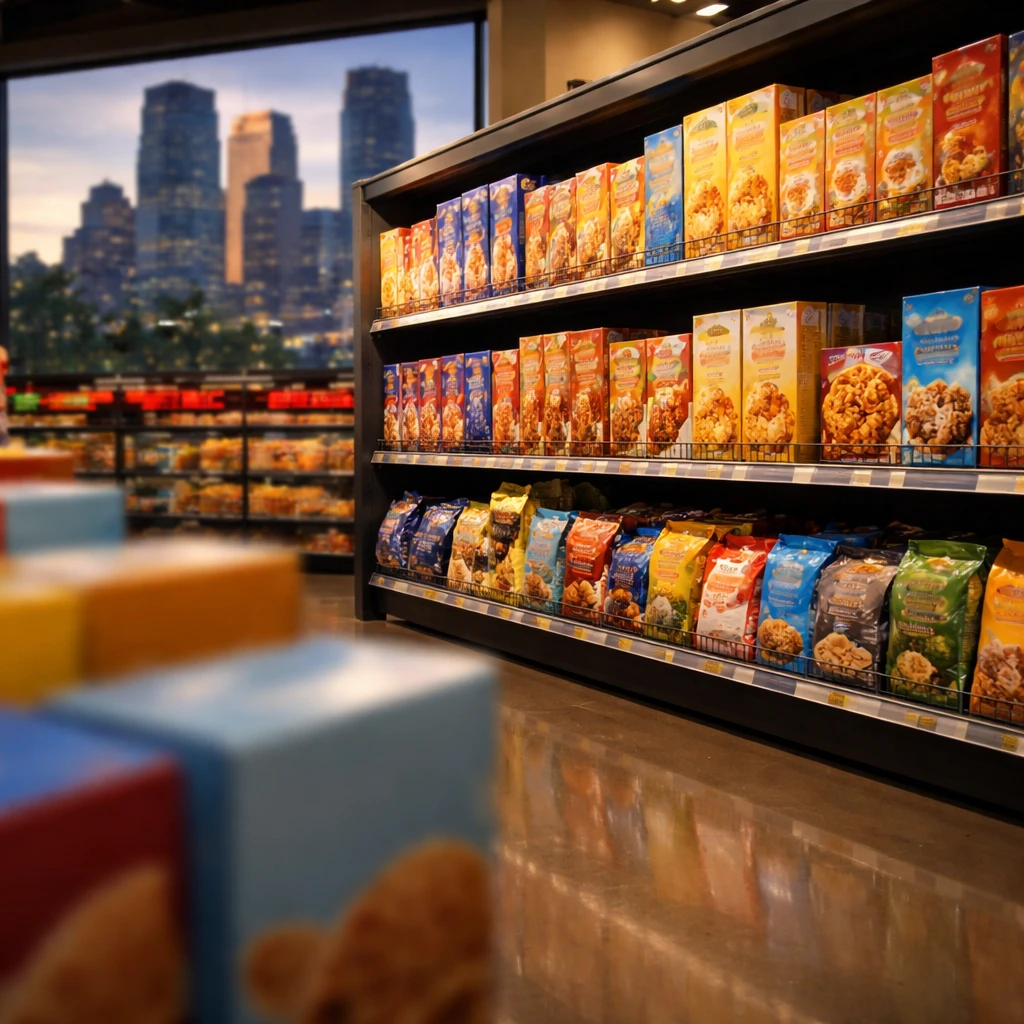
General Mills manufactures and markets branded consumer foods across numerous categories - cereal, snacks, refrigerated and frozen dough, baking mixes, yogurt and pet food. Its segments include North America Retail, International, North America Pet and North America Foodservice. Investors care because these categories produce reliable, recurring sales and generate substantial operating cash flow that supports a large dividend and buybacks when management chooses.
Hard numbers that support the setup
- Market capitalization is about $19.8B with an enterprise value near $32.9B.
- Reported free cash flow is ~$1.65B, implying an FCF yield in the neighborhood of 8% on market cap.
- Trailing EPS sits around $4.13; the stock trades near a P/E of ~9 (9.09 reported), which is low for a stable consumer staples business.
- Price-to-sales is ~1.07 and EV/EBITDA is roughly 10, both consistent with a value entry relative to the company's defensive cash flows.
- Dividend yield is high — roughly 6.6% - which makes the cash return to shareholders attractive while you wait for operational recovery or multiple expansion.
- Technical backdrop is bearish but oversold: 52-week low is $37.01, RSI is ~20, and short interest implies around 4 days to cover — not a crowded short but enough to fuel occasional squeezes.
Valuation framing - why this feels cheap
At a market cap near $19.8B and free cash flow of $1.65B, General Mills generates cash that meaningfully offsets equity value. A P/E of ~9 and EV/EBITDA around 10 place the company in deep-value territory for a consumer staples business that should exhibit limited cyclicality compared with discretionary names. Price-to-sales near 1.07 suggests the market is not paying up for growth expectations; instead it’s pricing in slower margins and an investment year in certain categories.
In plain terms: you are buying a high-yielding, cash-generative engine at an attractive multiple. That doesn’t eliminate operational risk, but it does set a favorable risk/reward for a patient accumulation strategy.
Catalysts that could re-rate the stock
- Portfolio simplification: the announced sale of the Brazil business (reported 03/17/2026) should sharpen focus on core markets and can be accretive to margins if proceeds are redeployed well.
- Stabilizing commodity costs or passing price increases to retailers could restore margins and lift earnings per share.
- Improved execution in international and pet segments delivering above-consensus sales growth would push multiples higher.
- High dividend yield continuing to attract income-focused funds, especially if payout coverage remains stable.
Trade plan - actionable with horizon and sizing guidance
Recommendation: slowly accumulate shares on weakness using the following anchor parameters. This is a long-biased, risk-managed idea for investors who want income and value exposure to a stable consumer staples company.
| Entry | Stop Loss | Target | Primary Horizon |
|---|---|---|---|
| $36.50 | $34.00 | $46.00 | Long term (180 trading days) |
How to size and execute: start with a small tranche (25% of intended position) at $36.50. If the stock dips into the low $35s or touches $34.00 (stop), reassess — a further tranche could be added opportunistically between $34.50-$36.00 assuming no new structural deterioration. The idea is phased accumulation: buy some now, and add on confirmed weakness or technical support tests.
Time horizons to keep in mind: short term (10 trading days) - watch for any bounce driven by short-covering given ~4 days to cover; mid term (45 trading days) - look for initial stabilization and margin commentary; long term (180 trading days) - expect valuation rerating from either earnings recovery or dividend-support flows.
Why this trade fits a conservative but yield-seeking investor
If you want current income and a reasonable margin of safety, General Mills checks a lot of boxes: elevated yield (~6.6%), FCF coverage and low absolute multiples. You are paid while you wait for the market to recalibrate margins and the balance sheet.
Risks and counterarguments
- Margin pressure can persist. Input cost volatility (commodities and logistics) or continued promotional intensity from retailers could keep operating margins compressed for multiple quarters.
- Execution risk on portfolio changes. The company is exiting non-core markets (e.g., Brazil sale announced 03/17/2026). If proceeds are not redeployed effectively, the expected margin lift may not materialize.
- Demand shifts toward healthier, fresher options. Consumer preferences away from legacy packaged goods could structurally reduce growth potential versus historical norms.
- High dividend could come under pressure. While current cash flow covers the payout, a prolonged downturn in sales or a hit to free cash flow could force dividend cuts or slower capital return programs.
- Technical/market risk. Deep oversold conditions can remain in place for an extended period; the stock could test lower support near prior lows before a sustainable recovery.
Counterargument
A reasonable counterargument is that low multiples and high yield reflect structural deterioration: slower top-line growth, higher promotional intensity, and secular shifts away from packaged food brands. If these trends accelerate, the valuation gap may widen and the dividend may no longer be tenable. In that scenario, accumulation would be premature and capital preservation (or waiting for clearer signs of margin stabilization) would be the better course.
What would change my mind
I would reduce exposure or stop adding if several negative signals appear: a sustained decline in free cash flow below $1.0B, a dividend increase in payout ratio above comfortable coverage levels without corresponding FCF growth, or guidance implying multiple quarters of falling organic sales. Conversely, I would become more constructive and add size if management provides credible margin targets following portfolio simplification, or if quarterly results show rising operating margin and positive organic sales trends.
Conclusion
General Mills is not a speculative fast-money trade. It is an income-oriented, value-biased idea: attractive yield (~6.6%), cheap relative multiples (P/E ~9, EV/EBITDA ~10), and positive cash flow dynamics invite phased buying. The technicals are oversold, which supports a measured accumulation approach, but margin and execution risks justify using a protective stop and staggered sizing.
For patient investors who want yield and value exposure to defensive consumer staples, slowly accumulating on dips with the parameters above provides a sensible balance between income generation and downside protection.
Key metrics (quick reference)
| Metric | Value |
|---|---|
| Market cap | $19.8B |
| Enterprise value | $32.9B |
| Free cash flow | $1.65B |
| P/E (trailing) | ~9 |
| Dividend yield | ~6.6% |
| RSI | ~20 (oversold) |
Reminder: General Mills goes ex-dividend on 04/10/2026 with a payable date of 05/01/2026 - this high yield may provide some downside cushion as income buyers step in ahead of the record/ex dates.