
Hook / Thesis
Amerigo Resources (ARREF) trades like a small-cap copper exposure but with an operational twist: electrolytic copper production lifts realized metal value relative to concentrate sales. That difference matters when market trading is thin and the company is transitioning to steadier, higher-margin cathode production. For nimble traders who can accept volatility, there is a clear trade: buy the pullbacks and give the thesis time to play out.
We lay out a tactical long idea: enter at $0.80, place a protective stop at $0.55, and target $1.50 within the position time horizon (up to 180 trading days). This is a position-sized trade that assumes the market begins to price in stronger cash conversion from electrolytic copper and benefits from any improved copper pricing environment.
What Amerigo does and why the market should care
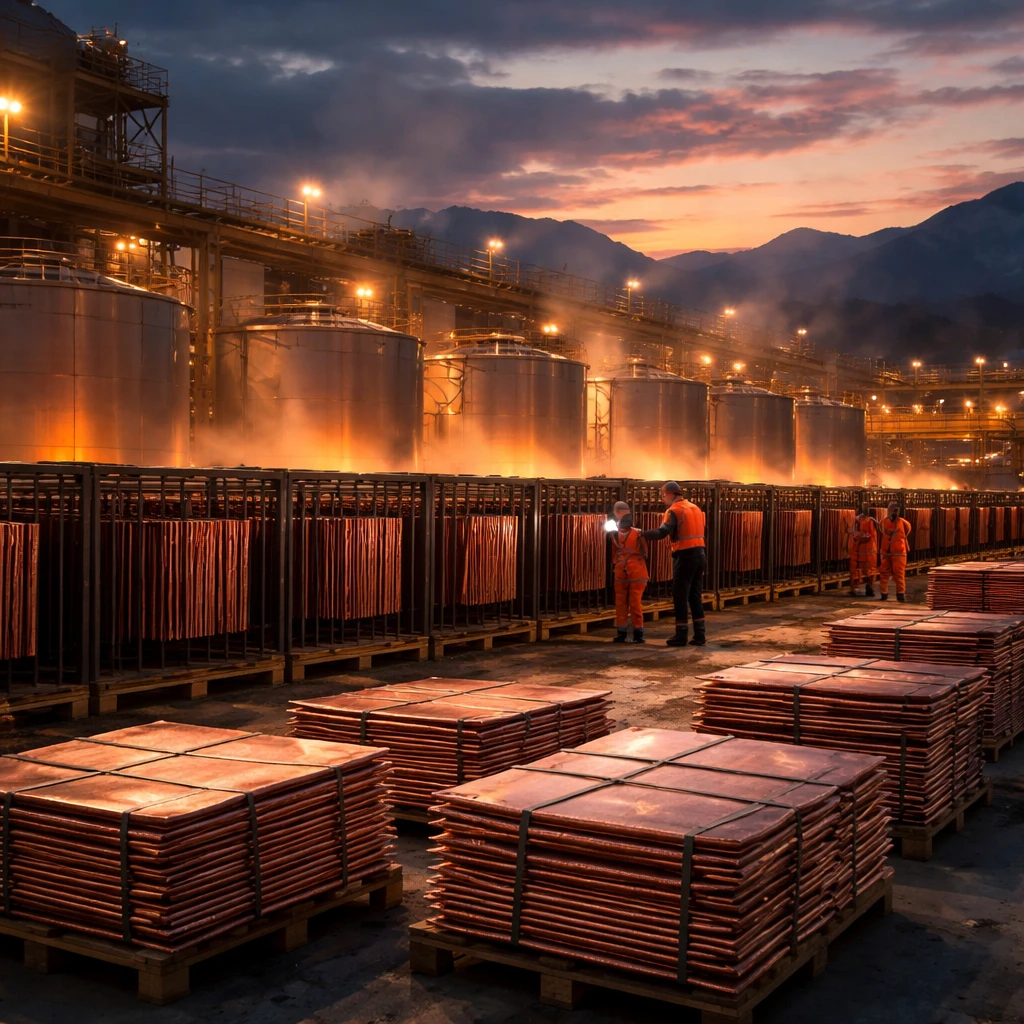
Amerigo is a copper-focused producer that monetizes ore via a two-step pathway: extraction and then copper metal recovery. The move toward electrolytic copper - that is, refining copper to cathode form via electro-winning - increases the margin between mine gate value and realized metal value because cathode typically commands higher, more stable pricing than concentrates sold under discounts and treatment charges.
Why that matters to shareholders: incremental margin from electrolytic output is cash flow-accretive and more predictable. For a company with modest market liquidity, improved cash generation can meaningfully change valuation dynamics. That conversion can reduce the need for dilutive financing, support modest buybacks or debt paydown, and make the company a more attractive takeover or partner target among mid-tier copper consolidators.
Supporting argument and operational logic
Two operational levers underpin the thesis:
- Higher realized copper price per tonne via cathode sales. Electro-winning produces cathode copper which typically captures a finer premium versus concentrate netbacks because of lower treatment and refining charges.
- Improved cash conversion and margin stability. Cathode contracts tend to be nearer to LME-referenced prices and expose the company less to concentrate market frictions.
On a practical level, this means that when electrolytic output is a larger share of total production, a given copper price translates into more free cash flow than before. For traders that focus on cash-flow inflection points, that’s the core of the argument: the market underappreciates the marginal benefit of each tonne of electrolytic copper because headline production figures alone do not capture realized revenue per tonne.
Note: short-term copper price moves will still drive share volatility. The trade is therefore contingent on both operational progress and a stable-to-favorable copper price backdrop.
Valuation framing
Amerigo sits in the small-cap copper cohort where valuations are often driven by cash-flow visibility rather than purely by resource size. Given the company's operational focus on electrolytic copper, a re-rating is plausible if market participants award a higher multiple to the company’s adjusted EBIT or free cash flow per share.
Rather than a precise peer multiple, think qualitatively: a producer that shifts from lower-margin concentrate sales to higher-margin cathode sales should command a premium multiple to peers that remain concentrate-dependent. The valuation delta depends on the sustainability of electrolytic output and the company’s ability to convert that into recurring free cash flow.
Catalysts (2-5)
- Operational ramp and reporting that electrolytic output is increasing as a percentage of total copper production - this should show up in quarterly production mix and realized revenue per tonne metrics.
- Any sustained improvement or stability in copper prices - even modest upside in the $0.10-0.20/lb range would meaningfully lift cash flow for a small producer.
- Management disclosures around capital allocation - explicit commentary on using incremental cash flows for debt reduction, buybacks, or higher dividends would be a meaningful re-rating event.
- Third-party offtake or contract wins for cathode material - long-term supply agreements reduce price execution uncertainty and increase earnings visibility.
Trade plan
Entry: $0.80 - this is a tactical buy-on-weakness level that gives room for short-term choppiness but positions for improved operational flow.
Stop loss: $0.55 - below this level the risk/reward deteriorates materially and signals either a deeper operational or commodity-driven selloff; exit to preserve capital.
Target: $1.50 - represents a re-rating toward higher multiples for a higher-quality cash flow mix; the target assumes partial realization of the electrolytic premium and better cash flow visibility.
Position sizing: treat this as a volatile small-cap commodity trade - keep exposure size limited to what you can tolerate through a multi-week drawdown. If your portfolio allocation rules call for 1-2% absolute exposure to single small-cap mining names, stay near the low end of that range.
Risks and counterarguments
Below are the principal risks that could invalidate the trade or lead to losses:
- Commodity price risk. Copper prices can reverse sharply. A large drop in the metal price compresses margins and can erase the electrolytic premium in absolute terms, undermining the valuation thesis.
- Operational execution risk. Electro-winning facilities are capital- and process-intensive. Delays, lower-than-expected recovery rates, or higher operating costs undermine expected cash flow uplift.
- Liquidity and market structure risk. Small-cap mining names can gap on news and have thin intraday liquidity. The stop at $0.55 may not be executable at that exact price in stressed conditions.
- Political and permitting risk. If assets are located in jurisdictions with permitting or political uncertainty, that can introduce operations interruptions or additional capex demands.
- Financing / dilution risk. If cash flows fall short of expectations, management may need to raise capital, diluting existing shareholders and compressing per-share value.
Counterarguments
- One could argue the electrolytic premium is already priced in and the stock is a value trap: if so, outcomes will show up as continued low free cash flow and operational underperformance, which would keep the multiple depressed. That is plausible — this trade is not a blind momentum bet, it depends on actual improvement in cash conversion.
- Another counterpoint is that large copper producers can outcompete smaller operators on cost and scale, limiting consolidation upside. In that scenario, AMERIGO’s niche simply provides stable but unimpressive returns, and patient traders would earn only modest appreciation.
Why this trade still makes sense
Despite the risks, the combination of a structural uplift in realized revenue per tonne via electrolytic output and the small-cap market’s tendency to under-price persistent cash-flow improvements creates a measurable asymmetric payoff. The entry at $0.80 offers a defined risk with a stop at $0.55, while the $1.50 target assumes only a moderate re-rating and improved visibility rather than a home-run multiple expansion.
What would change my mind
I would reduce conviction or exit the trade if any of the following occur:
- Quarterly operational reports show falling electrolytic production share and declining realized revenue per tonne for two consecutive quarters.
- Management signals the need for significant equity financing to sustain operations, which would dilute the cash-flow benefit for current shareholders.
- There is a prolonged copper price slump that materially weakens free cash flow such that recovery to a $1.50 share price would require multiple expansions rather than objective improvements in cash generation.
Conclusion
Amerigo Resources presents a tactical long opportunity that trades on an operational inflection rather than on exploration optionality. The electrolytic copper transition, if executed and sustained, should improve margins, cash flow predictability, and re-rating potential. Enter at $0.80, stop at $0.55, and target $1.50 within a position horizon (up to 180 trading days), size modestly, and monitor quarterly production mix and realized revenue per tonne closely. The trade is not without material risks; manage position size accordingly and respect the stop if the operational story falters.