
Hook & thesis
John B. Sanfilippo & Son (JBSS) has had a tidy run into the $80 area and printed a fresh 52-week high on 02/02/2026. Momentum has picked up but the fundamental picture supports more upside: the company reported a 33.7% jump in diluted EPS in fiscal Q4 2025 driven by contract manufacturing and ingredient-channel strength, while maintaining roughly flat revenue. That combination - earnings leverage plus improving operational efficiency - makes JBSS an actionable long for a mid-term swing.
Technicals reinforce the fundamental view. The stock is above its 10/20/50-day moving averages (SMA-10 $76.14, SMA-20 $74.13, SMA-50 $73.20), the RSI sits in healthy territory at 64.8, and MACD shows bullish momentum. Taken together with a reasonable valuation (P/E ~13.3, EV/EBITDA ~8.1), JBSS is a buy for traders willing to back quality, cyclical food exposure on a defined risk plan.
What the company does and why it matters
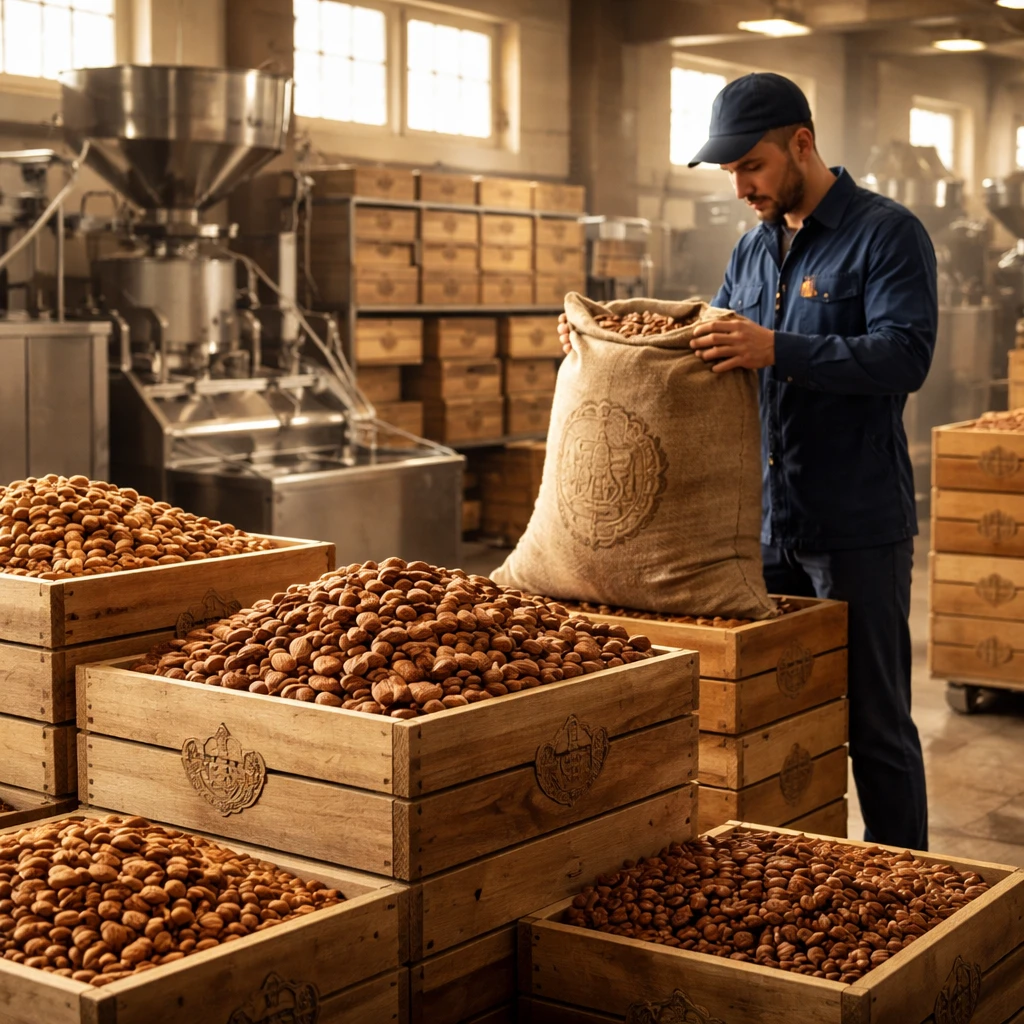
John B. Sanfilippo & Son is a nearly century-old processor and distributor of nuts and nut-related products. Brands include Fisher, Orchard Valley Harvest, Squirrel Brand and Southern Style Nuts. The business mixes branded snacks, contract manufacturing and ingredient sales - the latter increasingly important as food manufacturers demand nut-based ingredients for plant-based and health-focused products.
Why the market should care: nuts are both a consumer snack category and an industrial ingredient. That dual demand profile helps JBSS offset weakness in one channel with gains in another, as the company demonstrated in Q4 FY2025 when ingredient and contract manufacturing strength offset softer consumer unit volumes. For investors, that means earnings can be more resilient than a pure branded snack company during uneven consumer cycles.
Hard numbers you should know
| Metric | Value |
|---|---|
| Current price | $78.59 |
| 52-week range | $58.47 - $81.93 (high on 02/02/2026) |
| Market cap | ~$915M |
| EPS (TTM) | $6.02 |
| Price / Earnings | ~13.3x |
| EV / EBITDA | ~8.05x |
| Free cash flow (latest) | $32.8M |
| Return on Equity | ~19.0% |
| Debt / Equity | ~0.12 (low leverage) |
| Dividend yield | ~1.1% |
Why those numbers support a trade now
First, the earnings punch. The company reported a 33.7% increase in diluted EPS in Q4 FY2025 (reported 08/20/2025) even while revenue was flat and consumer volumes declined. That tells you management is finding ways to protect margins through operational efficiencies and favorable channel mix - ideally a durable quality in a commodity-exposed business.
Second, the balance sheet and cash flow profile are constructive. JBSS generates free cash flow ($32.8M most recently), carries minimal leverage (debt/equity ~0.12), and trades at modest multiples: P/E ~13.3 and EV/EBITDA ~8.1 are not stretched for a food-specialty business with positive ROE (~19%). Price-to-sales of ~0.82 suggests the market is not assuming blowout growth, leaving room for upside if margins or volumes recover.
Third, technicals give a tactical edge. The stock is sitting above its short and medium-term averages, MACD is positive and RSI is below extreme overbought levels. Short interest has been shrinking in recent readings (settlement 01/15/2026 short interest ~147,446 shares; days-to-cover ~3.47), reducing the risk of squeeze-driven volatility on the long side.
Valuation framing
JBSS is not a high-multiple growth name; it behaves like a specialty food manufacturer with commodity input exposure. At ~13.3x P/E and EV/EBITDA ~8, you are paying a fair, not rich, multiple for a company that earns healthy returns on equity and generates cash. Given the cyclical upside possible from improved ingredient demand and ongoing operational efficiencies, this multiple leaves room for 12-25% upside if margins hold or improve. If the company were to demonstrate sustainable top-line growth or broader margin expansion, the multiple could re-rate higher. In the absence of peer comparables in this note, consider the metrics reasonable relative to typical specialty food peers where EV/EBITDA in the mid-high single digits is common.
Catalysts - what can drive the stock higher
- Margin improvement continuing from operational efficiencies and better nut-sourcing economics.
- Stronger-than-expected ingredient and contract manufacturing demand as customers expand nut-based formulations.
- An earnings beat or raised guidance in the next reported quarter that confirms the Q4 margin thesis.
- Seasonal snacking tailwinds and retail inventory restocking that lift branded sales volumes.
Trade plan (actionable)
Trade direction: Long
Time horizon: mid term (45 trading days). This horizon gives the trade enough time to benefit from follow-through in contracts/ingredient demand and for any near-term mean reversion off the recent high to settle. If the thesis plays out slowly, the same position can be extended to a long-term window (180 trading days) with a revised target.
Entry: Buy at $78.50 or on a light dip toward the $76 area. The stock is trading near $78.59; $78.50 is a practical near-market entry that respects recent momentum while keeping exposure defined.
Stop: Stop loss at $72.00. That sits below the 50-day SMA (~$73.20) and provides a clear technical invalidation point: a close below $72 would signal a failure to hold the medium-term trend and increased risk of deeper retracement.
Target: $92.00 within the 45 trading day window. That target is roughly 17% above the entry and is consistent with a rerating to mid-teens P/E or modest multiple expansion combined with modest earnings upside. For traders comfortable holding longer, consider a secondary target near $105 for a 180 trading day horizon if the company posts continued margin expansion.
Position sizing: Keep the position to a level consistent with a medium-risk trade (e.g., risk no more than 1-2% of portfolio capital to the $6.50 per-share distance between entry and stop). Reassess after any earnings release or meaningful change in nut procurement costs.
Risks and counterarguments
Below are the primary risks that could derail this trade, followed by a brief counterargument to the buy thesis.
- Commodity-price volatility: Nut acquisition costs are a direct input. A sudden rally in raw-nut prices would compress margins quickly and could eliminate the earnings upside the market is anticipating.
- Weak consumer demand: The company reported flat revenue and declining consumer unit volumes in Q4 FY2025. A prolonged consumption slowdown would pressure branded sales and put more weight on lower-margin channels.
- Concentration & channel shifts: Heavy exposure to a few channels or large customers can amplify downside if those buyers cut orders or shift suppliers.
- Liquidity & float considerations: The public float is relatively small (float ~7.8M shares), which can lead to sharper moves on modest flows and make it harder to scale in/out of larger positions without moving the market.
- Valuation already partly priced: The stock is near its 52-week high. Some upside may already be reflected in the recent rally; disappointing results could trigger an outsized pullback.
Counterargument: One could argue the rally already prices in margin recovery and that the path to better results depends on commodity cycles outside management's control. If nut prices deteriorate or ingredient demand stalls, JBSS may see earnings reversals and the stock could give back gains quickly. In that view, waiting for a deeper pullback to the low $70s or a confirmed post-earnings beat would be the prudential move.
What would change my mind
I would abandon the trade if any of the following occur: a clear operational miss or guidance cut, a meaningful increase in leverage or working-capital stress, a sharp and sustained rise in raw-nut input costs that management can’t offset, or a daily close below $72 with volume confirming a breakdown. Conversely, if the company posts consecutive quarters of top-line growth and margin expansion, I would upgrade the position and shift targets higher.
Conclusion
JBSS offers a pragmatic buy-on-strength opportunity. The combination of recent EPS leverage, conservative balance sheet, positive free cash flow and reasonable multiples supports a mid-term long with defined risk. Take a measured entry at $78.50, protect capital with a $72 stop, and target $92 over the next 45 trading days. Keep position sizing sensible given the float and commodity exposure, and re-evaluate after the next quarterly results or any major swing in nut prices.
Key dates & data points referenced
- Q4 FY2025 EPS jump reported 08/20/2025.
- Almond ingredients market outlook cited 09/03/2024 as supportive long-term demand for nut ingredients.
- 52-week high recorded on 02/02/2026 at $81.93.
Trade idea: Long JBSS at $78.50, stop $72.00, target $92.00, mid term (45 trading days). Adjust position on earnings or commodity-cost moves.