
Hook / Thesis
Great Lakes Dredge & Dock (GLDD) has been quietly compounding a better mix of work and improving margins while sitting on a backlog that gives visibility into 2026 revenue. At the current market price near $14.98, the stock offers a straightforward mid-term trade: enough operational momentum and reasonable valuation to justify a buy-to-$18 target over the next 45 trading days, with a stop at $13.50 to limit downside.
Why now? The dredging industry is benefiting from rising global trade, large-scale port and coastal projects, and an expanding role in offshore wind infrastructure. Great Lakes is the largest U.S.-based dredger and is converting a $1.0 billion-plus backlog into revenue while reporting record quarterly results in recent periods. Those facts, combined with modest multiples (P/E ~12.6; EV/EBITDA ~7.5), create an attractive risk/reward for a mid-term tactical position.
What the company does and why the market should care
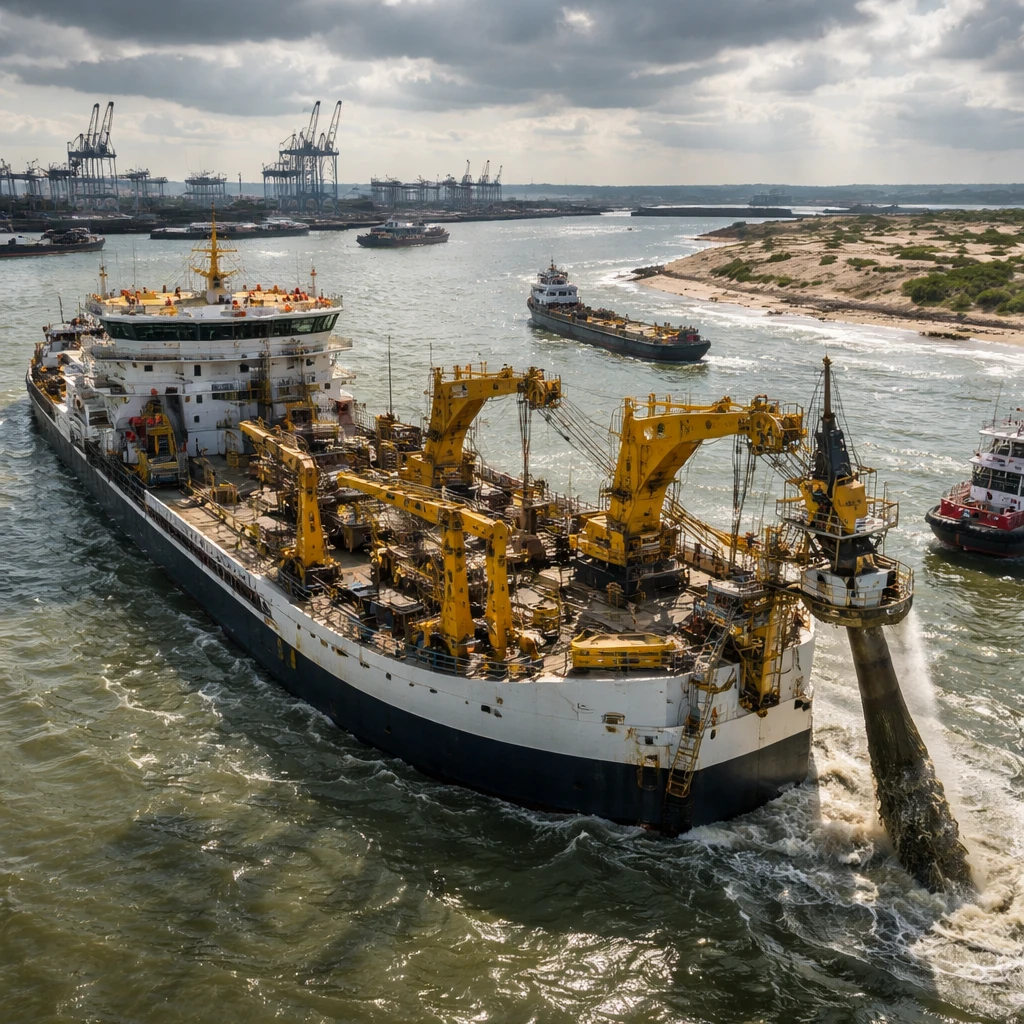
Great Lakes Dredge & Dock provides dredging services across channel and port maintenance, channel deepening, coastal protection/restoration, and land reclamation. The business is project-driven, with revenue visibility tied heavily to contract awards and backlog conversion. Importantly, the company has been expanding into offshore wind and other capital projects, which are higher-margin and longer-duration opportunities.
The market should care because this is an asset-heavy services business with recurring maintenance work and a growing addressable market. Industry researchers expect dredging demand to grow materially over the coming years, driven by infrastructure investment and energy projects. For a company with a reported backlog greater than $1.0 billion and a market capitalization of about $1.02 billion, sustained backlog conversion and modest margin expansion can re-rate the stock quickly.
Numbers that support the case
- Q2 2025 revenue was $193.8 million, and management reported continued strength in capital projects.
- Backlog: management has cited a backlog near $1.0 billion (and previously reported $1.2 billion at year-end 2024), which underpins revenue visibility.
- Valuation: market cap around $1.02 billion; P/E roughly 12.6; price-to-sales about 1.22; EV/EBITDA ~7.49. Those multiples are consistent with a cyclical services company that is profitable and growing.
- Profitability / balance sheet: return on equity roughly 16.0% and return on assets about 6.35%. Debt-to-equity is moderate at ~0.83, current ratio ~1.2 and quick ratio ~1.06, suggesting adequate short-term liquidity for project execution.
- Cash generation: free cash flow was positive (reported at roughly $13.05 million), showing the business converts profit into cash despite being fleet- and capex-intensive.
- Technicals: the stock shows bullish momentum—MACD is positive with a small bullish histogram and RSI around 58—supporting a mid-term trade setup. The 50-day moving average sits below price, indicating an upward trend phase.
Valuation framing
At a market cap near $1.02 billion, GLDD is trading at accessible multiples for an industrial services company with a sizable backlog and improving fundamentals. A P/E of ~12.6 and EV/EBITDA ~7.5 imply investors are not paying a premium for future growth or an expansion in margins. Given the company's reported record revenue and Adjusted EBITDA in recent quarters and a substantial backlog, those multiples leave room for upside if execution continues to improve.
Historically the stock has traded as low as $7.51 in the past 52 weeks and as high as $16.72; the current price around $14.98 is nearer the upper half of that range but still below the recent high. That makes GLDD a catch-up candidate if it continues to win and convert high-margin projects (offshore wind and capital deepening work) and sustains its current profitability profile.
Catalysts (what could push the stock higher)
- Backlog conversion - steady recognition of the $1.0B+ backlog into quarterly revenue and margin expansion should drive multiple expansion.
- Offshore wind & fleet expansion - meaningful awards or project starts in offshore wind would increase long-term revenue visibility and higher-margin work.
- Quarterly earnings beats - another quarter of record revenue/adjusted EBITDA or upward revisions to backlog commentary could catalyze a re-rate.
- Infrastructure spending and port projects - new federal or state contracts to deepen channels and expand ports would sustain multi-year demand.
Trade plan (actionable entry, stops, targets and timeframes)
Primary idea: initiate a long at an entry price of $15.00 with a protective stop at $13.50 and a primary target of $18.00. This is a mid-term trade designed for mid term (45 trading days) duration to allow backlog conversions and earnings cadence to play out.
Trade mechanics and rationale:
- Entry price: $15.00. The stock is trading near $14.98; entering at $15.00 provides a clean round price and keeps the trade close to market.
- Stop loss: $13.50. That level sits beneath recent short-term support and limits downside to roughly 10% from entry—acceptable for a tactical mid-term trade in a cyclical services name.
- Target price: $18.00. This target prices in room for multiple expansion to a more typical mid-teens EV/EBITDA multiple and reflects revenue/margin improvements being recognized over the next couple of quarters.
- Time horizon and management: primary horizon is mid term (45 trading days). If GLDD reaches an interim target (for example $16.75), consider trimming to lock profits and raise the stop to breakeven. If momentum continues, hold toward the $18.00 target. For patient investors, a secondary longer horizon to $20.00 over long term (180 trading days) is reasonable if backlog grows or margins expand materially.
Why the stop / target make sense
The $13.50 stop protects against a breakdown in the project execution thesis or a sharp deterioration in demand (e.g., large contract cancellations or significant weather-related delays). Hitting the $18.00 target would represent a re-rating consistent with modest multiple expansion and continued backlog conversion—an achievable outcome if management continues to execute.
Risks and counterarguments
Any trade has risks; this one is no exception. Below are the principal risks investors should weigh.
- Cyclicality and project timing: dredging revenue is lumpy and dependent on contract awards and weather. Delays or slower-than-expected project starts can push revenue out and compress near-term earnings.
- Execution and cost overruns: large capital projects carry execution risk. Cost overruns, vessel downtime, or supply chain issues could hit margins and cash flow.
- Free cash flow is modest: while FCF is positive (~$13.05M), it is relatively small for a fleet-heavy business. Continued capital intensity or unexpected capex needs could pressure cash flow.
- Concentration and political risk: a significant portion of dredging work is government-funded; changes in appropriations or project priorities can materially affect near-term demand.
- Valuation proximity to recent highs: the stock is trading closer to its 52-week high. If investor expectations are already elevated, a miss or soft commentary could trigger a quick pullback.
Counterargument
One reasonably bearish view is that GLDD is already priced for perfection: the market may be giving the company credit for continued backlog wins and smooth project execution. If that optimism is not met—if backlog starts to roll off without replacement or if offshore wind awards stall—the stock could decline sharply from current levels. That is why a disciplined stop at $13.50 is central to this trade.
Conclusion and what would change my mind
We upgrade GLDD to a buy for a mid-term trade. The combination of a $1.0B+ backlog, recent record revenue and adjusted EBITDA, reasonable valuation (P/E ~12.6; EV/EBITDA ~7.5), and bullish technicals creates a favorable risk/reward to target $18.00 over the next 45 trading days while protecting downside with a $13.50 stop.
What would change my view? I would reconsider the trade if any of the following occurred: a meaningful backlog decline or large contract cancellations, two consecutive quarters of margin deterioration or negative cash flow surprises, or balance sheet stress that materially increases leverage above the current ~0.83 debt-to-equity. Conversely, a clear string of new contract awards in offshore wind or public port infrastructure would make me more aggressive and extend the target range upward.
Checklist before entering
- Confirm price near $15.00 and position size consistent with portfolio risk limits.
- Set hard stop at $13.50 and predefine profit-taking rules (e.g., trim at $16.75, move stop to breakeven).
- Monitor upcoming earnings and backlog updates closely—those reports are likely to move the stock.
Trade idea summary: initiate a long at $15.00, stop $13.50, target $18.00, primary horizon mid term (45 trading days). The thesis hinges on backlog conversion and modest margin expansion; failure to execute or a rapid loss of backlog would invalidate the setup.