
Hook & thesis
Unilever remains one of the most consistent compounders in consumer staples: market-leading brands across Beauty & Wellbeing, Personal Care, Home Care, Nutrition and Ice Cream; a healthy dividend yield; and steady cash generation. Today the shares trade at $66.74 and sit only a few percentage points off a 52-week high of $67.82, but price action and moving averages suggest a low-risk buy-on-weakness opportunity for disciplined investors.
My thesis: buy Unilever on a measured pullback toward structural support around the $65 area, size the position to the stop, and hold with a long-term horizon (180 trading days) to capture both re-rating and organic growth upside. Fundamentals and market dynamics - especially resilient demand for personal hygiene and growing premium skincare and nutrition categories - support steady earnings, while the stock yields 3.27% and offers downside protection through cash return to shareholders.
What Unilever does and why the market should care
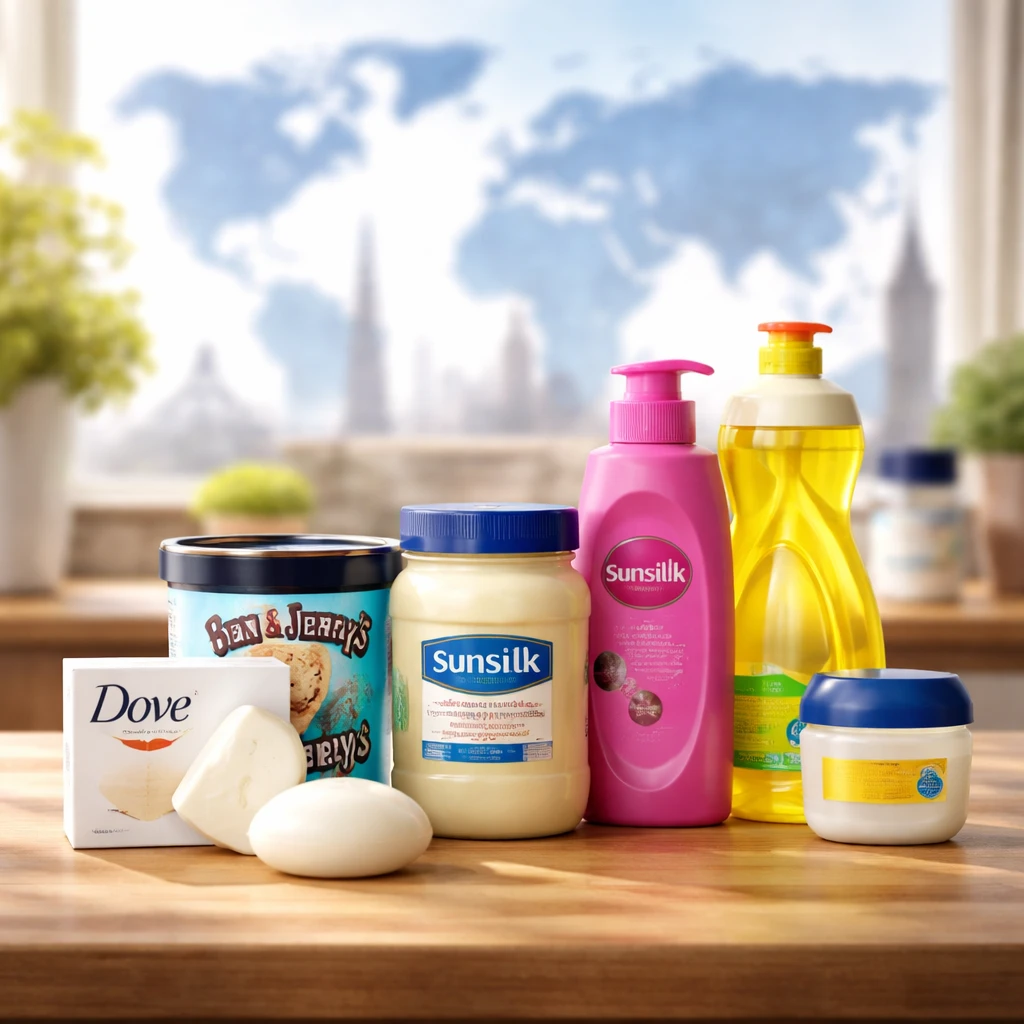
Unilever is a global consumer goods company with five core segments: Beauty & Wellbeing, Personal Care, Home Care, Nutrition and Ice Cream. That diversification spreads cyclical risk and offers steady cash flow; the business is built on household brands that have durable market share and pricing power. Investors should care because Unilever combines predictable cash flows with modest growth exposure in faster-growing beauty and hygiene categories: recent industry reports show robust demand in hydrogel masks, women’s health & beauty supplements, and the broader hygiene market, areas where Unilever has product and distribution muscle.
Support from recent technical and market signals
Technically, the shares sit above key moving averages: SMA50 ~$65.64, SMA10 ~$65.79 and the EMA21 ~$65.60. Momentum indicators are constructive - RSI is 57.4 and MACD shows bullish momentum - implying the stock has room to bounce if it holds the $65 support band. Average daily volume (~3.55M) is larger than recent intraday volumes, suggesting current pullbacks are not yet high-conviction washouts.
Hard numbers that matter
- Current price: $66.74.
- Market cap: $145.54 billion.
- P/E ratio: 24.51; P/B: 7.05.
- Dividend yield: 3.27% (ex-dividend most recently 12/08/2025).
- 52-week range: $54.32 - $67.82; current price is near the top of that range.
Those numbers tell a consistent story: Unilever is valued like a high-quality defensive growth name, not a deep-value turnaround. The P/E of 24.5 is not cheap in absolute terms, but in the context of a stable cash-generating FMCG business with a 3.27% yield, it’s reasonable - particularly given the company’s exposure to categories growing faster than the wider consumer staples market.
Valuation framing
At a market cap of about $145.5 billion and a P/E of 24.5, Unilever trades like a premium consumer staples name. The P/B of ~7 is elevated and reflects significant intangible assets and brand value on the balance sheet. Without contemporaneous peer multiples in this note, evaluate Unilever qualitatively: you pay for predictability and brands that can sustain pricing and margin through inflationary cycles. The key to the trade is not buying at the absolute cheapest multiple, but buying when risk/reward gets skewed in your favor - i.e., on a shallow pullback toward structural support closer to the SMA50/EMA21 levels.
Catalysts that can drive upside
- Category tailwinds: personal hygiene and beauty categories are expanding; recent reports flag growth in hydrogel masks and women’s health & beauty supplements, where Unilever has scale and product extensions.
- Portfolio execution: product premiumization in skincare and nutrition, plus ice cream premium brands (Ben & Jerry’s etc.) can lift average selling price and margins.
- Operational leverage: cost savings and pricing discipline can flow through to margins if commodity pressures ease.
- Dividend and buybacks: a 3.27% yield limits downside and can attract yield-focused capital during bouts of equity volatility.
- Geographic diversification: further share gains in high-growth APAC and emerging markets could accelerate top-line growth.
Trade plan - actionable entry, stops, targets
My recommended actionable trade is a buy-on-weakness with clearly defined risk controls.
| Action | Price | Horizon |
|---|---|---|
| Entry | $65.50 | Enter on pullback to support (short/mid-term inflection) |
| Stop loss | $62.50 | Protects capital; invalidates support band |
| Target | $72.00 | Primary long-term target (upside from re-rating and organic growth) |
Trade duration:
- Short term (10 trading days): Look for an initial bounce back to $68.50 if the $65.50 entry holds and macro risk is limited.
- Mid term (45 trading days): Expect consolidation and gradual earnings-driven re-rating toward $70 if categories remain robust.
- Long term (180 trading days): The fulltrade objective is to capture upside to $72, reflecting a recovery toward higher multiples driven by margin expansion and improved organic growth. Hold the position unless the stop at $62.50 is triggered or a material negative earnings revision occurs.
Position sizing and risk control
Because Unilever is a large-cap stable business, consider sizing to 2-5% of portfolio risk at entry and keep absolute position loss limited to your risk tolerance using the $62.50 stop. If the stock gaps below the stop on a headline event, cut to the predetermined stop and reassess. Re-enter opportunities can be evaluated on signs of stabilizing volume and improving technicals.
Risks and counterarguments
Every trade has risks. Here are the principal ones—and a realistic counterargument.
- Slower-than-expected organic growth - If Unilever’s product innovations or pricing do not gain traction, revenue growth could disappoint and pressure multiples. This is especially relevant if emerging market volumes soften.
- Input-cost pressure - Volatility in commodities (oils, packaging materials) could compress margins; although management has historically passed through costs, there is a limit to consumer elasticity.
- Execution missteps on premiumization - Investments in prestige beauty and nutrition could fail to convert if competitors or local brands undercut price or distribution.
- Macroeconomic shock or FX moves - As a global company, Unilever is exposed to currency swings and consumption slowdowns in key markets; recessionary conditions could materially reduce volumes.
- Valuation risk - The stock trades at a premium P/E and P/B; a multiple contraction would erase price gains even if earnings hold steady.
Counterargument
One reasonable counterargument is that Unilever is already priced for perfection: a P/E near 25 and P/B above 7 implies high expectations for steady growth and margin maintenance. If macro growth disappoints or competitors take share in faster-growing categories, upside could be limited and downside sharper than the consumer staples stereotype. For investors who prioritize absolute valuation over yield and quality, waiting for a deeper pullback closer to the $60 area might be preferable.
What would change my mind
I would reconsider this buy-on-weakness plan if any of the following occur: a material earnings downgrade from management tied to volume loss in key markets, a sustained breakdown below $62.50 on meaningful volume, or evidence that commodity cost pass-through is no longer achievable without heavy share loss. Conversely, sustained margin improvement, better-than-expected market share gains in APAC or premium beauty, or a buyback acceleration would strengthen the bullish case and could justify earlier partial scaling into the position.
Conclusion
Unilever is a classic wide-moat consumer compounder: recognizable brands, diversified segments and a yield that provides a natural cushion during market volatility. At $66.74 the stock is not dirt cheap, but a measured buy-on-weakness entry at $65.50 with a $62.50 stop and a $72 upside target offers a favorable risk/reward for long-term investors prepared to tolerate modest near-term churn. The trade leans on category tailwinds in personal care and hygiene, the company’s ability to extract pricing and margin improvement, and a defensive payout. Stick to the plan: enter size-limited, respect the stop, and reassess on fresh fundamentals or a change in the macro regime.