
Hook & thesis
DHT Holdings looks like a classic shipping story where operational progress and balance-sheet moves are finally converging with valuation. The company has been actively pruning older tonnage, taking in four VLCC newbuildings (the first, DHT Antelope, delivered on 01/02/2026) and converting net cash proceeds from asset sales into optionality. At a current price of $17.995 and a market cap of approximately $2.90B, the stock already reflects improved fundamentals but still leaves room for upside if charter markets and utilization stay constructive.
Our trade thesis: buy DHT as a swing trade. The company is growing earnings power without equity dilution - newbuilds are fully funded - and recent vessel disposals generated roughly $95.0M in expected net cash proceeds. That combination supports both the dividend (yield ~5.51%) and potential for modest multiple expansion if time charter equivalent (TCE) rates firm. Entry $17.99, stop $16.25, target $22.00.
What DHT does and why the market should care
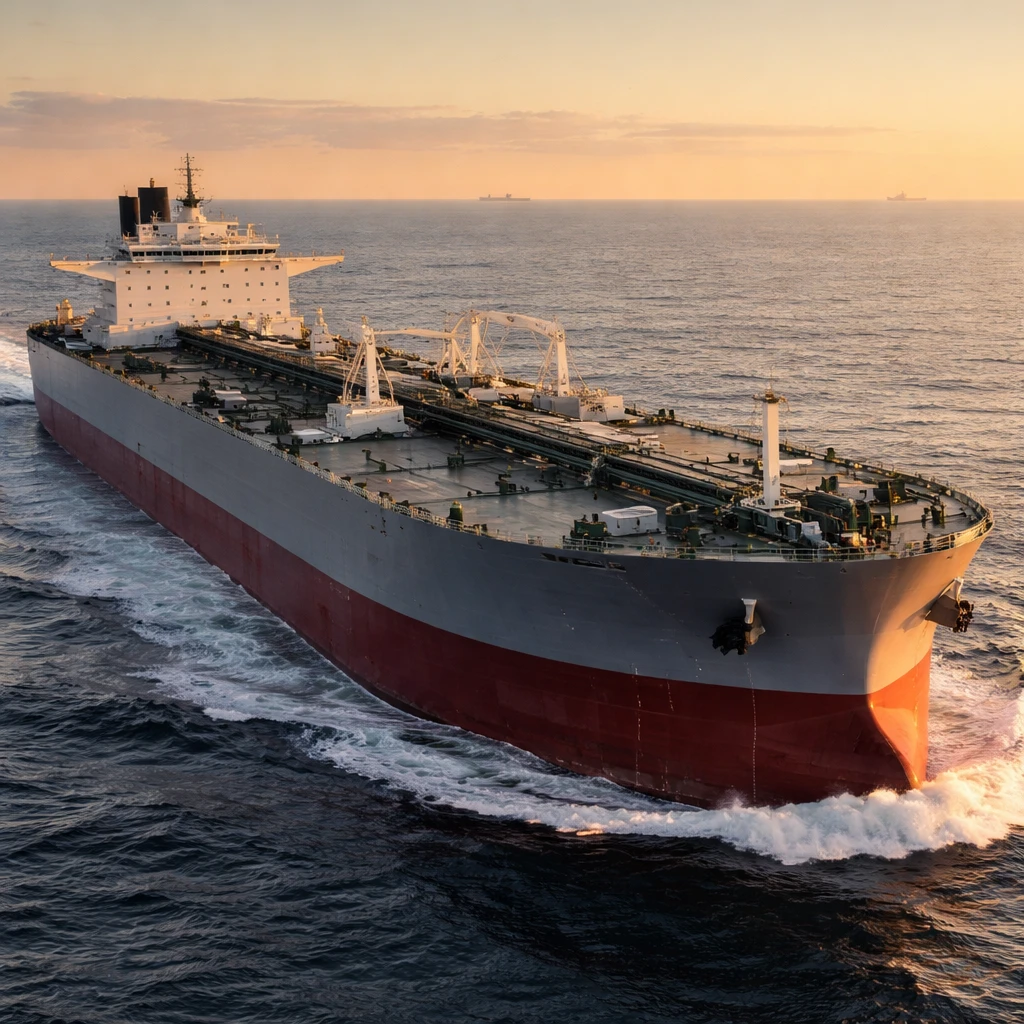
DHT operates a fleet of crude oil tankers, focused on VLCCs (very large crude carriers). The company runs its integrated management operations out of Monaco, Singapore and Oslo, and it owns and operates tonnage that trades on the spot and time-charter markets. For investors, the fundamental driver is straightforward: vessel earnings are driven by global crude flows and the VLCC charter market, which swings with oil demand, refinery cracks and tonnage supply/demand dynamics. A handful of days' improvement in TCE rates can meaningfully move quarterly earnings for a fleet this size.
Two operational items matter right now: first, newbuild deliveries expand DHT's earnings capacity. The company announced the delivery of DHT Antelope on 01/02/2026 and has three additional newbuildings scheduled in the first half of 2026. Management says these newbuildings are fully funded, which reduces the risk of equity issuance to finance growth. Second, DHT sold two older VLCCs for a combined $101.6M on 12/29/2025 and expects approximately $95.0M net cash proceeds after debt repayment - proceeds that improve liquidity and give the company options for debt reduction, dividends or opportunistic buybacks.
Recent operating and market data that supports the call
- Market cap: $2,897,950,790. Shares outstanding: 161,042,000. A market cap under $3B for a pure VLCC owner with improving earnings is reasonable given cyclicality.
- Valuation: PE ~13.53, PB ~2.52. Those ratios are consistent with a company that generates cash and returns capital; they do not reflect an excessively high growth premium.
- Dividend yield: ~5.51% (ex-dividend date 02/19/2026; payable 02/26/2026). The payout provides income while the stock participates in any earnings upside.
- Fleet and earnings: Q3 2025 TCE was reported at $40,500/day, with 56% of Q4 spot days booked at $64,400/day (10/14/2025 business update). Those levels point to material upside versus trough shipping rates and suggest management has already locked in meaningful revenue for recently completed quarters.
- Balance-sheet actions: sale of two VLCCs (12/29/2025) generated expected net proceeds ~$95.0M; the company recorded gains on the sales, boosting reported earnings in the short run.
Technical and market structure context
Technically, the stock is trading above its 50-day moving average ($16.54) and close to its 20-day SMA ($18.09), with a neutral RSI of ~54.5. Volume patterns show average daily volumes in the multi-million share range (two-week average ~5.87M; 30-day ~7.00M), which supports tradeability. Short interest has ticked up recently to levels near 6.95M (settlement 03/13/2026), but days-to-cover remain low (around 1), limiting the scope for a large short squeeze. The MACD shows slightly bearish momentum, which is why a tactical entry near current levels with a defined stop makes sense.
Valuation framing
At a market cap near $2.9B and reported PE ~13.5, DHT sits at a valuation that implies modest earnings growth and a continued distribution of free cash flow. The company’s PB of ~2.52 suggests investors price some replacement-cost value for the fleet but not aggressive growth. Importantly, the newbuilds are fully funded, and the sale of older vessels brought meaningful liquidity (~$95.0M), lowering financing risk and preserving shareholder optionality. For a cyclical asset owner, valuation should be judged against normalized TCEs and balance-sheet resilience; on both counts DHT looks defensible at current levels.
Catalysts
- VLCC newbuild deliveries entering the spot market - first of four delivered 01/02/2026 - could lift overall fleet TCEs if crude flows remain firm.
- Further asset-lighting or selective sales of older tonnage would produce cash and improve fleet age profile, supporting margins.
- Improvement in global crude demand or refinery activity - higher oil volumes increase VLCC demand and charter rates.
- Management allocation of the ~$95.0M proceeds toward buybacks or debt reduction would be a positive signal for the capital return profile.
Actionable trade plan
Trade stance: Long DHT with a swing horizon.
| Entry | Target | Stop | Time horizon | Risk level |
|---|---|---|---|---|
| $17.99 | $22.00 | $16.25 | mid term (45 trading days) | medium |
Rationale: Entering at $17.99 (near the current $17.995) gives exposure to the immediate earnings uplift from delivered newbuilds and the balance-sheet buffer from recent asset sales. The mid-term horizon (45 trading days) is chosen to give time for charter-rate moves to affect realized TCEs and for market recognition of improved cash flows. Stop loss at $16.25 sits below the 50-day moving average and provides a clear technical invalidation point if the recovery stalls. Target $22.00 reflects a modest multiple re-rating and/or a rebound in TCEs from current spot levels; it equates to roughly a 22% upside from entry and is consistent with comparable moves when VLCC rates firm unexpectedly.
Risks and counterarguments
- Geopolitical disruption: Regional events can spike insurance and voyage costs or temporarily close choke points. For example, temporary closures or heightened Strait of Hormuz risk can disrupt schedules and depress sentiment (news flagged 02/18/2026).
- Cyclical rate downturn: VLCC earnings are highly cyclical. If crude flows slow or vessel supply ramps faster than expected, TCEs could deteriorate and compress earnings and dividends.
- Delivery timing and spot absorption: While newbuilds are an earnings lever, simultaneous deliveries across peers can increase available tonnage and cap short-term rate gains; the market could already price this in.
- Dividend sustainability: A 5.5% yield is attractive but dependent on volatile shipping income. A prolonged rate slump would pressure distributions and could hurt the valuation.
- Counterargument: One could argue the market has already priced in the positive elements - funded newbuilds, asset sales and a higher TCE backlog - leaving limited upside. If TCEs remain rangebound, the multiple may compress toward the sector trough and limit returns to the dividend only.
What would change my mind?
If rates weaken materially from current booked levels (e.g., if the company reports a meaningful drop in realized TCEs below the Q3 2025 trough of $40,500/day) or if management uses the $95.0M proceeds in ways that dilute shareholders (large equity raise, aggressive capex with poor returns), I would downgrade the trade. Conversely, sustained improvement in spot VLCC rates and evidence that proceeds are funding buybacks or accelerating debt paydown would make the position more attractive and could justify raising the target.
Conclusion
DHT is worth owning as a disciplined swing trade at $17.99. The company is executing on three practical fronts: modernizing the fleet through funded newbuilds, capturing upside through spot exposure, and extracting value via selective asset sales. Those moves reduce financing risk and improve earnings power. With a market cap of roughly $2.9B, a reasonable PE (~13.5) and a 5.5% yield, DHT offers a favorable risk/reward for traders willing to accept cyclical volatility. The trade plan pairs a defined stop with a mid-term 45 trading day horizon to balance operational catalysts against shipping cyclical risk.
Key metrics at a glance
| Metric | Value |
|---|---|
| Current price | $17.995 |
| Market cap | $2,897,950,790 |
| PE | 13.53 |
| PB | 2.52 |
| Dividend yield | 5.51% |
| Shares outstanding | 161,042,000 |
| Recent notable TCE | $40,500/day (Q3 2025); Q4 spot days 56% booked at $64,400/day) |
Trade with position sizing that reflects the medium risk level and shipping cyclicality. The plan here provides a clear entry, stop and target and is based on the combination of funded fleet growth, recent cash proceeds and a conservative valuation that leaves room for upside if VLCC earnings normalize higher.