
Hook & thesis
Armanino Foods (AMNF) is a niche producer of upscale frozen and refrigerated specialty Italian products. The company is small but not immaterial: market capitalization sits around $331,241,799 and the company is trading near $10.40. Management has been pushing new SKUs and distribution wins that should lift revenue and gross leverage if execution holds.
My trade thesis is straightforward: a tactical long that buys into improving operational momentum while keeping a tight risk control. The reward here is a reclaim of the 52-week high of $12.25, achievable if retail placements and pricing combine to expand margins. The main caveat is execution - distribution and production scale need to line up. That makes this a mid-term trade rather than a position trade.
What the company does and why the market should care
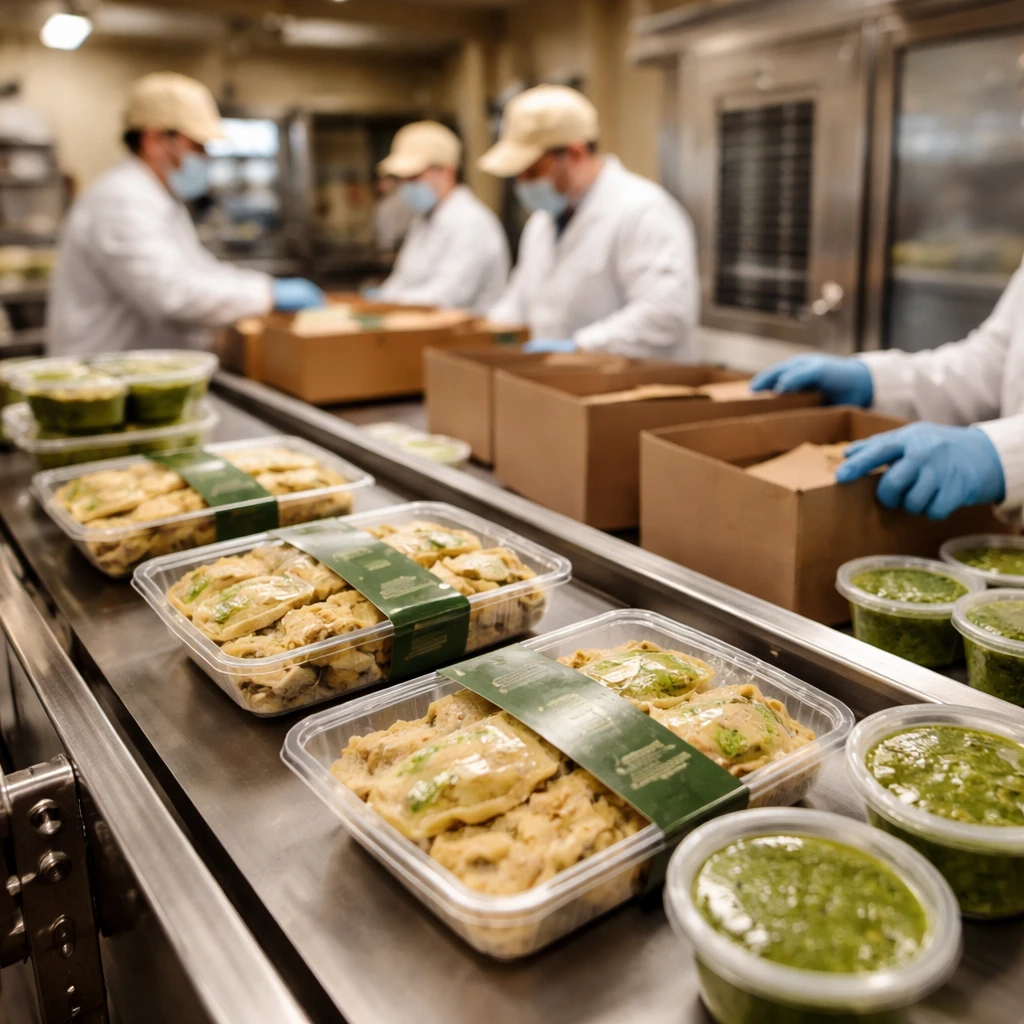
Armanino Foods of Distinction is a specialty/ upscale frozen and refrigerated food manufacturer headquartered in Pleasanton, CA. Its portfolio includes pesto sauces, stuffed pastas, pasta sheets and value-added Italian pastas and cooked meat products. With a staff of 37, this is a capital-light, product-focused business where incremental distribution wins can move revenue meaningfully.
Why should investors care? Two reasons: (1) product-led businesses in specialty food often see quick top-line lift from a few national or regional retail placements because manufacturing can be scaled up without huge fixed-cost increases; (2) the company pays a dividend (yield ~1.62%), providing some income while waiting for execution to play out. Against that, the stock trades on the OTC markets, liquidity is modest and the balance between growth and profitability is delicate.
Key operating and market-picture numbers
| Metric | Value |
|---|---|
| Current price | $10.40 |
| Market cap | $331,241,799 |
| P/E ratio | 17.09 |
| PB ratio | 7.38 |
| Shares outstanding | 32,066,001 |
| 52-week high / low | $12.25 (01/23/2026) / $7.27 (04/11/2025) |
| Average daily volume (30d) | ~22,171 |
Technically, the stock sits near its 10-day simple moving average ($10.39) and slightly below the 20-day SMA ($10.44) and the 50-day SMA ($11.05). Momentum indicators are mixed: RSI is 42, indicating neither oversold nor strongly bullish conditions; MACD shows a modest bullish momentum with the histogram slightly positive.
Why now - the fundamental driver
The investment case rests on three tangible fundamentals: product innovation, distribution expansion, and the ability to protect margins. Given the firm’s small workforce and focused product slate, incremental retail placements or a single significant regional chain can move revenue materially. The company also yields ~1.62%, which supports a carry-oriented trade while waiting for execution.
From a valuation standpoint, the headline P/E of ~17 is not expensive for a small growth-oriented food manufacturer that can compound sales. However, the PB of 7.38 is elevated, which likely reflects limited tangible assets relative to equity and investor willingness to pay for brand/IP and margins. With market cap at ~$331M, this is a name where absolute dollar moves in demand or a handful of buyers can materially impact price given average daily volume below 25k shares.
Catalysts to watch (2-5)
- Retail expansion announcements - new shelf placements or distribution agreements with regional/national grocery chains would be the clearest positive catalyst.
- Quarterly results showing revenue growth and expanding gross margins - this would validate the product-led growth story and give the market confidence that scale economics are improving.
- Operational updates on production capacity or co-packing agreements - evidence that supply can keep up with demand would reduce the execution risk premium.
- Insider buying or a meaningful share buyback - for a small-cap OTC stock, such moves can meaningfully affect sentiment and liquidity.
Trade plan - actionable setup
Trade direction: Long
Entry price: $10.40
Target price: $12.25 (near 52-week high)
Stop loss: $9.20
Horizon: mid term (45 trading days) - this timeframe is chosen because distribution and merchandising wins tend to be announced and show through to sales in a matter of several weeks to a couple of months. Forty-five trading days gives time for placements to appear in weekly scans, for retail reorder cycles to begin, and for any quarterly financials to be digested.
Rationale: The target sits at the 52-week high of $12.25. That level represents a credible short-term upside if one or two of the catalysts above materialize. The $9.20 stop limits downside to a defined range that respects the recent volatility and the low liquidity environment. If price falls below $9.20, the market is signaling that either execution is failing or investor sentiment has shifted negatively.
Valuation framing - what you're paying for
On a market-cap basis, AMNF is a small-cap name at roughly $331M. A P/E around 17 suggests the market currently anticipates moderate growth but not explosive expansion. The elevated PB of 7.38 implies investors are valuing the company's brand, product mix and potential for margin expansion more than its book assets. For a specialty food producer, that makes sense: intangibles and expected cash flow growth matter more than plant-and-equipment on the balance sheet.
Qualitatively, compare this to typical valuations for niche food brands: when brands demonstrate repeatable distribution wins and margin expansion, multiples expand quickly. Conversely, when execution lags, multiples compress and illiquidity exacerbates moves to the downside. Given the OTC listing and average volume of ~22k shares, this is a trade where microstructure risk can dominate fundamentals in the short term.
Risks and counterarguments
- Execution risk - The thesis depends on new placements and margin expansion actually happening. If production or co-packing issues arise, the company can miss expectations and the stock could trade sharply lower.
- Liquidity and OTC listing - Trading on the Pink Current market tier means lower visibility and lower institutional ownership. Average daily volume (~22k) and a float of ~31.3M shares make it susceptible to price swings on relatively small orders.
- Competitive pressure - The specialty frozen foods market is crowded. Larger CPG players can undercut pricing or secure more favorable in-store positioning, limiting Armanino's growth runway.
- Valuation volatility - The high PB ratio (7.38) suggests the stock is priced for growth. If growth disappoints, P/B and P/E multiple compression can be rapid.
- Short-interest and short-volume dynamics - Recent short interest has fluctuated (notable reports around 02/27/2026 and 03/13/2026), and daily short-volume data shows active shorting on certain days. Short activity can amplify volatility in either direction.
Counterargument to the thesis
A reasonable counter view is that the stock already prices in the limited but real growth potential, and upside beyond the $12 handle requires sustained revenue acceleration and margin expansion that may be unrealistic for a company of 37 employees without large-capex or partner-led distribution. In that view, the safer play is to wait for clear evidence of distribution wins on the shelf or a better liquidity profile.
What would change my mind
I would abandon the trade plan and flip to neutral/short if any of the following occur: (1) a quarter showing sequential revenue decline or contracting gross margins; (2) public disclosure of production constraints or lost distribution agreements; (3) a material insider sell program or dilution that meaningfully increases shares outstanding without commensurate capital deployment. Conversely, I would add to the position if the company announces a major regional or national distributor win, or if quarterly revenue prints show clear sequential acceleration and margin improvement.
Conclusion
Armanino Foods is a classic small-cap, product-driven opportunity: the upside depends on a few discrete execution outcomes. For traders comfortable with OTC liquidity, the setup to buy at $10.40 with a $12.25 target and $9.20 stop offers an asymmetric but defined-risk trade over a mid-term (45 trading days) horizon. Success depends less on macro trends and more on the company proving it can scale product placements and protect margins. If you prefer lower execution risk, wait for confirming signs in sales and production metrics before committing capital.
Quick takeaways
- Entry: $10.40 | Target: $12.25 | Stop: $9.20
- Horizon: mid term (45 trading days)
- Market cap: ~$331M | P/E ~17 | Dividend yield ~1.62%
- Main risk: execution and liquidity; main catalyst: distribution wins and improving margins