
Hook & thesis
Anfield Energy (AEC) reads like a classic high-risk, high-reward resource story: small market cap, real mining assets (including the Shootaring Canyon mill and several uranium projects across Utah and Colorado), recent capital injections, and regulatory catalysts that could jumpstart production timelines. The upside is straightforward - if permitting progresses and uranium market sentiment remains constructive, AEC could re-rate sharply from its current ~$88.5M market capitalization. The downside is equally stark - micro-cap volatility, dilution from financings and warrants, and execution risk at the project level could wipe out paper gains quickly.
My trade idea is directional and tactical: a long bias on AEC for investors who accept high risk and volatility, using a clear entry, stop and ambitious target tied to operational and financing catalysts. This is not a buy-and-forget trade; it’s a docketed, event-driven stake tied to permitting, shareholder votes, and potential project restarts in H2/2026.
What Anfield Energy does and why the market should care
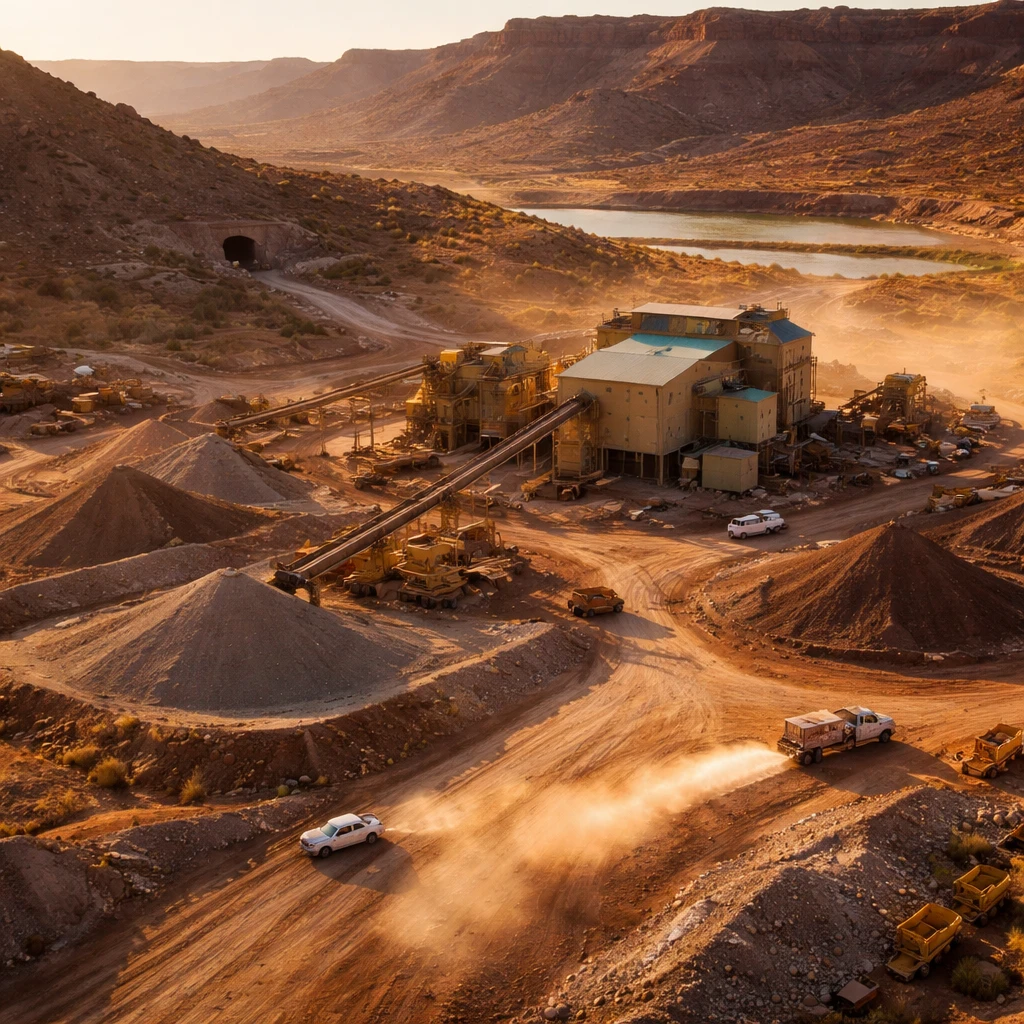
Anfield Energy is a small-cap explorer/developer focused on uranium and associated energy metals. The company's asset base includes the Shootaring Canyon mill (a material processing asset), plus project interests such as West Slope, Velvet-Wood, Slick Rock, Findlay Tank Breccia Pipes, Frank M, Date Creek Basin and Marquez-Juan Tafoya. Operationally, the Shootaring Canyon mill - and the potential to restart the JD-8 underground mine in Colorado - are the primary operational levers that could drive near-term cash generation if approvals hold.
The macro backdrop is supportive: U.S. policy moves to prioritize domestic uranium processing and enrichment (notably President Trump's Section 232 proclamation on processed critical minerals) and $2.7B in Department of Energy enrichment support create tailwinds for U.S. uranium producers. For a company with a ready mill and nearby deposits, that policy environment matters because it shortens the path from asset to revenue compared with greenfield developers.
Numbers that matter
- Current price: $5.54.
- Market cap: $88.5M.
- Shares outstanding: 15,979,256; free float: ~10,194,500.
- 52-week range: $2.58 - $12.49.
- Recent financings: closed a combined US$10.0M financing (US$6.0M LIFE offering + US$4.0M private placement to Uranium Energy Corp) on 01/13/2026. The US$4.0M tranche to Uranium Energy was priced at US$4.46 per subscription receipt (896,861 receipts).
- Permitting: JD-8 mine restart application passed initial completeness review with Colorado DRMS on 12/22/2025, targeting a production restart in H2/2026.
- Technicals: SMA-10 = $5.43, SMA-20 = $5.70, SMA-50 = $6.67. RSI = 42.46. MACD histogram is slightly positive; short interest has fallen from six-figure levels in 2025 to ~23k most recently.
Valuation framing
A market cap of ~$88.5M places AEC in micro-cap territory where market moves are governance- and catalyst-driven more than earnings-driven (the firm does not currently report material production revenue in the dataset). The company recently raised roughly US$10M; on an enterprise-value-like basis, that cash cushion reduces immediate hydrostatic pressure but also implies dilution was accepted at financing prices, which investors must respect.
For context, the private placement to Uranium Energy at US$4.46/subscription receipt and share issues under the LIFE offering indicate the company has been issuing equity between roughly $4.46 and current market levels. With ~16.0M shares outstanding, a return to the 52-week high of $12.49 implies significant upside (roughly +125% from $5.54), but that path depends on operational execution rather than multiple expansion alone.
Catalysts to watch (2-5)
- Shareholder vote on Uranium Energy as a control person - meeting originally set for 02/27/2026. Approval (or not) will materially change strategic optionality and potentially open operational synergies or further funding access.
- Permitting milestones for the JD-8 mine and any subsequent DRMS approvals - management targets restart in H2/2026; watch for completeness reviews translating into approved permits.
- Use of proceeds and execution updates tied to capital commitments for West Slope, Velvet-Wood, Slick Rock, and the Shootaring Canyon mill following the US$10M raise closed on 01/13/2026.
- Macro: further U.S. policy actions or DOE funding that specifically favor domestic uranium processing and enrichment could accelerate project financing and offtake discussions.
Trade plan (actionable)
Thesis: directional long with strict risk control. This is a trade for those who accept high volatility, potential near-term dilution, and binary outcomes tied to permitting and shareholder governance.
| Trade | Entry | Stop | Target | Horizon |
|---|---|---|---|---|
| Primary long | $5.54 | $4.00 | $12.00 | Long term (180 trading days) |
Rationale: Entering at market ($5.54) captures current catalysts while leaving room for an intraday re-entry if price dips toward the SMA-10 (~$5.43) or the SMA-20 (~$5.70) dynamic. The stop at $4.00 limits downside to a controlled amount (roughly -28% from entry) while sitting above the financing strike and leaving room for ordinary micro-cap noise. The target of $12.00 ties to the 52-week high ($12.49) and represents a full realization of the upside scenario — permitting + orderly project execution + supportive uranium markets. Expect this trade to play out over the long term (up to 180 trading days) because permitting and restart timelines generally take multiple months and the company has signaled production targets for H2/2026.
If you prefer a laddered approach, consider trimming at $9.00 and selling the remainder into strength toward $12.00.
Risks (balanced, 4+ items)
- Dilution risk: Recent and prior financings (multiple LIFE offerings and subscription receipts) plus bonus warrants issued to Extract Advisors (500,000 warrants exercisable at C$12.50 through 09/2028) increase share count and can limit per-share gains if management must raise more capital to advance projects.
- Execution & permitting risk: Passing an initial completeness review is not the same as permit approval. Permitting delays or restrictive permit conditions could push restart timelines past H2/2026, trimming the trade's upside.
- Commodity price risk: Uranium prices can be volatile and are a key driver of project economics and investment appetite. A stagnant or falling uranium price would lower asset valuations and reduce appetite for project financing or offtake.
- Control/strategic risk: The proposed role for Uranium Energy as a potential control person (shareholder vote resulted from meetings in late February 2026) can change governance, strategy, or capital access in ways minority shareholders may not favor.
- Micro-cap liquidity and volatility: With a float of ~10.2M shares and average volumes in the tens of thousands, price moves can be sudden and exaggerated. Short-volume data shows active shorting on heavier volume days; rapid squeezes or dumps are both possible.
Counterargument
A reasonable counterargument is that AEC is still a speculative micro-cap with limited operating track record at scale. Even with a favorable policy backdrop, there’s no guarantee that permitting converts into profitable, timely production. If Uranium Energy becomes a control shareholder, integration issues or strategic reprioritization could mean assets are mothballed or resold rather than developed rapidly. In that view, investors should treat AEC more like an options-like exposure to uranium upside than a conventional mining equity.
What would change my mind
I would become more bullish if Anfield reports firm offtake, project-level financing commitments, or clear restart permits for JD-8 with a fixed timeline and capex budget. Conversely, repeated dilutive financings without demonstrated progress at Shootaring Canyon or JD-8, or a failed shareholder vote on the Uranium Energy control proposal that leads to strategic limbo, would make me step away or flip to a cautious short-term neutral stance.
Conclusion
Anfield Energy is a classic high-risk, high-reward uranium micro-cap. The company checks key boxes for upside - a mill, prospective projects, supportive U.S. policy tailwinds, and recent capital to advance work. Still, the story sits on binary governance and permitting catalysts and carries real dilution and execution risk. For disciplined, size-controlled traders who can stomach big swings, a long position entered at $5.54 with a stop at $4.00 and a target at $12.00 over a long-term window (180 trading days) is a defensible tactical play. Keep position sizing small, watch shareholder votes and permitting milestones closely, and be ready to tighten stops if execution falters.
Note: This idea is for investors who accept elevated volatility and the possibility of dilution. Treat AEC as a leveraged play on U.S. uranium restart themes rather than a low-risk miner.