
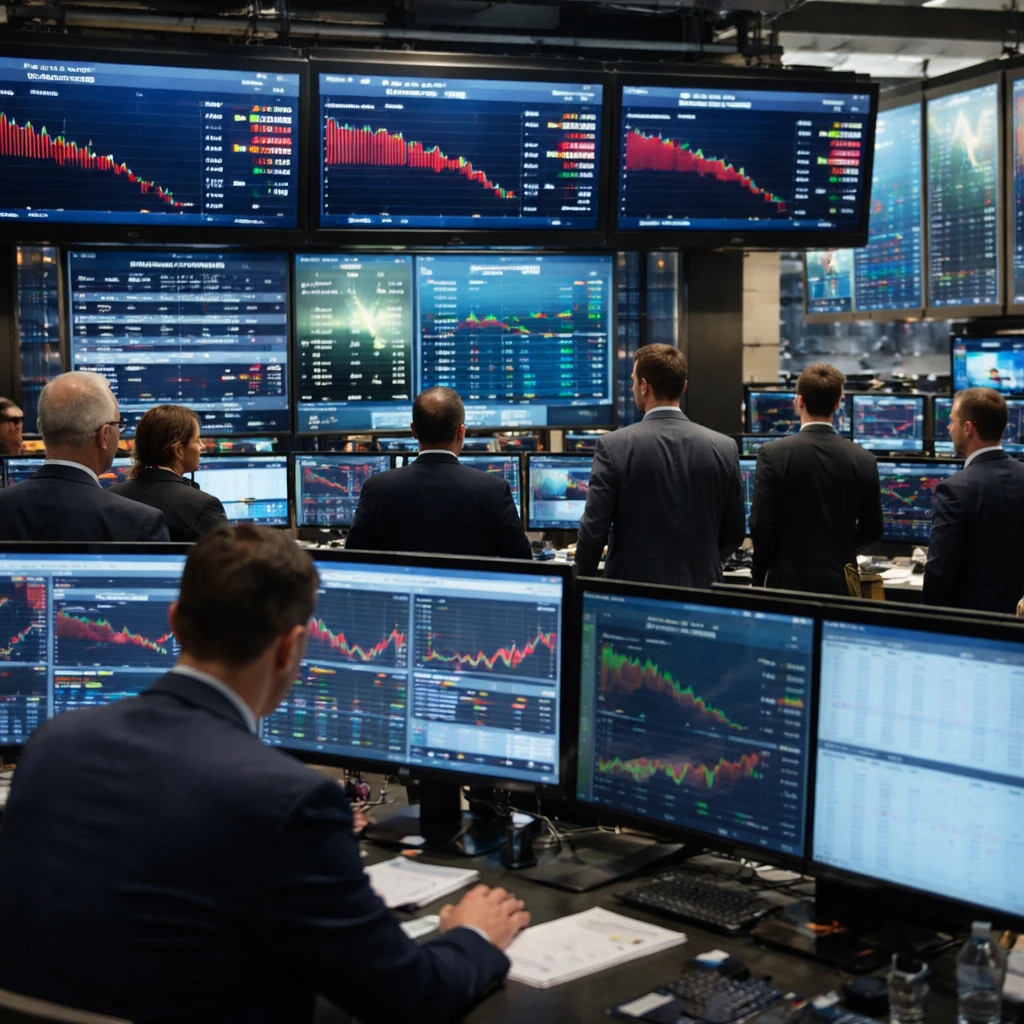
U.S. stock benchmarks finished lower on Friday, with technology shares weighing on returns despite a generally muted market response to the White House naming Kevin Warsh as the next Federal Reserve chair.
The S&P 500 fell 0.43% to close at 6,939.03, marking a third straight day of declines. The Dow Jones Industrial Average dropped 179 points, or 0.36%, to end at 48,892.47. The Nasdaq Composite took the biggest hit among the major indexes, sliding 0.94% to finish at 23,461.82, after all three benchmarks had traded more than 1% lower earlier in the session.
Moves in other markets suggested the Fed nomination did not unsettle investors broadly. The U.S. dollar strengthened while Treasury yields were largely unchanged through the day, indicating limited disruption to fixed-income markets.
On the nomination, Morgan Stanley strategist Michael Wilson wrote that "The Warsh nomination should be viewed as a market stabilizing event with the recent parabolic rise in precious metals raising questions about the \"run it hot\" strategy." He added, "Friday’s price action signals it was the right move as the S&P 500/Gold ratio had one of its best days in history."
Despite the pullback on Friday and a choppy month-end, U.S. equities posted gains for January. The S&P 500 advanced roughly 1.4% for the month, the Dow rose about 1.7%, and the Nasdaq finished up near 1%. Smaller-cap stocks outperformed, with the Russell 2000 climbing more than 5% over the month.
Looking ahead, investors will remain focused on fourth-quarter corporate earnings and incoming economic data, particularly the U.S. monthly jobs report slated for February 6. The Federal Reserve in its most recent meeting flagged signs of stabilization in the labor market when it paused its cycle of interest-rate cuts.
A Reuters survey of economists expects nonfarm payrolls to increase by about 64,000 in January. With economic data flows returning to a more normal pace after delays last year, markets will be sensitive to any deviation from those hiring expectations. Current market pricing reflects no additional Fed rate cuts until June; however, a materially weaker jobs report could prompt a quick reassessment of that timeline.
Corporate results will be a central test for U.S. equities this week. Following a disappointing report from Microsoft that pressured major indexes, another slate of high-profile earnings is due, including results from Alphabet (NASDAQ:GOOGL) and Amazon (NASDAQ:AMZN). Roughly one-quarter of the S&P 500 is scheduled to report this week, and continued solid profit growth in the United States is underpinning constructive sentiment for equities heading into 2026.
Among the companies investors will watch closely for earnings and capital expenditure signals are Alphabet and Amazon, two of the largest AI-focused hyperscalers. Other notable names reporting this week include Eli Lilly (NYSE:LLY), Advanced Micro Devices (NASDAQ:AMD) and Walt Disney (NYSE:DIS).
Leading investment banks and market strategists offered commentary on the market backdrop and what recent price action may imply for the path forward.
Morgan Stanley highlighted the importance of the sharp reversal in the S&P/gold ratio, suggesting it could mark a restoration of confidence. The firm noted that near-term gains may come from falling gold amid tighter liquidity considerations, while longer-term upside is likely driven by productivity gains resulting from a capex cycle. Morgan Stanley also observed that markets are rewarding firms with higher capex-to-sales ratios and improving earnings momentum, and it expects a rotation from commodity cyclicals back into consumer cyclicals in the near to intermediate term.
Evercore ISI characterized the recent selloff in parabolic gold and silver - driven in part by meme-like trading - as not presenting a material headwind to stocks. Instead, Evercore ISI said this development helps remove fears of building systemic risk and refocuses attention on equities. The firm noted that volatility is a normal feature of a four-year-old bull market and presents opportunity rather than a signal of trend termination.
Goldman Sachs commented that the outlook for S&P 500 earnings per share growth in 2026 remains solid. Of the 50 companies offering 2026 EPS guidance so far, 54% have guided above consensus versus a historical average of 40%. Goldman noted that consensus estimates for S&P 500 2026 EPS have been broadly unchanged since the start of the season and expects S&P 500 EPS growth of about 12% in 2026.
JPMorgan said it believes a positive growth-policy tradeoff will continue to support risk-on performance in equities. The bank pointed to resilient activity momentum and the potential for lagging sectors to catch up, citing robust consumer spending powered by a positive wealth effect, tax cuts, and potentially stronger confidence and labor markets in the future. JPMorgan also said corporate capital expenditure should benefit from accelerating and broadening earnings delivery based on initial Q4 results.
RBC Capital Markets signaled that reporting season to date has not altered its constructive outlook on the U.S. equity market for the current year. RBC reiterated that stock market returns in 2026 are likely to be driven by earnings growth, with limited movement expected in price-to-earnings multiples.
Investors and analysts will be parsing incoming corporate reports for evidence of sustained revenue growth, margins that reflect AI-related investment, and capital spending plans that could indicate a durable uplift in productivity. The immediate market reaction will likely depend on how reported results align with the optimistic profit growth trajectory that underpins many bullish views for equities into 2026.
For now, the market closes the week with modest losses but remains supported by January gains, a subdued reaction to a key Fed appointment, and an earnings calendar that promises fresh data on corporate health and investment plans.