
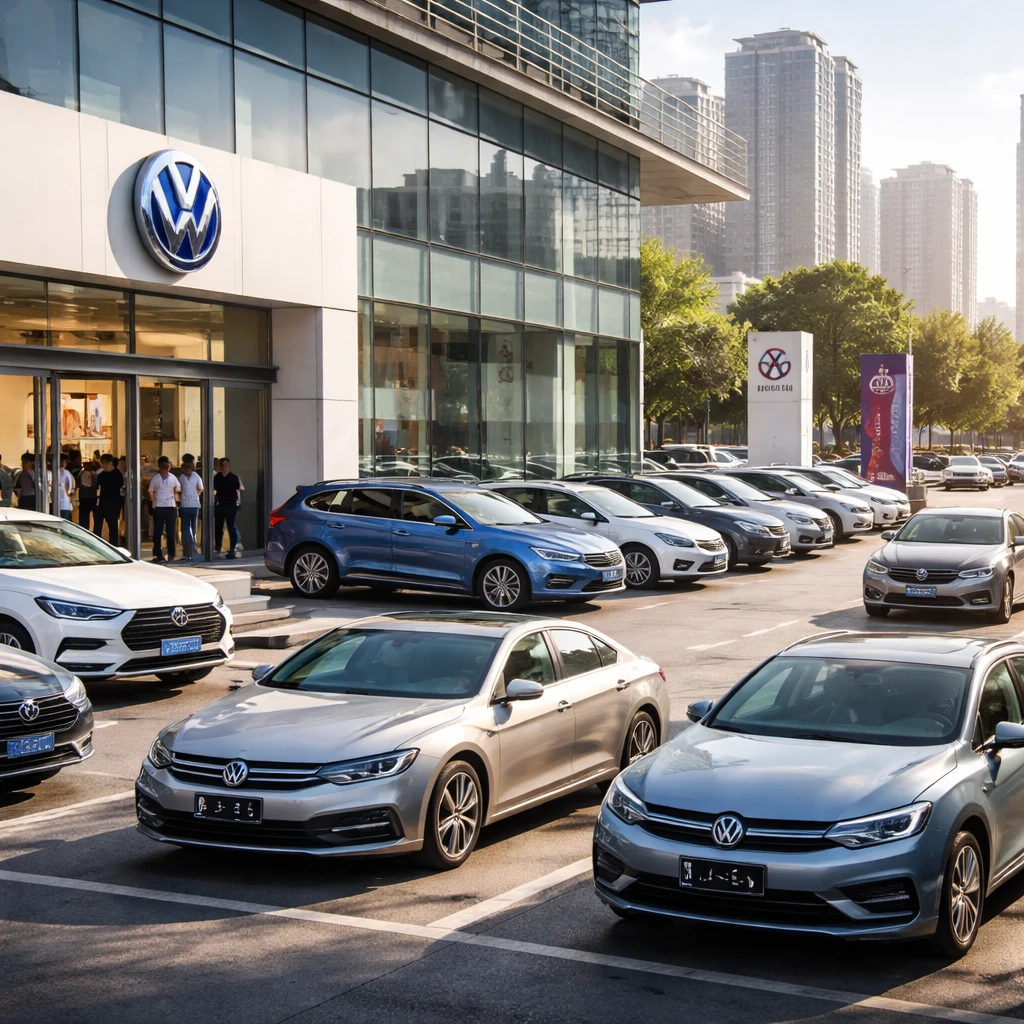
Volkswagen reclaimed the top sales position in China’s passenger vehicle market during the first two months of 2026, displacing BYD as government support for greener cars declined, according to figures released by the China Passenger Car Association (CPCA).
Combined sales from Volkswagen’s joint ventures with FAW and SAIC represented 13.9% of the country’s passenger vehicle market in volume terms for January and February. Geely trailed narrowly with a 13.8% share, while Toyota, through its joint ventures with GAC and FAW, accounted for 7.8% of passenger vehicle sales in the same period.
BYD, which had overtaken Volkswagen as China’s largest automaker by sales in 2024 and retained that lead last year, slid to fourth place with a 7.1% market share for the two-month span. The company recorded its steepest sales decline since the pandemic, per the CPCA data.
The reshuffling in rankings coincides with the expiration of purchase tax exemptions on electric cars and a pullback in Beijing’s subsidies for EV trade-ins. Those policy changes have narrowed the competitive advantage previously enjoyed by purely electric models, allowing several legacy manufacturers to regain ground in what is the world’s largest auto market.
CPCA secretary-general Cui Dongshu pointed to hybrid electric vehicles - a segment where Toyota has established strength - as one factor drawing buyers away from plug-in hybrid electric vehicles as subsidies dwindle.
"Hybrid EVs that Toyota specializes in steered some consumers away from PHEVs as subsidies fade," Cui said, according to the CPCA briefing.
The reduction in incentives has hit local automakers that concentrate on budget electric and plug-in hybrid models most acutely. Those brands saw the largest effects from the policy changes during the January-February period, reflecting a market response to the changing cost calculus for consumers.
The CPCA data illustrates a reversal in momentum after legacy automakers had been challenged by domestic rivals in the electric vehicle segment. The early-2026 rankings show Volkswagen back at the top, followed by Geely, Toyota and BYD, in that order, for the two-month window.
Key data points in the CPCA release include the combined 13.9% share for Volkswagen’s FAW and SAIC joint ventures, Geely’s 13.8% share, Toyota’s 7.8% share, and BYD’s 7.1% share for January-February 2026.