
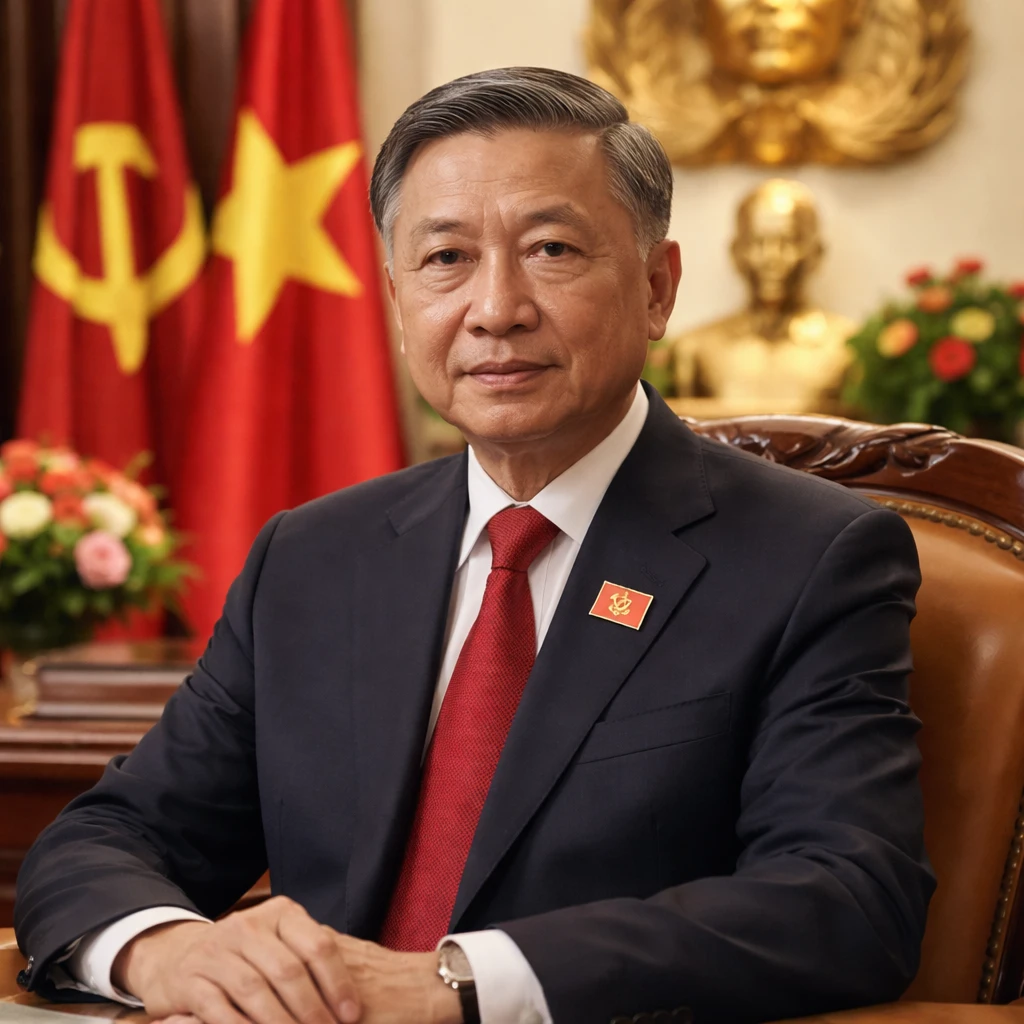
Vietnam's Communist Party has reaffirmed To Lam as its paramount leader, a position marking him as the most powerful official in the country. His tenure, notably proactive, combines an assertive reform agenda with a bolstered security framework that has influenced both domestic policy and Vietnam's foreign relations.
During his initial period at the Party's helm, Lam implemented wide-ranging reforms, notably fostering the growth and influence of private business conglomerates. His pragmatic focus on economic expansion aims to reinforce the legitimacy of the Communist Party’s rule, which rests heavily on sustained growth, even as this approach has prompted concerns regarding financial stability, project favoritism, and contentious infrastructure development.
Le Hong Hiep, a senior fellow at the ISEAS Yusof Ishak Institute, describes Lam as a leader with strategic vision shaped by his security and intelligence background. This experience translates into a leadership style less rigid than that of his predecessor, Nguyen Phu Trong, with a clear prioritization of Vietnam’s economic progress.
On the international stage, Lam has carefully balanced relations with major world powers. Despite challenges arising from unilateral U.S. tariffs on Vietnamese exports that jeopardize Vietnam’s access to its most significant trading partner, Lam’s diplomatic effort strives to maintain cooperative ties broadly, underscoring a nuanced foreign policy approach.
Lam, currently 68 years old, is the son of a senior police officer and holds an extensive background in security and legal studies, including a PhD in law. His ascent through the ranks includes appointment as Minister of Public Security in 2016, elevation to four-star general within three years, and entry into the Party Politburo by 2021.
As the police minister, Lam was instrumental in enforcing an aggressive anti-corruption campaign initiated by Trong in 2017, which led to the removal of numerous officials and even precipitated the resignation of two state presidents by 2024. His prominence during this turbulent period helped cement his dominance within the Party hierarchy.
Lam assumed the presidency in May 2024 and succeeded Trong as Party chief in July, soon afterwards stepping down as president, though reportedly with reluctance. Nonetheless, he continued to function as the de facto head of state, representing Vietnam internationally and engaging with global leaders. Currently, he is seeking to reunite the roles of Party general secretary and president, akin to the leadership model in China, a move some analysts caution could unsettle Vietnam’s traditionally collective political system.
Under Lam’s stewardship, Vietnam’s security framework has significantly expanded. The police have acquired augmented influence over legislative processes, project sanctioning, and business oversight, cementing the law enforcement body's centrality in governance. Lam is recognized for his hands-on involvement in operations, such as past anti-smuggling initiatives. His tenure has also been marked by controversial actions, including alleged involvement in the 2017 extraction of a Vietnamese national from Germany.
Despite his hardline roles, Lam maintains an intellectual demeanor, characterized by a calm speaking style and genuine interest in arts and music. His office oversaw Hanoi’s second opera house opening in 2023, with a third venue, designed by architect Renzo Piano, underway.
Initially, Lam sought closer relations with Washington; however, following stalled trade negotiations and punitive U.S. tariffs on Vietnamese goods, he shifted tactically towards warmer ties with China. Analysts expect Lam to continue navigating Vietnam’s proclaimed "Bamboo Diplomacy," balancing multiple major power relationships, though regional crises could create substantial disruption for this approach.