
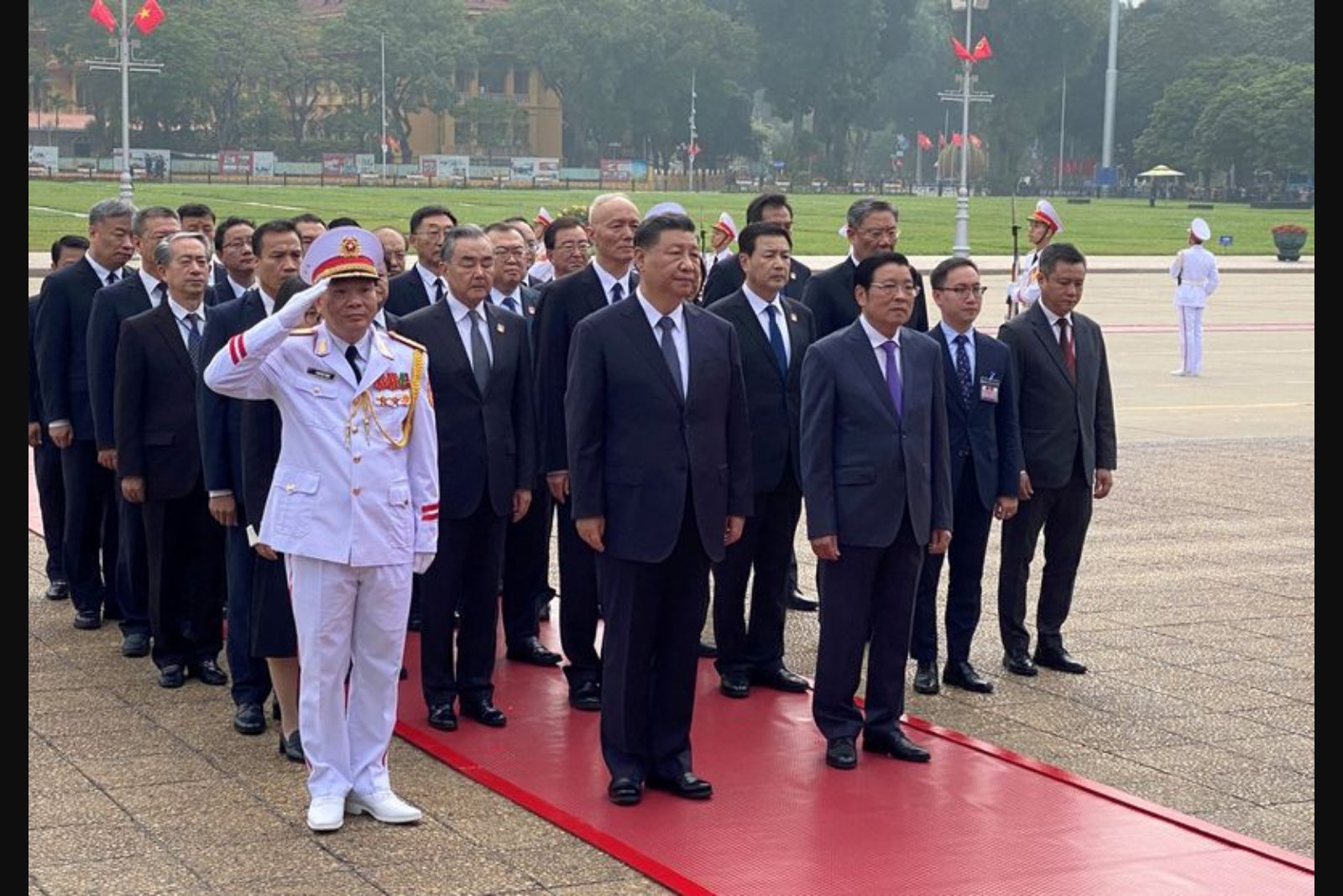
Vietnam is moving closer to China’s model of centralized control and technology adoption, according to internal government papers, policy plans and interviews with people familiar with the matter. The shift has accelerated as party chief To Lam, a former public security minister, prepares to travel to Beijing for talks with Chinese leader Xi Jinping this week on his first overseas trip since being inaugurated as state president on April 7.
Those sources, who spoke on condition of anonymity because of the sensitivity of the subject, say the political changes in Hanoi have brought China-friendly security figures to the fore. The consolidation of the roles of party chief and state president in To Lam has created a concentration of power reminiscent of recent trends in Beijing and marks a departure from Vietnam’s traditional emphasis on collective leadership.
In a joint statement after a prior meeting, Lam said: "Vietnam-China relations have entered a new stage, marked by higher political trust, more substantive defence and security cooperation, deeper and more practical cooperation across sectors." People familiar with this week’s schedule expect dozens of cooperation agreements to be announced during the visit. While many of those accords may be non-binding, observers point to increasingly tangible links between the two neighbors: China’s exports to Vietnam are at record highs and Chinese investment in Vietnamese manufacturing is expanding.
Technological cooperation has emerged as a principal indicator of the warming relationship. Hanoi has set aside earlier anxieties about Chinese equipment in its 5G network, and Vietnam’s largest internet service provider, FPT, has announced investments in an undersea cable project to be built by a Chinese vendor that has been associated in U.S. policy discussions with a sanctioned telecom firm. A telecom entity under Vietnam’s public security ministry is also in talks with Chinese companies over further 5G agreements.
In parallel, Chinese companies are exploring investments in Vietnamese data centres, which local observers and market advisers say has become a clear priority. "Chinese interest in Vietnam’s data-centre market has increased noticeably over the past 18-24 months," said Mickael Driol, head of investment advisory firm Mekong Partners. He linked much of that interest to manufacturers that have shifted operations from mainland China into Vietnam.
At the policy level, Hanoi is prioritising tighter state control of data and digital infrastructure. Draft rules prepared by the security ministry would severely limit cross-border data transfers and create state-run data-trading exchanges overseen by the public security ministry - arrangements that mirror China’s centralized approach to data and increase the state’s capacity to use information for surveillance or strategic objectives. In Western markets, trade in data is typically handled by private platforms; the draft Vietnamese framework would place such functions under government control.
Authorities are also expanding a national electronic identification system and rolling out AI-enabled camera networks nationwide, measures that enable more direct identification of individuals and resemble elements of surveillance architecture seen in China. Nguyen Khac Giang, a visiting fellow at the ISEAS Yusof Ishak Institute in Singapore, summarized Vietnam’s approach this way: it has "a dual approach of actively learning from the Chinese model while selectively resisting its influence." Giang also suggested that the increasing power of the police in Vietnam may explain a rising interest in Chinese-style social control tactics.
Alongside technology and security, Hanoi is tilting its economic management toward measures associated with China’s state-directed model. The Communist Party in Vietnam is endorsing larger roles for public investment and subsidies, pursuing major infrastructure projects and facilitating cooperative ventures with Beijing on high-profile initiatives, including proposed high-speed rail links between the two countries.
Public sentiment toward China has grown less critical in some quarters, and the ubiquity of platforms such as TikTok in Vietnam has helped spread narratives favorable to China. Hanoi’s criticism of Beijing’s actions in the disputed South China Sea has grown more muted in recent months, according to the documentation and sources.
Financially, Vietnam has been using monetary and regulatory tools that echo Chinese practice. Examples include lending directives to banks, strict foreign ownership limits in strategic sectors and handling a property market that bears similarities to issues seen in China. Chinese capital's share of total foreign investment in Vietnam is rising, and Chinese consumer brands are gaining traction at home.
Vietnam is now considering more active state intervention in domestic equity markets. Draft proposals include creating a government-backed stabilisation fund designed to purchase stocks during market downturns - a mechanism that internal documents explicitly model on China’s experience. An internal security ministry document reviewed by officials noted that "China created one and succeeded in reassuring investors."
Despite these shifts, analysts stress that Vietnam is not abandoning strategic hedging. Officials continue to maintain relationships with Washington and other partners, keeping diplomatic channels open even as domestic policy converges with aspects of China’s governance style. Alexander Vuving of the Asia-Pacific Center for Security Studies said that closer ties with China, without sufficient safeguards, "will have a negative impact not only on Vietnam’s security, prosperity, and autonomy, but also on its relations with the U.S. and the West."
Vietnam’s foreign ministry did not immediately respond to a request for comment on these developments.
The trajectory outlined in internal papers and public policy drafts suggests a deliberate combination of tighter domestic controls, preferential engagement with Chinese technology and capital, and a willingness to adopt economic instruments inspired by Beijing’s state-led model. Whether that approach will deliver the stability and growth Hanoi seeks - while retaining political autonomy and external partnerships - remains an open question in the documents and among outside analysts.