
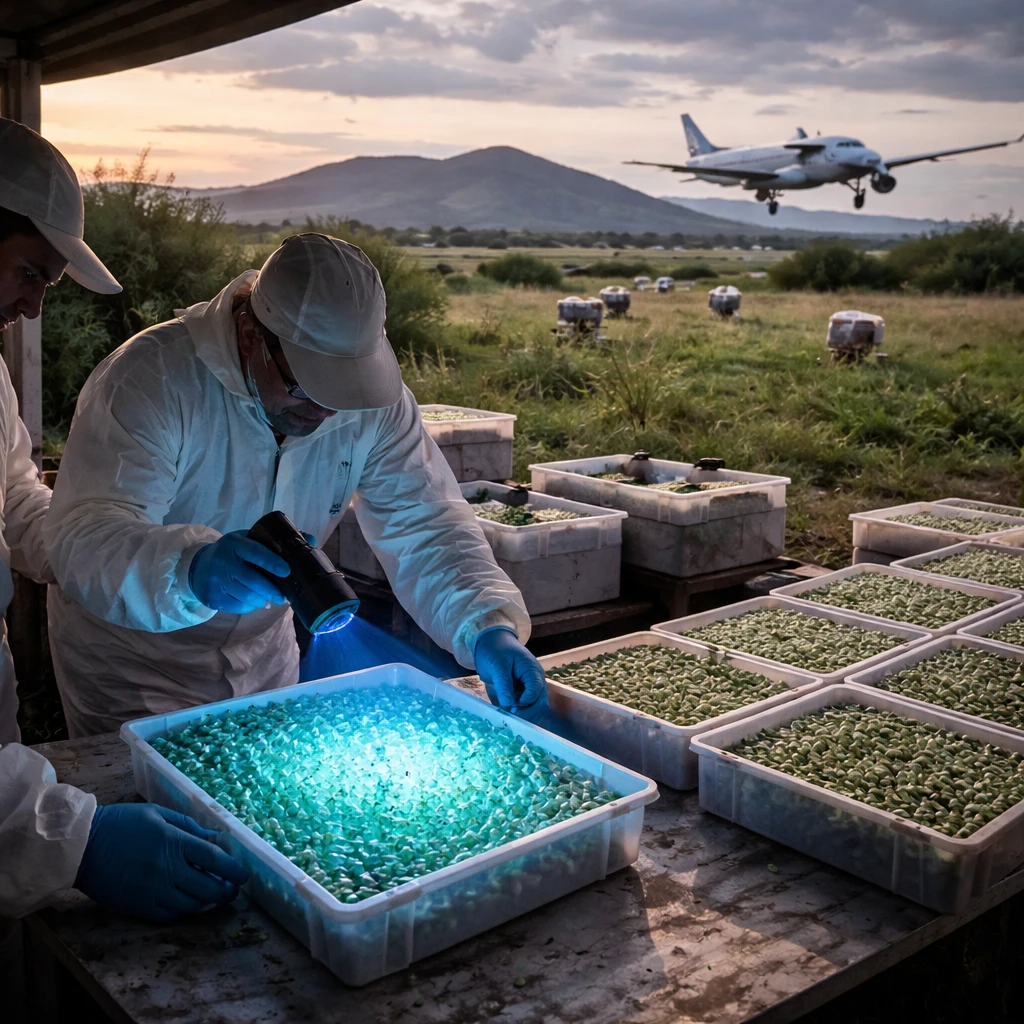
CHICAGO, Feb 2 - The U.S. Department of Agriculture said it will expand releases of sterile, fluorescently marked flies into areas of Mexico nearer the U.S. border and into southern Texas as federal officials work to stop the spread of the New World screwworm.
Screwworms are parasitic flies whose females lay eggs in open wounds on warm-blooded animals, commonly livestock. When those eggs hatch, the larvae use sharp mouthparts to burrow into living tissue and can kill the host if infections go untreated.
The USDA has suspended imports of Mexican livestock into the United States to prevent the pest from entering the domestic herd - a move that has exacerbated existing cattle shortages and contributed to record-high retail beef prices for consumers.
At present, the agency produces approximately 100 million sterile flies per week at a production facility in Panama and has used aerial dispersal in Mexico to prevent wild screwworm populations from reproducing. The USDA said it will now direct those same sterile flies farther north, to create a protective zone closer to the U.S. border.
Recent detections and the new dispersal zone
The decision follows reports of 20 screwworm infestations in animals in Tamaulipas since Dec. 26, a Mexican state that shares a border with southern Texas. The USDA said it will begin releasing sterile flies north of the locations in Mexico that have reported active cases to try to halt further northward movement of the pest.
The agency described the new dispersal area as including operations that extend roughly 50 miles into Texas along the border with Tamaulipas. Dudley Hoskins, a USDA under secretary, said the northernmost active case in Mexico was about 200 miles from the U.S. border and that cases have continued to appear across Tamaulipas and farther south in Mexico.
"Our highest priority is protecting the United States from screwworm," Hoskins said in the agency’s statement.
How the sterile-fly program will be distinguished
Before hatching, sterile flies will be treated with a fluorescent dye so technicians can distinguish released flies from wild, potentially reproductive flies. The USDA noted the dyed flies will glow under ultraviolet light and may even be visible to the naked eye.
Mexico’s government said the U.S. move to shift releases nearer the border is consistent with technical proposals it has been making since November 2025.
Capacity constraints and planned expansions
Experts say the current production rate of 100 million sterile flies per week is insufficient to eradicate the pest across Mexico. The USDA announced last year plans to build a new production facility in Texas, but the agency has cautioned that the site would likely take at least a year to become operational.
Last month, the USDA also said it would allocate up to $100 million toward projects to expand sterile fly production and bolster broader screwworm-control efforts, but those measures will not immediately raise weekly output to the levels experts say are needed for eradication.
Effectiveness and risks
The sterile-insect technique - historically used by the U.S. to eliminate screwworms in the 20th century by dropping boxes of sterile flies from aircraft - works when released sterile insects significantly outnumber wild, fertile populations. "They’re pretty effective as long as you can outnumber the population," said Max Scott, an entomology professor at North Carolina State University.
Veterinary and entomology specialists warn that detection of screwworm in new regions can stem from movement of infested livestock from affected areas. However, the increasing number of cases in Tamaulipas suggests experts believe a local breeding population of flies may be establishing itself there.
Industry impacts and seasonal considerations
Unseasonably cold weather in Texas could provide a temporary barrier to the pest’s northward spread, Tyson Foods Chief Operating Officer Devin Cole said on an earnings call. Cole noted the meatpacker’s beef business has been losing money as tight cattle supplies have driven up costs.
The USDA’s halt on Mexican livestock imports, combined with a need to contain and eradicate screwworm, has heightened pressure on cattle supplies and beef pricing in consumer markets.
Looking ahead
For now, USDA releases of dyed, sterile flies nearer the border are intended to create a buffer zone and slow or stop the pest if it continues to creep north. Officials have said the effort aligns with technical proposals Mexico had advanced and reflects a priority to protect U.S. livestock and consumers from the consequences of an established screwworm population.
Officials and experts acknowledge that production shortfalls, the time needed for new facilities to open, and the potential for local establishment of screwworms in border states all complicate eradication efforts.