
The U.S. Commerce Department's International Trade Administration (ITA) announced a substantial increase in foreign government procurement contracts signed by U.S. companies in 2025, reaching $244 billion with Department assistance. This figure represents almost a threefold rise compared to $87 billion recorded in 2024, and showcases a recovery and expansion trajectory in export contracts after the low points experienced during the COVID-19 pandemic.
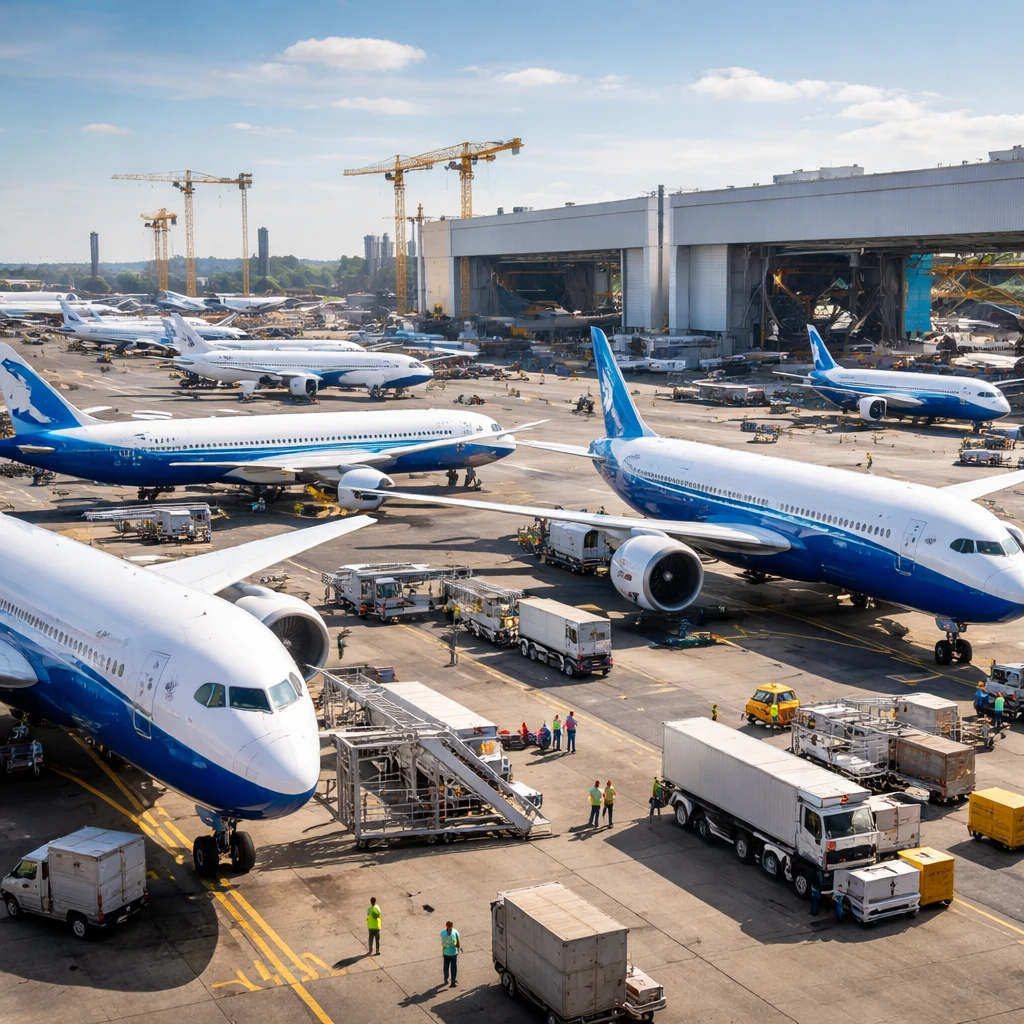
A prominent factor in this growth is Boeing's exceptional surge in jetliner orders, which leapt from 377 in 2024 to 1,075 in the following year, marking Boeing's sixth-best year ever for net orders. Notably, it was the first time in seven years that Boeing led over its main competitor, Airbus, in net orders.
The procured contracts, encompassing 121 separate agreements, are valued to include roughly $206 billion in U.S. export content. These contracts are forecasted to directly support around 844,000 American jobs across multiple sectors.
The Commerce Department credits part of this success to the foreign spending commitments embedded within trade agreements negotiated under the Trump administration. These agreements, along with other negotiation efforts, have facilitated significant contract values in key sectors.
A dominant segment of the contracts is related to aerospace, with sales of Boeing aircraft and GE Aerospace jet engines comprising approximately $215 billion of the total, containing $187 billion in export content. A landmark deal included a record-setting agreement with Qatar Airways valued at $96 billion, for up to 210 widebody 787 and 777X aircraft along with associated engines. This agreement was finalized during President Trump’s visit to Doha in May, with top executives and officials present.
Another notable aircraft-related contract includes a $50 billion deal with Korean Air Lines, part of a broader U.S.-Korea trade and investment framework that reduces tariff rates and encompasses $350 billion in total investments.
It is important to recognize that the stated aircraft values typically use list prices; actual transaction values can vary considerably based on factors such as order volume, delivery schedules, maintenance agreements, and cost escalation clauses. Moreover, the timing of cash flows to Boeing depends heavily on delivery dates, meaning much of the revenue from these orders will materialize years beyond the current administration’s tenure.
The ITA indicates that their reported figures include only signed contracts, suggesting that several preliminary commitments made last year—for instance, from Malaysia and Bangladesh related to trade talks—could be counted towards 2026 totals if those agreements become finalized.
Goods and services outside aerospace are also significant contributors. The agency points to infrastructure and supply chain projects generating $8.3 billion in 2025, inclusive of a $4.2 billion contract by U.S. locomotive manufacturer Wabtec to supply 300 heavy-haul locomotive kits to Kazakhstan. This deal represents Wabtec’s largest foreign sale and followed an intensive advocacy campaign involving a phone conversation between President Trump and Kazakhstan’s president.
Additional sectors with substantial contract activity include defense, valued at $10 billion; energy, with $7 billion; and technology, totaling $3.4 billion. Technology contracts span emerging areas such as artificial intelligence, cybersecurity, financial technology, and healthcare solutions.
Commerce Secretary Howard Lutnick emphasized the ongoing commitment to fostering investment, manufacturing, and new opportunities for American companies and workers, noting that 2025's record-breaking year was only the beginning of a broader initiative to promote American manufacturing and economic growth.
The ITA’s Assistance Center plays a vital role in consulting companies on foreign government procurement bidding processes. It also facilitates interactions between foreign decision-makers and high-ranking U.S. officials to boost American business prospects, marshaling resources across various governmental agencies to support these efforts.